
There was a moment, not too long ago, when I stumbled onto something that made me pause. I was chasing ideas that sounded like they mattered, things that people talked about as if they were inevitable game‑changers. You know the type: concepts that feel profound at first, but when you peel back the layers, you realize they don’t actually shift how people live or work. Digital identity was one of those ideas for me. On paper, it made perfect sense: if people could control their own data, if they could decide who sees what and when, then the power dynamics of the internet would change. Platforms would have to adapt. Users would be in the driver’s seat. But that’s not what happened. Most of the systems I saw either pretended to give control while secretly keeping central levers of power, or they dumped complexity on the user in a way that made adoption a headache. It wasn’t enough to just talk about identity as a nice feature. It had to disappear into the background, invisible, working without asking people to think about it.
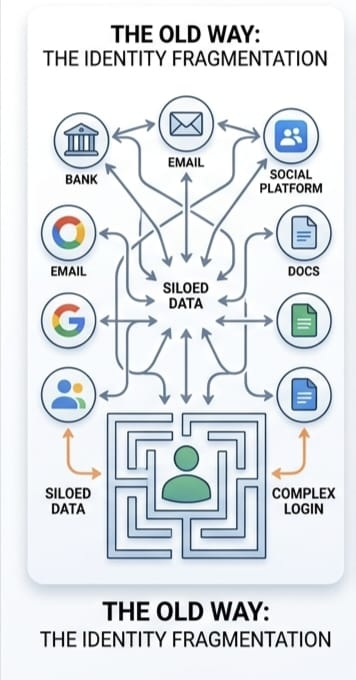
That shift in my thinking is why I paused when I first came across Sign. At first, I expected the same old pitch: another project waving the banner of “user sovereignty” without actually delivering something people will use. But as I dug in, it started to feel different. Not because of the buzzwords, but because the design treats identity as a structural part of the system, not an optional add‑on.
I remember the first time I really understood what they were trying to build. Sitting with my laptop, reading their documentation late at night, I realized they weren’t just proposing a better login system or a way to store credentials. They were tying identity directly into the mechanics of transactions at the protocol level. That means when someone sends money, the network itself can check who they are in a way that doesn’t expose their private details. It’s one thing to say “self‑sovereign identity,” but it’s another thing to make it so baked into the rails that the system can’t function without it.
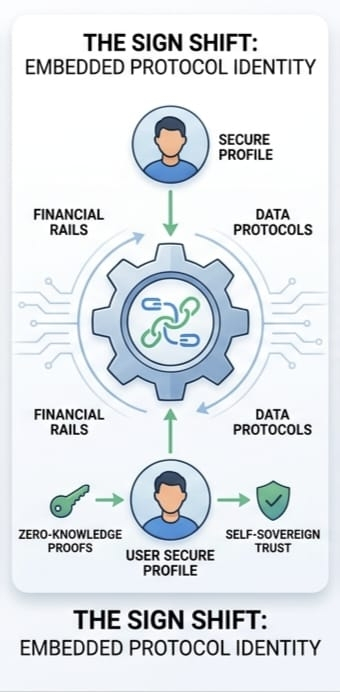
It’s deceptively simple when you say it out loud: a payment or exchange is not just about moving value, it’s about knowing something about the parties involved that you can trust. In most systems today, that trust comes from intermediaries: banks, big tech platforms, credit agencies. They hold the keys and the data. Sign flips that model. Identity becomes part of the ledger, verifiable by the network without leaking sensitive information. So when someone pays a merchant, you don’t just see that payment happen, you see confirmation that the payment came from a verified identity.
My mind immediately jumped to how this could change interactions not only in finance but across applications. Imagine a world where developers don’t have to build or maintain clunky identity systems every time they launch a product. Imagine if they could lean on a neutral foundation that already provides trustworthy proofs about who people are and what they’re allowed to do. That’s the promise here. Trust becomes something the system shares by default, not something every app has to reinvent.
That’s where the real market relevance starts to show, especially in places where digital economies are taking shape fast. I’ve been paying attention to how governments and industries in the Middle East are investing in digital transformation. They’re rolling out new payment systems, digital services, and e‑commerce platforms at a pace I haven’t seen elsewhere. But when identity and financial infrastructure get built in silos, inefficiencies and friction crop up. You end up with a patchwork of systems that don’t talk to each other. Sign’s approach could knit those pieces together, giving emerging digital markets a common language for trust.
What surprised me most was how the token within this ecosystem isn’t just about speculation. It has a role to play in the mechanics of verification, network security, and usage incentives. That doesn’t mean the price won’t ever fluctuate or attract traders. Of course it will. But its design ties economic incentives to the health of the network in a way that aligns with real usage, not just hype.
And that’s where I think a lot of people get tripped up. There’s a big difference between building technology that looks cool in a demo and building something people rely on every day. Right now, Sign is early. There’s growing attention, more wallets holding the token, and rising trading volume. But those are signals of interest. They aren’t proof of meaningful use yet. Real adoption means people come back day after day, product after product, because the system reliably earns their trust and saves them time or money.
I found myself thinking about the classic chicken‑and‑egg problem. You need developers to build on top of this infrastructure for it to become useful. But developers need a user base that actually uses it. And users won't adopt it unless they see clear benefits over what they already have. Breaking that cycle is the hardest part of any new platform. Sign seems aware of that challenge. They’re focused on making proofs of identity useful enough that applications want them and users appreciate the convenience.
One thing I keep coming back to is how invisible good infrastructure should be. Most of the best systems are the ones you barely notice because they simply work. When I tap my phone to pay for coffee, I don’t think about the network that just processed that payment. But there’s a lot of engineering and trust hidden under the surface. If Sign can make digital identity that reliable and seamless, it could quietly become the foundation for a lot of future interactions we take for granted.
But that’s the question haunting me at the end of writing this. Will Sign become one of those invisible foundations we all lean on without thinking about it, or will it remain an interesting experiment that never quite cracks the everyday use case? Can identity become something that truly lives in the background of repeated economic activity, or will it stay a topic that only developers and speculators talk about? I guess time will tell, but I find myself watching this one with genuine curiosity, wondering whether what seems like a subtle shift could turn out to matter more than we expect.
