
$NIGHT #night @MidnightNetwork

I didn’t think wallet transparency would become a problem.
At the start it felt like an advantage. Everything visible, everything verifiable. You could look at an address and understand how someone behaves on-chain. It made trust easier.
But over time it started feeling heavy.
Not because transparency is bad, but because it doesn’t stay limited. It keeps accumulating. Every trade, every interaction, every experiment it all sticks. And eventually your wallet stops being something you use and starts becoming something you carry.
That’s where it turns into a burden.
I’ve reset wallets before just to get out of that feeling.
Start fresh, no history, no assumptions attached.
But the trade-off is obvious. The moment you reset, you lose everything that could have been useful any kind of reputation, consistency, or proof that you’ve been around and behaving well.
So you’re stuck between two options: stay visible and exposed or reset and become invisible again
Neither feels right.
This is where @MidnightNetwork started to make more sense to me.
Not as “privacy”, but as a different way to think about history itself.
It doesn’t treat your activity as something that should be visible to everyone. It treats it as something that should stay where it was created and only specific parts of it should ever be expressed.
That changes what reputation actually means.
Right now, reputation is basically your visible past.
Protocols scan your wallet, read patterns, and build a picture: how long you’ve been active how consistent you are how risky your behavior looks
All of that depends on full access to your history.
Your reputation is just your transparency, interpreted.
Midnight doesn’t work like that.
Your activity sits inside a private boundary under your Night key. That boundary isn’t just hiding data, it defines where your state exists and where computation over it is allowed.
On Midnight, if that computation doesn’t happen inside that private domain, the system doesn’t accept it at all.
If something tries to evaluate your history from outside that boundary, it doesn’t really have access.
So reputation can’t be built by reading your wallet.
It has to be built by proving something about it.
That’s where the idea of portable history starts to feel real.
Not portable as in “copy your data somewhere else”.
Portable as in: you carry proofs of your behavior, not the behavior itself.
In practice, that means reputation becomes a set of verifiable claims, not a visible score tied to your wallet.
Instead of exposing everything, the system checks specific conditions.
Like: this user has been active over a defined period this user has not defaulted under certain rules this user meets a required reliability threshold
These aren’t soft signals.
They’re turned into strict rules constraints that can be verified as clear yes/no conditions, not subjective scores.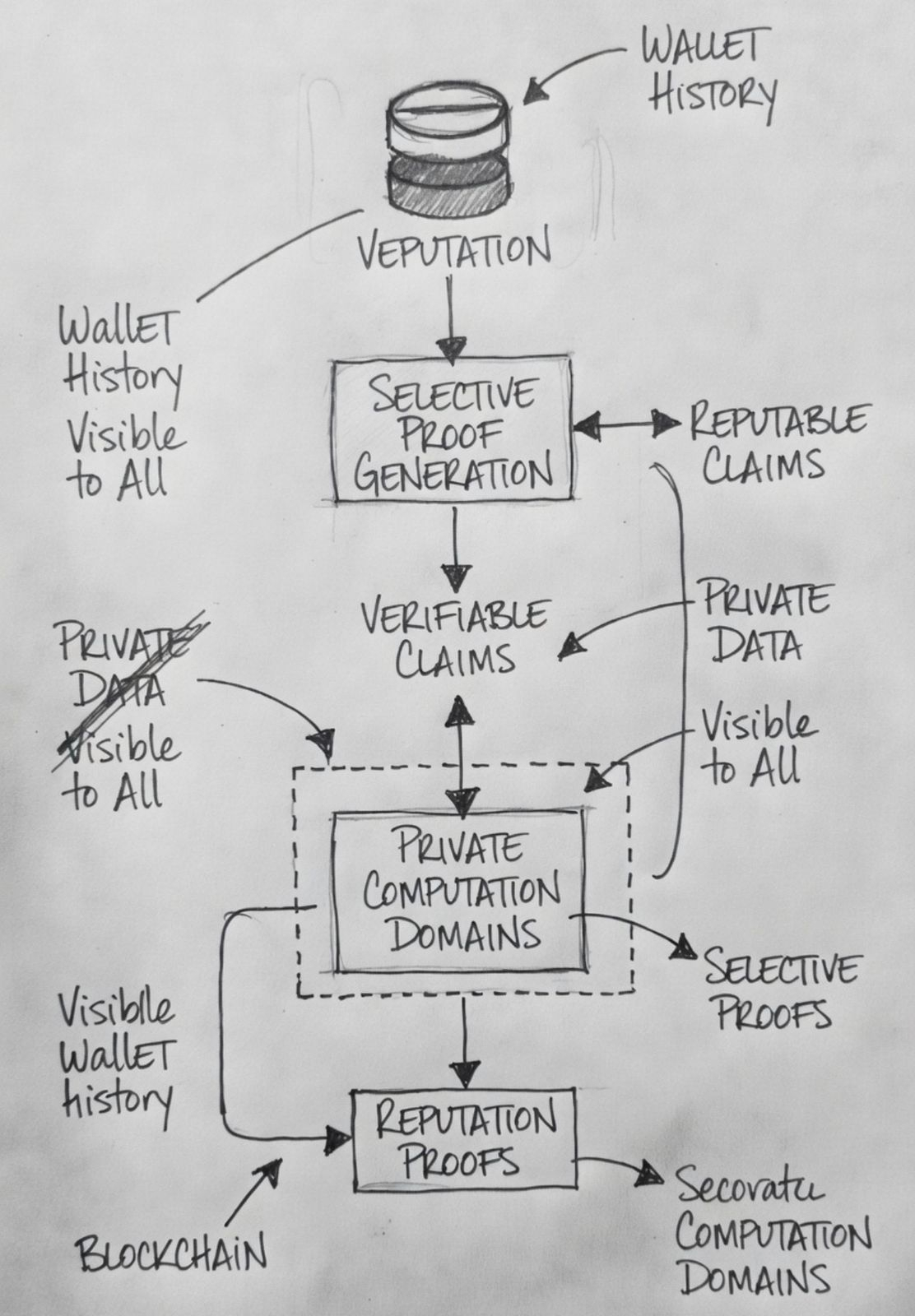
The model runs inside your private domain.
It evaluates your actual activity against those rules.
Then it produces a proof that those conditions are true.
That proof is what you carry.
Not your wallet history.
This is where it feels different from anything we have today.
Because your history becomes something you can express selectively.
You don’t reveal everything.
You prove what matters.
A simple example is lending.
Today, if you want better terms, your wallet has to show enough activity to convince the protocol you’re reliable.
That means exposure.
With Midnight, your history stays private.
A model checks: no defaults consistent activity risk within limits
The system proves those conditions.
You present the proof.
The lender gets what they need a reliable signal without seeing your full behavior.
Another case is moving across ecosystems.
Right now, reputation doesn’t travel well.
If you switch wallets or chains, you basically start from zero unless you link identities, which creates even more exposure.
With this model, reputation isn’t tied to a visible address.
It’s tied to proofs of behavior.
So you can carry that across contexts without dragging your entire history with it.
That’s what makes it portable.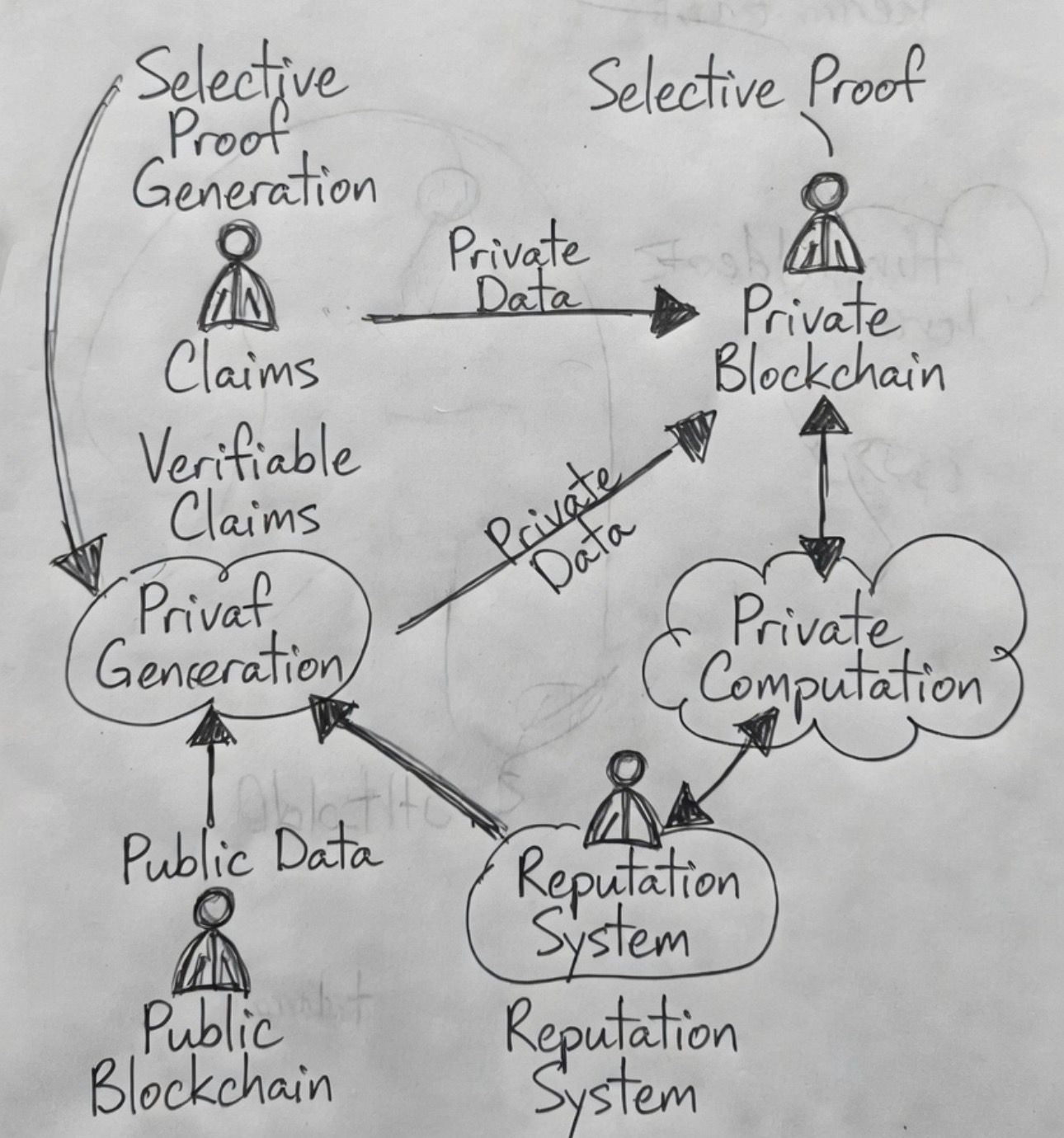
There’s also something deeper happening under the hood.
Those conditions are not just checks they’re enforced rules.
The computation that evaluates them happens inside the private domain tied to your Night key.
And if it doesn’t happen there, the system doesn’t accept the result.
So no one can fake reputation by generating arbitrary claims.
The proof is tied to real activity, even though that activity never gets revealed.
DUST plays into this as well.
Every time you evaluate these rules and generate a proof, it consumes capacity.
So reputation isn’t something you can cheaply spam.
It has a cost tied to real computation, which keeps it grounded and harder to game.
What I keep coming back to is how this changes the feeling of identity on-chain.
Right now, identity builds passively.
You don’t choose what gets exposed, it just accumulates.
With Midnight, identity becomes more intentional.
You decide what to prove.
You carry only what’s needed.
At first, that feels like less information.
But in practice, it’s probably closer to what systems actually need.
Most decisions don’t require your full history.
They require a few clear signals.
I don’t think the current model scales well.
Not because it’s technically broken, but because the cost of exposure keeps growing with usage.
The more you do, the more you reveal.
And eventually that discourages participation or forces people into constant resets.
Midnight doesn’t remove history.
It changes how it’s expressed.
Your past stays where it belongs.
And what moves with you is proof of it not the exposure of it.That’s what makes reputation feel lighter again.
Not something you have to carry in full.
Just something you can prove when it matters.