
I wasn’t planning to learn anything that day. Just lying there, scrolling without thinking, jumping from one profile to another. At some point I paused on someone’s post, reading their achievements, their story… and I just believed it. No checking, no proof, nothing. And that’s when it hit me—online, we believe things way too easily.@SignOfficial
That thought stayed with me longer than I expected.
Later that night, I came across this idea about credential verification and token distribution. At first, I almost skipped it. It sounded complicated, like one of those things only developers care about. But something about it connected with what I had just felt earlier, so I gave it a little more attention.
The more I read, the more it started to make sense—not in a technical way, but in a very real, everyday way.
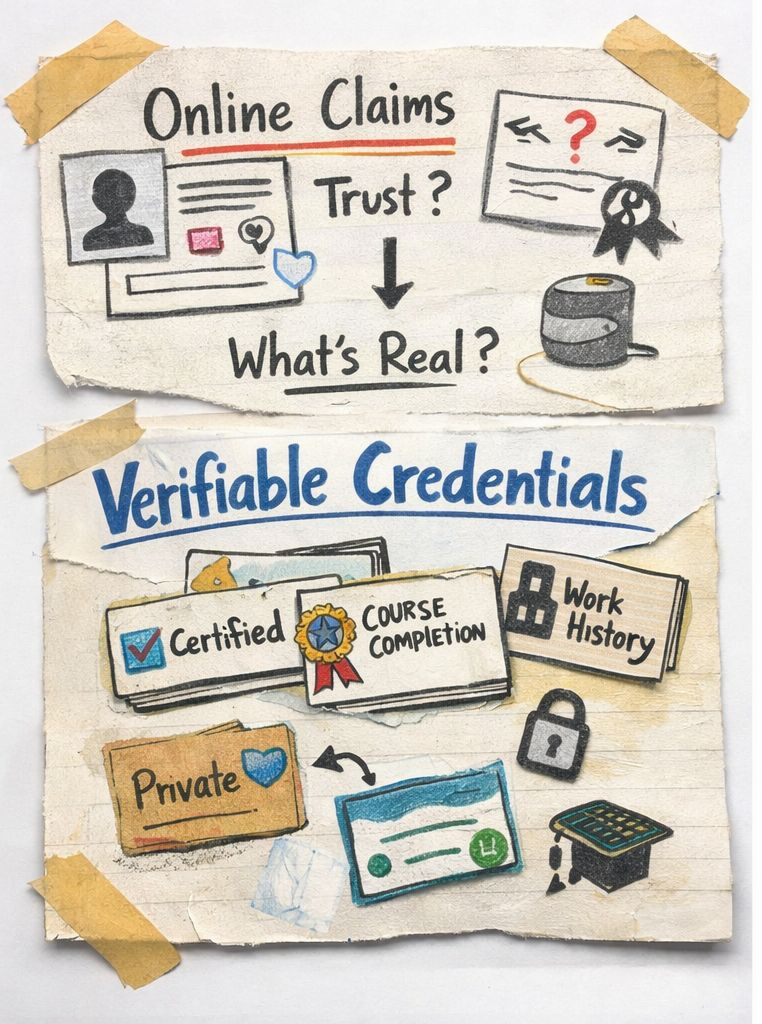
In real life, proving something is simple. You show a document, a certificate, an ID—done. People trust it because it comes from somewhere official. But online? It’s the opposite. You keep proving yourself again and again, and even then, people aren’t fully sure.
That’s where this whole system felt different.
Instead of repeating yourself everywhere, it lets you carry your proof with you. Not as screenshots or claims, but as something real—something that can be checked instantly. No back-and-forth, no waiting.
I remember sitting there thinking, “Why hasn’t this always been a thing?”
As I kept exploring, I started to see how it actually works. There are issuers—the ones who give you credentials. Then there’s you, holding them. And whenever needed, anyone can verify them without contacting the issuer again. It’s quick, almost effortless.
What surprised me the most was the privacy side of it.
Usually, when something asks you to “verify,” it feels like you’re about to give away too much. But here, it’s different. You only show what’s necessary. It’s like proving one fact about yourself without exposing your whole life. That felt… refreshing.
Then I went a bit deeper and discovered the tools behind it. This isn’t just something you use—it’s something people are building on. Developers can create systems where credentials are issued, verified, and actually used inside apps. And suddenly, things that used to feel messy—like onboarding, trust, or access—start to feel smooth.
That’s when it finally clicked for me what tokens were really about.
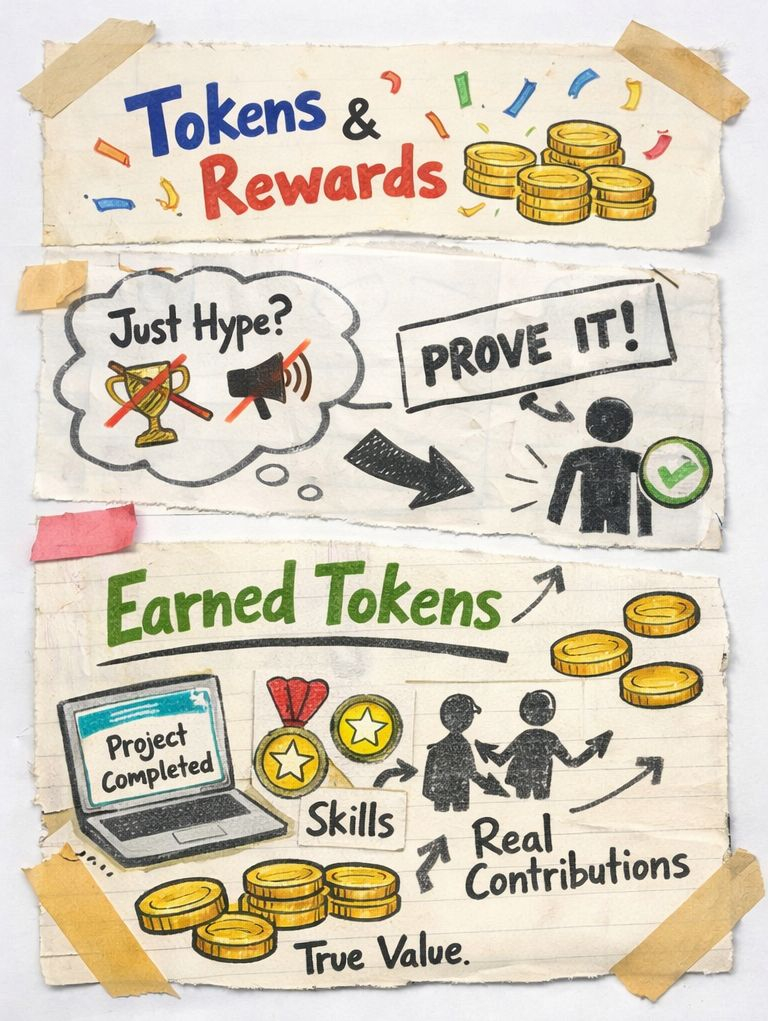
Before that, they always felt kind of random—like rewards being handed out without any clear reason, almost like luck mattered more than anything else. But here, it’s different. Credentials give context. They show why someone should receive something.
So instead of rewarding noise or popularity, systems can reward real actions—things that are proven. Contributions, effort, participation. Not just words.
And honestly, that changes the whole vibe.
It makes things feel fairer. More grounded. Less about who shouts the loudest, and more about who actually did something.
The more I thought about it, the more I realized this isn’t just about tech. It’s about fixing a quiet problem we’ve all gotten used to—this constant uncertainty online.
We scroll, we believe, we doubt… and then we move on.
But what if we didn’t have to guess?
What if trust wasn’t something you rebuilt every time, but something you simply carried with you?
That’s what stayed with me at the end of all this. Not the tools, not the system—but the feeling that the internet could finally move from “just trust me” to “here, you can check for yourself.”
