@SignOfficial #SignDigitalSovereignInfra $SIGN
Most CBDC news is just fluff. Governments love MoUs—they’re low-commitment, look great in a press release, and are usually forgotten in six months. So, when the Kyrgyzstan news first broke, I rolled my eyes and assumed it was more of the same.
I was wrong.
On October 24, 2025, Sign CEO Xin Yan and the Deputy Governor of the National Bank of the Kyrgyz Republic signed a Technical Services Agreement. That’s a massive distinction. This isn't a "let's explore" deal; it’s a "somebody is getting paid to build this" deal. There are deliverables, deadlines, and a hard target for legal tender: January 1, 2027.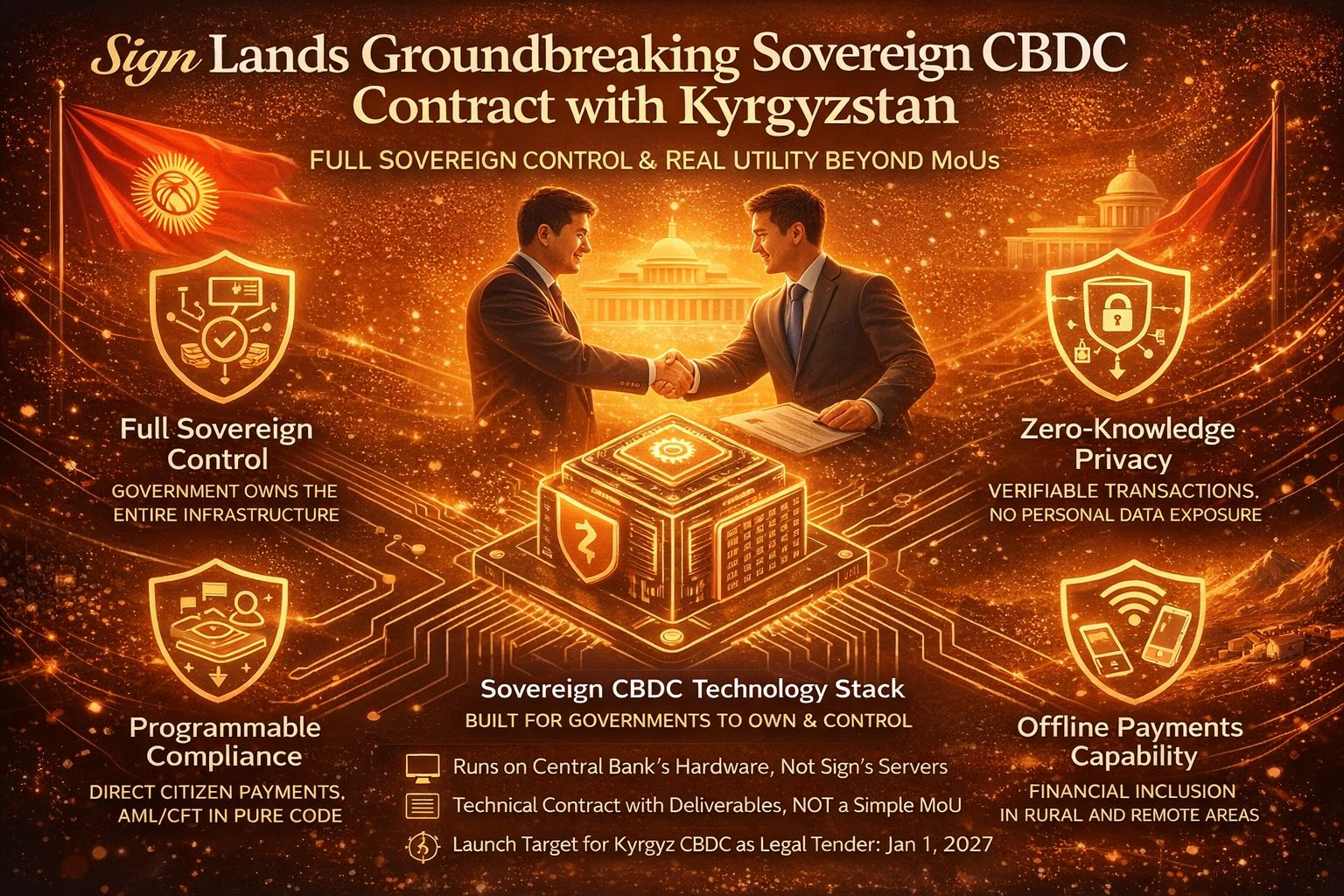
Why did Sign win where others failed?
It comes down to one thing most blockchain companies miss: Governments don’t want a vendor; they want ownership.
When a central bank talks to a tech company, the elephant in the room is: "If this goes sideways, or if we want to fire you, what happens to our money?" Most blockchain pitches don't have a clean answer.
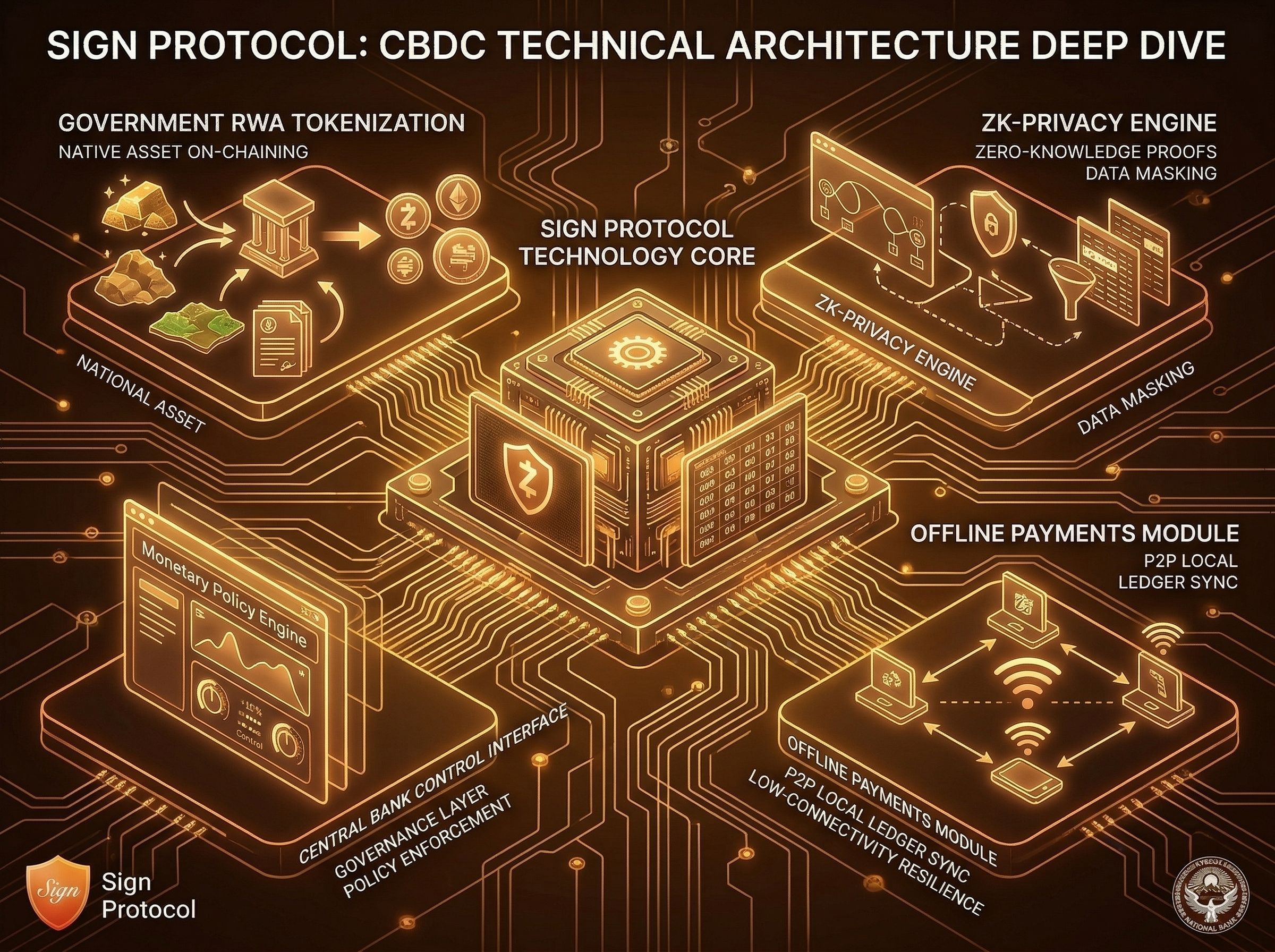
Sign’s answer is: "You own it all." The core infrastructure—Hyperledger Fabric X—runs on hardware the central bank controls. Sign Protocol sits on top as the attestation layer, but the Bank of Kyrgyzstan owns the nodes and the rules. For a sovereign nation, that’s not just a feature—it’s the entire reason they signed the paper.
Real-world utility vs. Pitch deck fluff
Programmable Compliance: Instead of welfare payments bouncing through three middlemen (each taking a cut), the Digital SOM can be coded to hit a citizen's wallet directly. It can be restricted to specific categories like healthcare or education, with AML/CFT checks running silently in the background.
Privacy through ZK-Proofs: They’re using Zero-Knowledge proofs for retail transactions. It allows for verification without exposure. Sign is building an audit trail that doesn't double as a surveillance system—a balance most CBDC designs haven't even attempted yet.
The Reality Check
I’m not 100% "moon" on this yet. There are hurdles:
The Connectivity Gap: Phase 3 of the pilot covers offline payments. This is the make-or-break moment. Kyrgyzstan is mountainous and rural. If this doesn’t work perfectly offline, the "financial inclusion" story stays stuck in the cities—where people already have banking access anyway.
The DeFi Bridge: The connection to KGST on the BNB Chain for global liquidity sounds cool on paper, but how many people in rural Kyrgyzstan are actually hunting for DeFi yields? This feels like "future-proofing" rather than a solution for today.
The 2028 Goal: Sign wants 300 million users by 2028. Kyrgyzstan is a brilliant template, but scaling this to five more governments involves navigating five more sets of complex geopolitics.
The Bottom Line
Sign has built a Sovereign Stack that lets a government go digital without surrendering control. They’ve solved the "trust" problem. Once the infrastructure is in, you can plug in Digital IDs and RWA tokenization effortlessly.
If they can get those offline payments to work in the mountain villages by 2027, the rest of the world is going to have to stop and take notice.