
I once noticed something that made me stop and think while I was moving funds across a busy network. One transaction confirmed quickly, almost instantly, and the next, almost identical, seemed to hang in limbo for longer than I expected. Fees weren’t the issue, and the network didn’t seem overloaded. Nothing broke, nothing failed but I found myself staring at the screen, wondering what was happening behind the scenes. That small, quiet pause changed how I think about how these systems actually work for the people using them.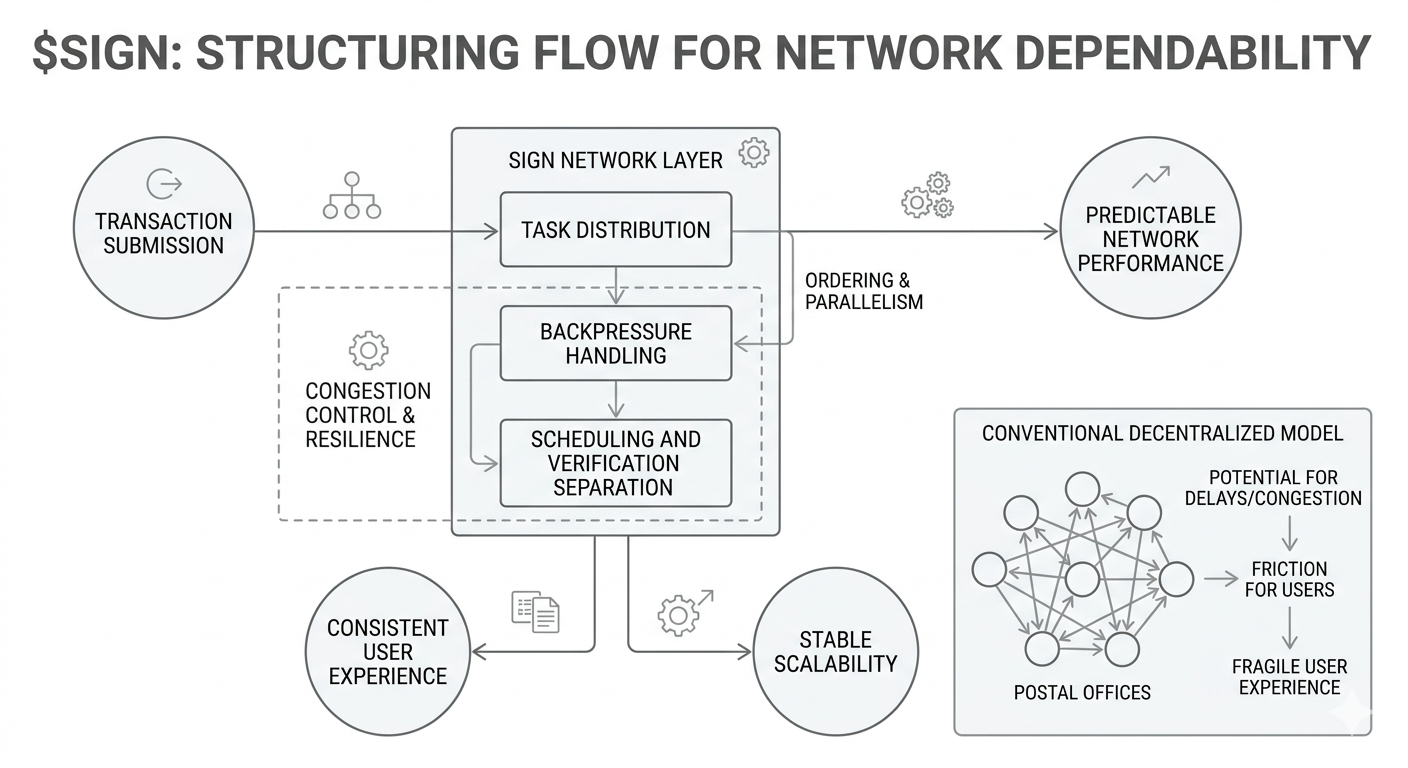
After seeing this happen a few more times, I realized it wasn’t just a minor hiccup. It revealed how fragile user experience can be when the network has to juggle verification, congestion, and ordering all at once. From a user perspective, autonomy and smooth operation feel like freedom but what really matters is how the system handles the invisible pressure points that show up under real conditions. Even small delays hint at complex coordination happening quietly behind the scenes.
I like to think of it like a city’s postal system. Each post office sorts and routes letters independently, and usually it works. But if one office falls behind or routes packages differently than expected, delays ripple outward. Even though the system is decentralized, the people at the end of the line feel the friction. In crypto networks, what interests me more is that the same thing happens with transactions and validation: the mechanics that keep everything moving smoothly are mostly invisible, but they define how predictable the network feels.
When I look at how Sign approaches this, what caught my attention is that it seems to handle these challenges by structuring the flow rather than trying to shortcut it. Scheduling and verification are separated, backpressure is considered, and task distribution seems carefully thought out. From a system perspective, it’s not just about speed it’s about making sure that one slow or congested part doesn’t ripple across the whole network. Even ordering and parallelism appear balanced in a way that keeps things stable while still allowing for scalability.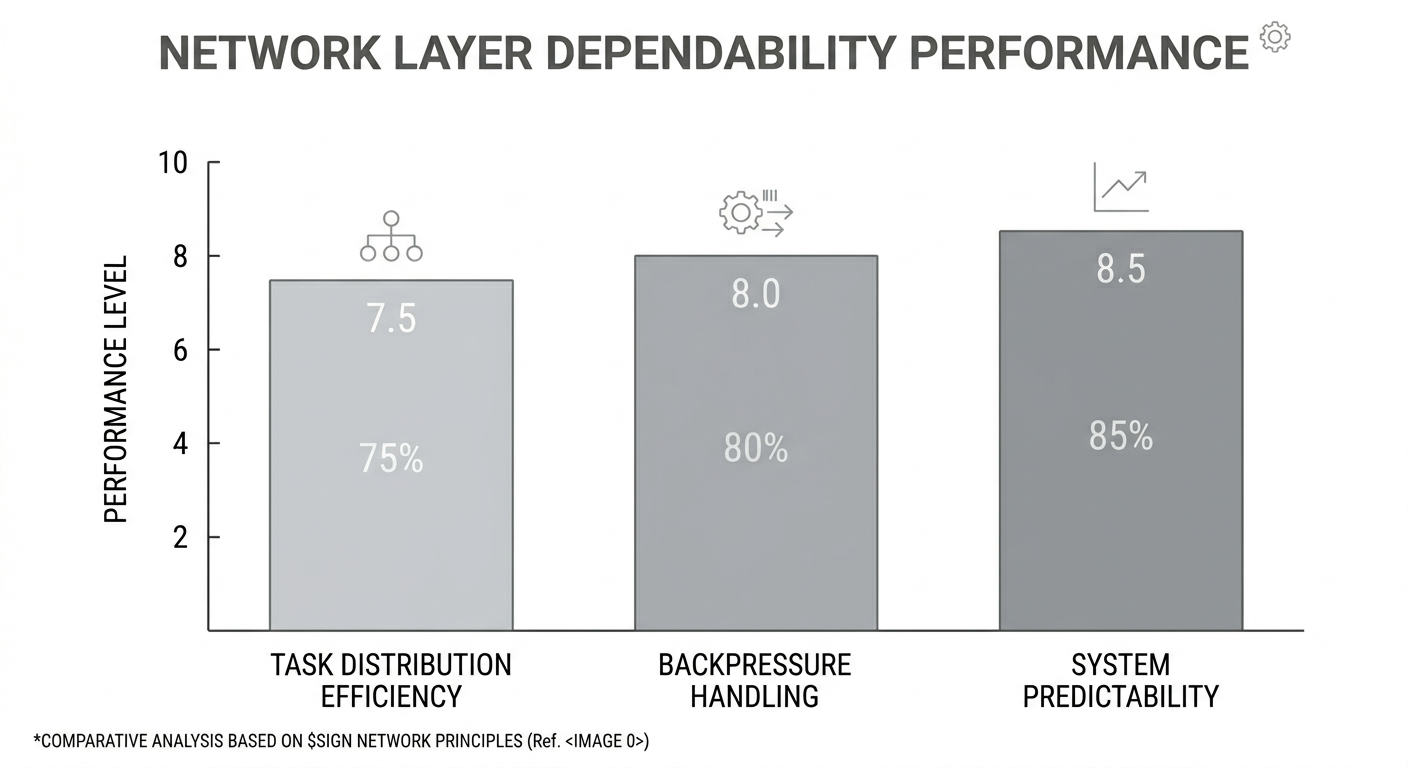
What matters in practice isn’t just whether transactions eventually succeed, it’s whether they feel reliable and consistent over time. In my experience watching networks, the quiet work of sequencing, congestion control, and workload distribution tells you far more about long term resilience than flashy performance numbers. A reliable system is not the one that claims the fastest confirmations, but the one that keeps working when unexpected patterns emerge. Good infrastructure rarely draws attention to itself; it quietly keeps the network functional while everyone else goes about their work, often unaware of the invisible engineering that makes it possible.
That small moment of watching a transaction linger reminded me that resilience isn’t about being the fastest it’s about being dependable. And in crypto, dependable often matters far more than headline performance.