

I’ve always been the kind of person who feels a strange kind of aversion toward almost everything said in the crypto space. Not because I hate the field—on the contrary, I’ve been in it for a long time and I’ve seen enough to either make you overly excited or permanently cynical. But what happened to me over time is something else… a state of constant caution. Whenever a new project appears and starts talking about a “revolution” or a “next generation blockchain,” my mind automatically shuts off a little.
I’ve started to feel that almost all projects say the same things, in the same way, with the same artificial enthusiasm. “Higher TPS,” “lower fees,” “unprecedented scalability,” “we are the future of the internet”… the same phrases keep repeating until the entire market feels like copy-paste, only the branding changes.
Maybe this made me hypersensitive toward any new project. Not in the sense that I reject it immediately, but in the sense that I don’t believe easily. I need to see something real, something that makes me stop and say: “Okay, this one is a bit different.”
And that’s roughly what happened with Midnight Network—but not at first.
To be honest, when I first heard the name, it passed through my mind without much attention. I told myself: “Okay, another Layer 1 project, probably the same usual story.” I had no motivation to dig deeper or read further. On the contrary, I was trying to reduce the number of projects I follow because it had become exhausting.
But what changed things wasn’t an announcement or marketing—it was a casual comment from someone I know in the field. A developer, not the type who gets excited easily. In fact, he’s the kind of person who usually mocks new projects.
He said a simple sentence that stuck in my head:
“They’re not coming to tell you the world is broken… they’re telling you the world is already broken.”
It was a simple sentence, but it carried something different. It didn’t have the usual “we will change everything” tone. Instead, it felt like an acknowledgment that the problem is bigger than slogans.
That’s where I started thinking again.
Because if there is one thing I’ve noticed over the years in crypto, it’s the idea of “radical transparency.” At first, we saw it as something beautiful. The idea that everything is visible, everything is traceable, nothing is hidden. We used to say this is the future of trust: you don’t need to trust anyone, you just verify everything yourself.
But over time, I started seeing the other side of it.
Absolute transparency is not always beautiful. Sometimes it becomes a heavy burden. Imagine operating in a market where every move you make is exposed to everyone. Every trade, every step, every wallet adjustment. Even if you are just a normal trader, you become exposed in a way that allows others to easily exploit you.
There is an example I always go back to. A friend of mine who works in quantitative trading once explained how he monitors competitor wallets. He wasn’t doing anything illegal—everything was on-chain and public. But the idea itself felt strange. He could see their movements, know when they enter or exit, and sometimes get ahead of them by a step.
He said it very casually: “It’s not spying… it’s just reading public data.”
But even if it’s “public data,” the result is still an unfair advantage.
That’s where I started understanding the idea of “transparency leakage.” Not everything needs to be exposed to be fair. Sometimes too much disclosure creates indirect unfairness.
And not only in trading. Even large companies, if you think about it, face a more complex version of this problem. A company trying to use blockchain in supply chains, for example, is a great idea technically. But if everything is visible—prices, suppliers, contracts, costs—then it becomes a real issue. Because it stops being transparency and becomes full exposure of internal operations.
And any rational company would ask: why should I expose myself to this level of visibility?
And honestly, that’s a very reasonable question.
This is where the idea behind Midnight started to become interesting to me gradually. Not because it “solves everything,” but because it at least acknowledges a problem many projects ignore.
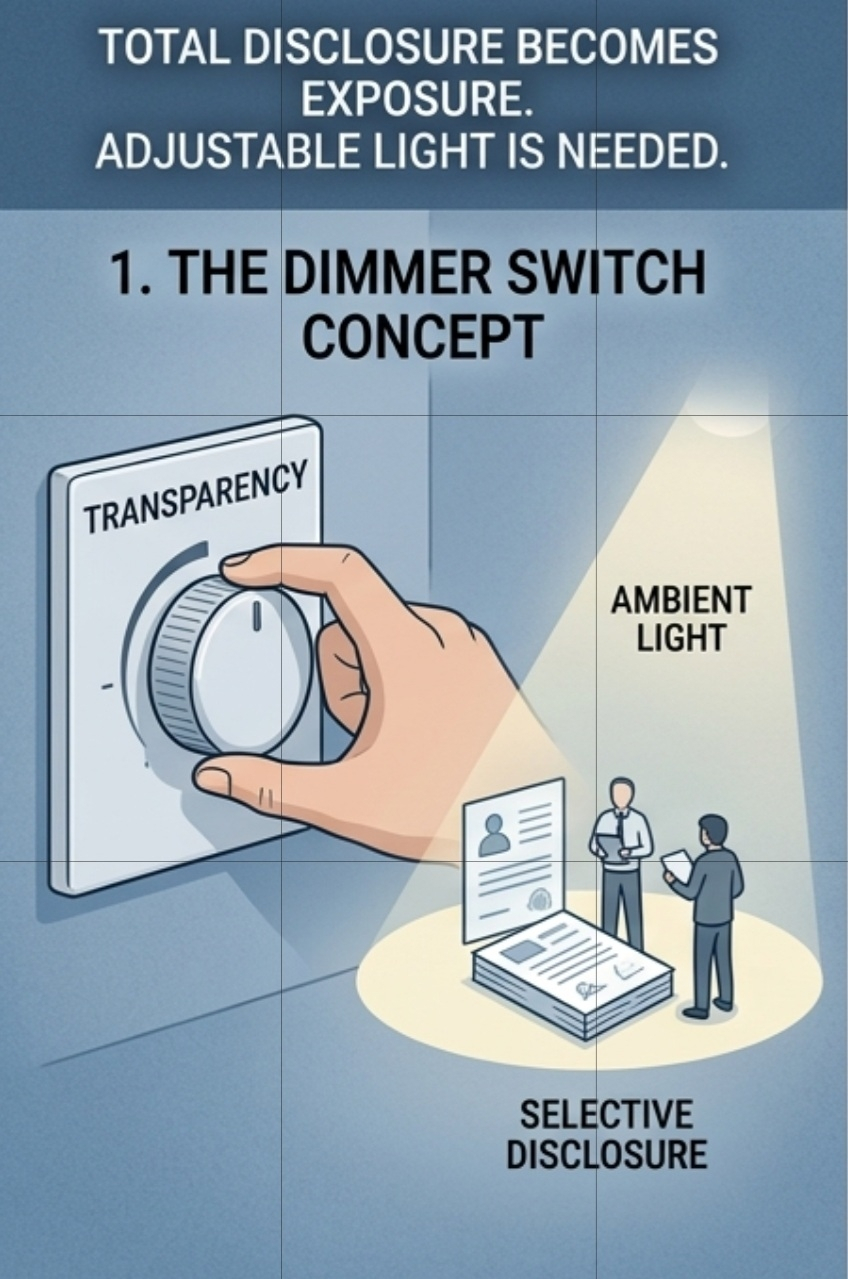
The core idea I noticed is that the project is not saying transparency is bad. It is saying that uncontrolled transparency is the problem.
And that is an important difference.
There is a difference between living in complete darkness and living under a constant bright light you cannot turn off. Both are uncomfortable.
What Midnight seems to suggest is: let’s make the light adjustable.
Maybe that’s a simplification, but that’s how I understood it.
When I started reading more, I came across Zero-Knowledge Proofs. And to be honest, this kind of technology has always given me a bit of a headache—not because it’s bad, but because it’s extremely complex. For a long time, it felt more like academic research than something usable in real-world applications.
The basic idea is simple, but the implementation is not. You can prove something without revealing the underlying data. Instead of saying “this is my bank balance,” you can say “I have sufficient funds” without exposing the account itself.
Conceptually, it makes perfect sense, but scaling it to real-world usage is another story.
What interested me in Midnight was not the technology itself, but the attempt to make it usable.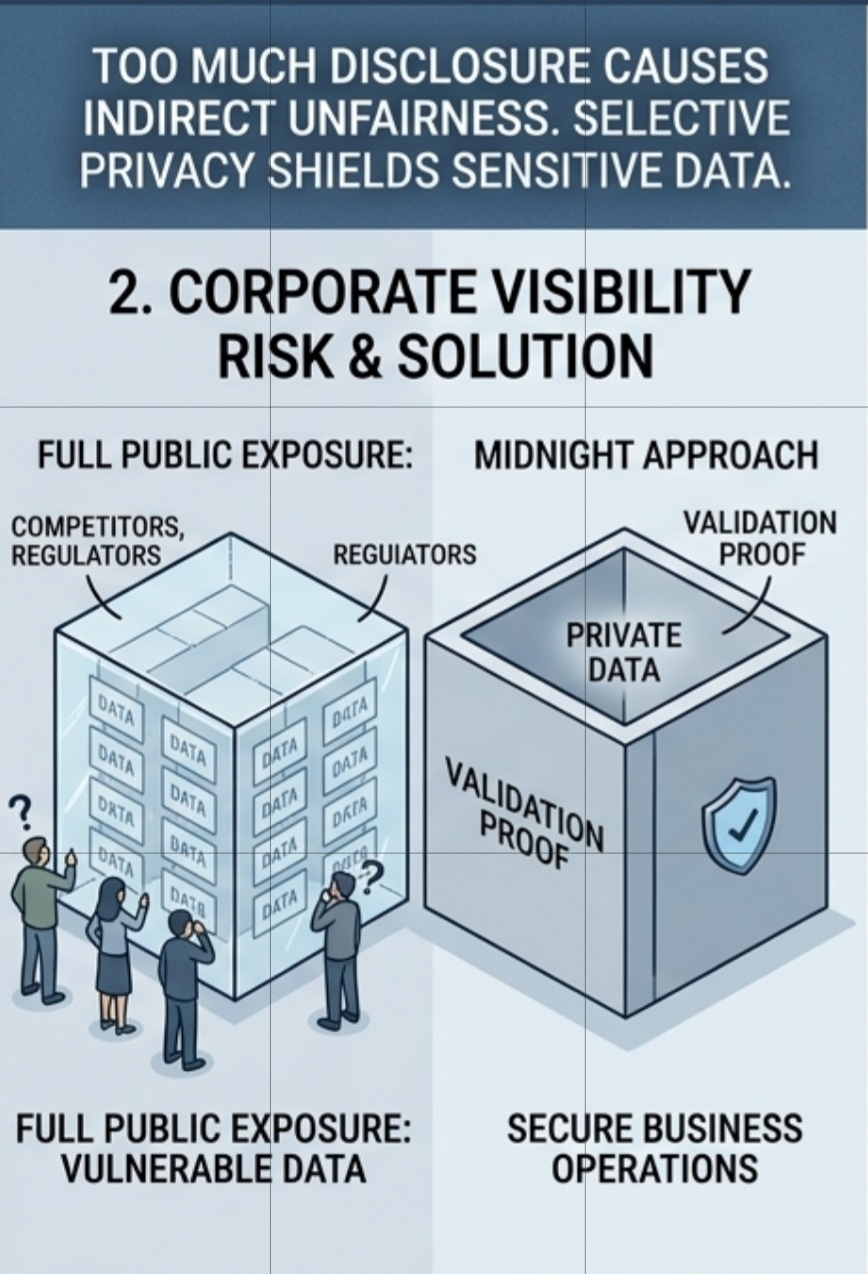
And that’s where Compact came in.
In most of these projects, developers carry a heavy burden. They must learn new tools, new languages, new mathematical concepts. That limits usage to a very small group of people.
But when I heard they were trying to make development closer to TypeScript, I felt something different. Instead of telling developers “learn a new universe,” you’re telling them “use what you already know, and we’ll hide the complexity underneath.”
And in my opinion, that is sometimes more important than the technology itself.
Because any technology that doesn’t reach developers has no real value, no matter how brilliant it is.
At the same time, there is another point I cannot ignore: the token model.
A dual-token system like NIGHT and DUST always creates hesitation at first, because many projects have tried this idea before and failed or became unnecessarily complex.
But here, the idea seems slightly different. One represents economic value, and the other represents operational usage inside the system. The goal is not speculation, but separating layers so everything isn’t tied to a single volatile price.
If this actually works the way it is described, it could reduce many of the issues we see with unstable fees in other networks.
But of course, talking is one thing, and execution is completely another.
And I think that’s what keeps me from getting too excited. I’ve seen many projects start with clean ideas, but once they enter the market, everything changes—pressure, investors, reality, regulations… all of these factors break even the best concepts.
Still, there is something slightly different about Midnight—or at least that’s my impression.
Maybe it’s because it doesn’t try to be “the only network” or “the killer of all others.” Instead, it accepts the idea of a multi-chain future. That alone makes it feel less like a marketing war and more like an attempt at integration.
The idea of Midnight being a privacy layer over other networks rather than a full replacement is more realistic than many projects trying to replace everything.
But even here, I remain cautious.
Because the real question is not design—it is execution.
Can Zero-Knowledge systems actually scale globally? Will developers adopt them? Will institutions trust them? And will regulators allow them to spread without resistance?
All of these questions remain unanswered.
And that is normal.
I am not looking for a perfect project, nor one that impresses me instantly. In fact, I tend to avoid projects that try too hard to impress.
What matters to me is simple: is the problem real?
In Midnight’s case, yes—the problem is real.
Is the solution ready? No.
Is the path easy? Definitely not.
But at least there is an acknowledgment of something many projects ignore: that absolute transparency is not always the answer, and sometimes it is part of the problem.
Maybe that’s why I keep returning to it. Not because it is an exciting project, but because it deals with something uncomfortable in the fundamental structure of blockchain itself.
And sometimes, projects that start from discomfort are closer to reality than those that start from hype.
I am not saying Midnight is the future. And I am not saying it will change everything.
I am simply saying it is one of the few projects that made me pause, think, and reconsider something I had long taken for granted: that everything must be visible in order to be valid.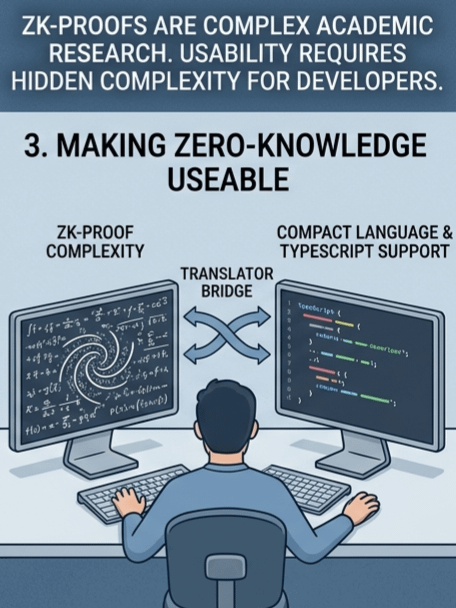
And maybe that alone is enough for now.
Because in this space, just making someone rethink their assumptions is rare.
And for me, that kind of project is worth following… even cautiously, even without excitement.
Because after all these years, I’ve come to believe one simple thing:
Projects that scream the loudest usually have something to hide… or something they are trying to compensate for.
And projects that speak quietly are either weak… or close to something real.
And Midnight, so far, is still in that grey area between the two.
$NIGHT @MidnightNetwork #night
