

In one of the most shocking intraday moves in recent financial history, gold experienced a dramatic $300 سقوط—only to recover the exact same amount within a single hour. For traders, analysts, and institutions alike, the question isn’t just what happened, but why did it happen so fast?
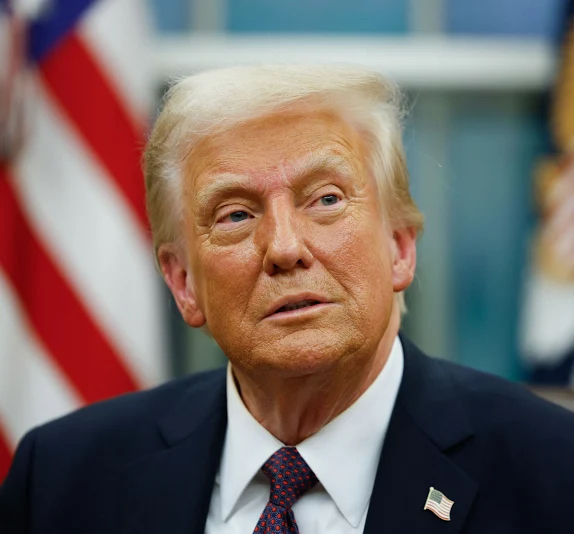
At the center of the speculation lies an unexpected yet increasingly familiar figure: Donald Trump.
Gold, traditionally seen as a safe-haven asset, reacts strongly to uncertainty—geopolitical tensions, inflation fears, and shifts in monetary policy. However, in today’s hyper-connected markets, narratives move faster than fundamentals. A single statement, rumor, or policy hint can trigger billions in capital flows within minutes.
Earlier today, markets were rattled by circulating reports tied to potential policy shifts, trade tensions, and macroeconomic signals that seemed to suggest a strengthening dollar environment—typically bearish for gold. This triggered a massive sell-off, wiping out $300 in value in what felt like seconds.
But then came the reversal.
A wave of counter-narratives, including renewed uncertainty around global stability and speculation surrounding political influence and future economic direction, caused traders to rush back into gold. Short positions were liquidated aggressively, and momentum traders flipped bullish almost instantly—fueling a vertical $300 rebound.
So where does Trump fit into this?
Love him or hate him, Trump has become a market-moving force. His past presidency demonstrated how a tweet, a speech, or even a hint of policy direction could send markets into chaos—or euphoria. Today, even outside the Oval Office, his influence over economic expectations, geopolitical narratives, and investor psychology remains undeniable.
Markets no longer move solely on data—they move on anticipation. And few figures command anticipation like Trump.
This raises a provocative question:
Has Trump evolved into the most powerful “economic oracle” in the world?
While traditional indicators like interest rates, CPI data, and central bank policies still matter, the psychological layer of the market has never been more dominant. Traders are not just reacting to reality—they are reacting to perceived future realities shaped by influential figures.
The $300 gold whiplash is a perfect example of this new era.
In a world where information spreads instantly and narratives shift in seconds, volatility is no longer an anomaly—it’s the norm. And as long as powerful voices continue to shape expectations at scale, these extreme moves may become more frequent.
For investors, the lesson is clear:
Understanding the market today requires more than charts and data—it requires understanding influence.
Because sometimes, the biggest driver of price isn’t what is happening…
It’s who the market believes will shape what happens next. $PAXG $XAUT