
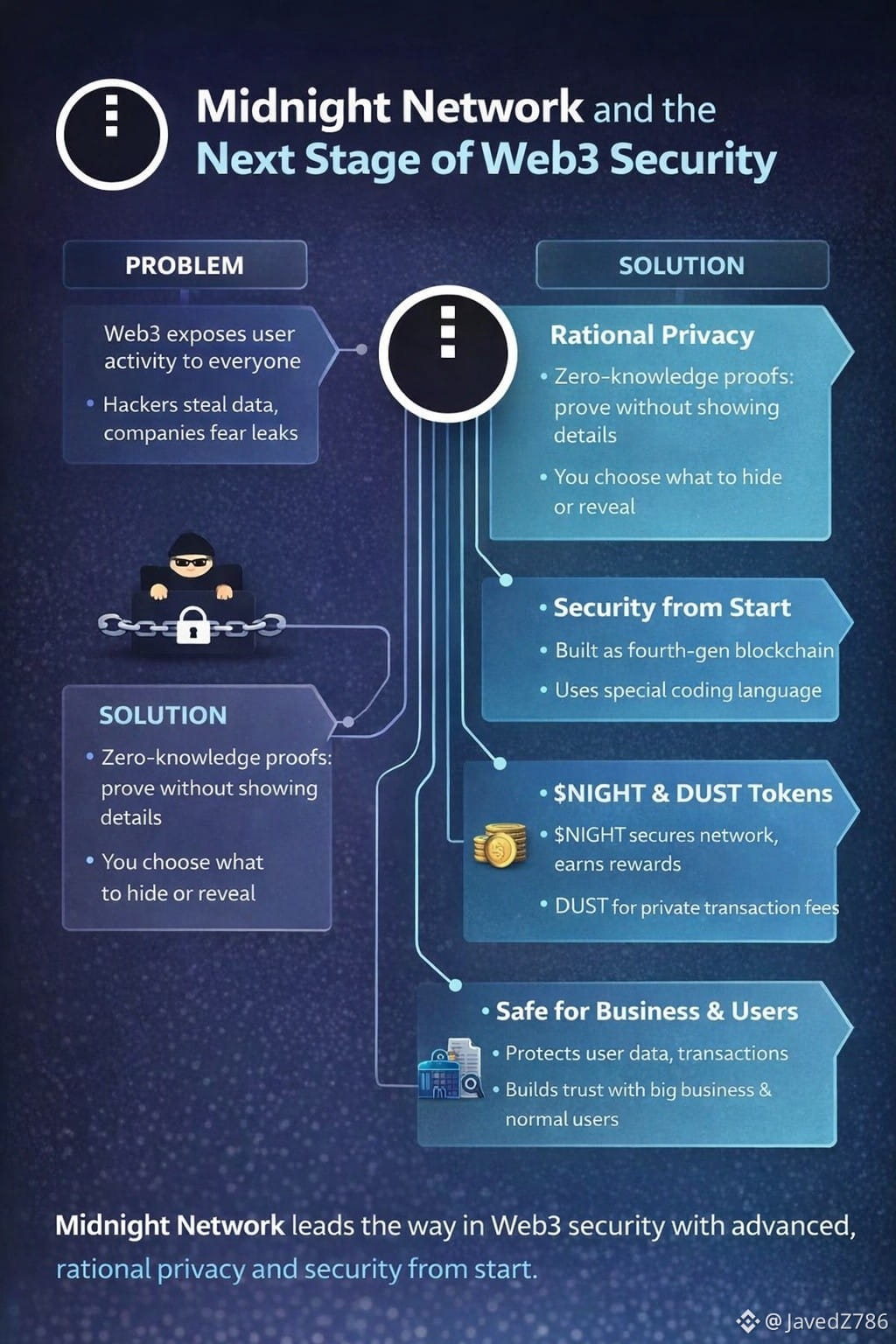
 Alright, I fell down the Midnight Network rabbit hole tonight… and I’m still not sure if I’m impressed or just tired and getting played a little. “Empowering developers from the age” or whatever the phrasing is, it already sounds like somebody hired a wordsmith and told them to jam tech into vibes. But then again, crypto is basically vibes stapled to math, so I shouldn’t act shocked.
Confidential computing has this… magnet thing. Like, I get why people chase it. The idea that you can compute without exposing the raw data feels like the dream version of crypto’s constant fear: “what if everything I do is traceable, and everyone finds out?” There’s a reason every privacy narrative in web3 keeps cycling back to the same question—can we trust the system with our secrets? Midnight stuff seems to be pointing at that answer with “confidential computing” as the badge. And yeah, I want to believe that badge means something real.
But here’s the thing… crypto marketing always tries to make you forget what you already know about incentives. “Confidential” is a nice word. It’s also a word that can be used like fog. Like wearing a hoodie in a dark alley and insisting you’re basically invisible. I’m not saying it’s fake, I’m saying I’ve seen how easily “privacy” turns into “trust us.” And “trust us” is basically the oldest scam in the book, even when it’s dressed up in cryptography.
I keep thinking about what it would actually mean in practice. If developers can build with confidentiality, does that mean the code runs in a way where inputs stay hidden from everyone except… whoever controls the execution environment? That part always gets me. Because confidentiality in tech can mean a bunch of different things depending on who’s still able to peek. Like when you hear “secure enclave” in the real world, you’re still trusting assumptions—some combination of hardware, attestation, key management, and whether the whole stack is as clean as the diagram.
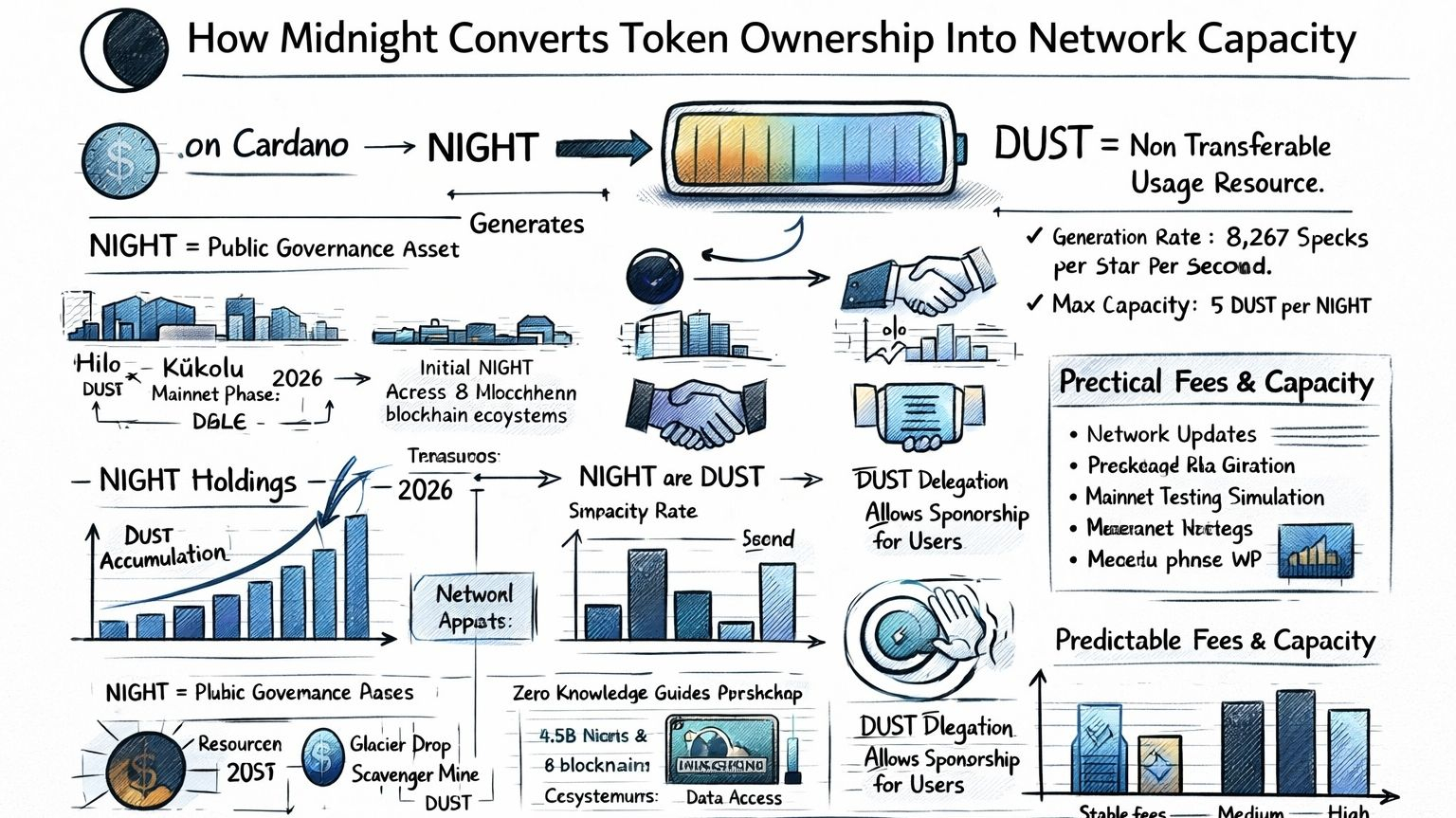
And then the “empowering developers from the age” angle… it’s like they’re trying to sell a kind of accessibility or generational shift. It sounds like “we’re giving tools to developers who’ve been locked out,” or “we’re building for the next wave.” But that’s the problem with these narratives. I’ve heard them a thousand ways: early builders, new builders, builders from places that don’t get attention, blah blah. Sometimes it’s genuine. Sometimes it’s just PR trying to make you feel like you’re joining a movement. Movements are great and all, but I don’t eat movement. I trade tokens, I check security claims, and I watch who gets paid.
Still… I can’t dismiss it, because confidential computing isn’t just a random theme. It’s one of the few tech categories in the last few years that actually has a serious body of work behind it. The “confidential” part isn’t something people invented yesterday. It’s tied to real research, real hardware concepts, and real deployments in enterprise-land. So when crypto projects pick it up, there’s at least some technical gravity. Unlike, say, “AI” hype or “metaverse” dust. Confidential computing feels like it has a spine. Even if the marketing is doing cartwheels.
But then I also hate how easy it is for crypto to slap this stuff onto a roadmap and call it revolutionary without proving the whole pipeline. Like… where are the audits? Where are the reproducible demos? Where’s the proof that developers actually can ship in a way that delivers the confidentiality they claim? I don’t want to guess. I want receipts. And I know, I know—web3 is allergic to giving receipts until they’re already famous. Still, it’s not unreasonable to ask.
Competition is another itch I can’t scratch. Privacy and confidential execution are not free turf. You’ve got other ecosystems moving on similar themes, and they’re not all waiting around for Midnight to get its first big grant. If you’re a developer, you’re choosing a platform based on tooling, ecosystem maturity, liquidity, and community momentum. If Midnight is trying to win developers, cool… but can it actually outcompete the default options? Or is it mostly attracting people who already want to believe in the niche?
Also, I’m a little suspicious of how these projects often sell “developer empowerment” while still behaving like a token project first. That’s not a fair accusation every time, but it’s a pattern. Developers get excited, they build, users come, and then suddenly the incentives get weird. Sometimes the protocol becomes a factory for token value capture, and everyone pretends that was always the plan. That’s the part that makes me grind my teeth a bit… because I’ve lived through too many “builders first” stories that turned into “holders first” reality.
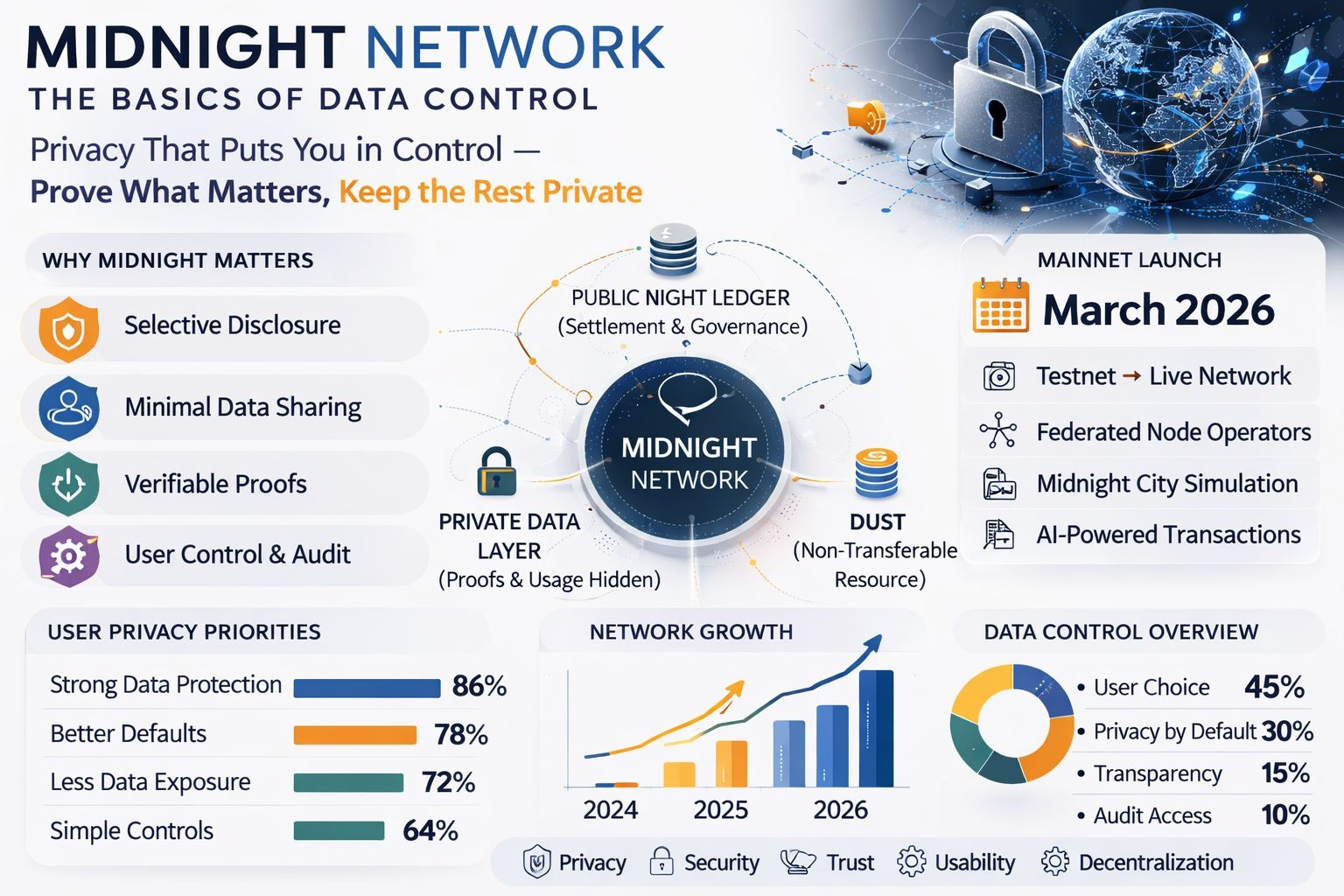
Let’s be real though. There’s a version of this that could be genuinely useful. Confidential computing is the kind of thing that could make on-chain and off-chain interactions less terrifying for normal developers and companies. Not even just “privacy,” but the ability to handle sensitive data without screaming it to the world. If Midnight manages to make the developer experience not miserable—if the system is reliable, if the security story isn’t just a pretty PDF—then yeah, people will use it. And I’ll be the first one to admit I was too cynical. I’ve been wrong before, I can be wrong again.
But I’m not gonna pretend the usual crypto risks aren’t there. Smart contract risks never go away. Even if the confidential layer reduces some exposure, it doesn’t magically fix bugs, economic vulnerabilities, governance problems, or the fact that upgrades and assumptions can always bite you. Confidential computing can hide inputs, sure… but it can’t stop you from deploying a broken contract and hoping the secrecy covers the damage. And secrecy never replaces transparency when something goes wrong. Ask any system designer—when you can’t see what happened, debugging becomes an art project.
What really gets me is the tone of the whole thing. “Empowering developers” is the kind of phrase that makes me look at the token. Not because it’s evil, but because it’s usually the gravity well. If the project needs dev attention, it might also need dev money. So I start connecting dots that might not even be meant to be connected. Then I go check charts. Then I feel guilty for checking charts. Then I check again anyway. That’s crypto brain, I guess. It turns everything into a signal and a trade.
I keep comparing it to those enterprise security tools that promise “zero trust” with the confidence of a fortune teller. The pitch is always: we’ll secure everything, we’ll protect data, we’ll make compliance painless. Then you try to integrate it and suddenly you’re knee-deep in configuration, policies, and weird limitations. Now, confidential computing is not exactly zero trust and I’m not saying Midnight is an enterprise tool. It’s just… the vibe of “big promise” meets “implementation reality.” That collision is where hype either earns respect or gets exposed.
And there’s another analogy in my head too, kind of dumb: it feels like building a locked vault and then arguing about how beautiful the lock is while ignoring whether the building around it is collapsing. The confidentiality layer can be gorgeous, but if the rest of the system is sloppy, the vault doesn’t matter. It’s still a vault with a crack somewhere.
So yeah, I’m curious, I really am. I want to see if Midnight Network actually delivers on confidential computing in a way that developers can trust, not just describe. I want proof that it’s not just a concept dressing itself up as a platform. But I’m also wary because the crypto world has a habit of taking advanced tech ideas and turning them into marketing props. If you’ve been in this long enough, you learn to spot the smoke. Not always the fire, but the smoke for sure.
And tonight, I’m mostly sitting in that uncomfortable middle: impressed by the technical direction, skeptical by the ecosystem incentives, and frustrated by how often “confidential” becomes a synonym for “don’t ask questions.” I don’t want to be that guy who assumes the worst instantly. I don’t. But I also can’t shake the feeling that I’ve seen this movie before, different actors, same plot beats.
So what do I think of Midnight Network right now? I think it’s trying to do something real with confidential computing, and that’s genuinely interesting. I also think it’s being sold in a way that’s designed to capture attention from developers and probably investors too, and those audiences don’t always want the same thing. One wants stability and clarity. The other wants momentum and upside. Crypto projects love to pretend they’re identical.
I’ll probably keep digging. I always do. But I’m also watching for the moment where the narrative starts drifting away from verifiable details. Because that’s usually when my excitement turns into annoyance… and my annoyance turns into “yeah, I knew it.” Anyway, it’s late, I’ve got charts open, and I can already tell I’m gonna wake up tomorrow still thinking about whether “empowering developers” is a real capability or just another slogan wr