
I’ve been burned by “standards” before half of them collapse the moment real traffic hits, the other half turn into cement blocks you drag around forever because some committee thought flexibility was optional. You know the type. Clean diagrams, zero tolerance for reality.
S.I.G.N doesn’t try to win that game. It’s closer to plumbing. Not pretty. Has to work.
The identity piece leans on World Wide Web Consortium specs Verifiable Credentials, DIDs and yeah, that sounds like checkbox architecture until you remember how many L2s break right here, spinning up their own identity layer like it’s 2017 and we learned nothing from OAuth wars. They all promise composability, then ship siloed credential formats that don’t even survive a cross-app flow. Absolute spaghetti code.
Here, it’s boring on purpose. OIDC-style flows, standardized credential envelopes, predictable verification logic. Systems don’t need bilateral trust deals; they just need to parse the same proof format. That’s it. Users disclose only what’s needed. No “oops we leaked the entire wallet history because the API was lazy.” Tight surface area. Finally.
Then you drop into the evidence layer and things get more interesting. Most chains treat transactions like gospel. Raw logs everywhere. Good luck explaining that to an auditor who doesn’t care about your event emissions. S.I.G.N flips it attestations first. Structured claims, schema-bound, signed, anchored. It’s closer to how regulated systems think about records than how crypto people think about “activity.”
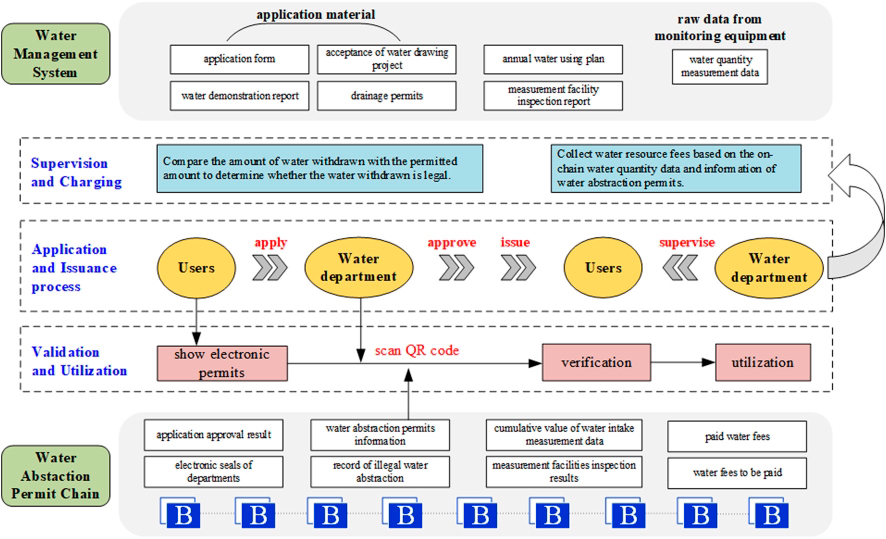
Quick tangent this is where it weirdly echoes stuff from International Organization for Standardization land, like ISO 20022 messaging semantics. Not the syntax, the philosophy. Define meaning upfront. Make it machine-verifiable. Avoid ambiguity. Crypto usually hand waves this and calls it “flexibility,” which is code for “we’ll fix it later.” They never do.
Anyway. Back.
The attestation model means you’re not dragging around raw chain noise when you need to prove something. You’re presenting a claim that’s already structured for verification. Auditors don’t want your calldata. They want assertions they can validate. Different mindset. Much cleaner.
Visibility is where most systems completely lose the plot. Public or private. Pick one. Regret it later. S.I.G.N doesn’t box itself in attestations can be public, private, or selectively disclosed. The key detail is separation: verification vs exposure. You can prove something exists or is valid without dumping the underlying data. Sounds obvious. Almost no one actually builds it that way.
Now the financial side this is usually where L2s turn into vaporware. They scale TPS, tweet benchmarks, and then… nothing connects to anything that matters. No bank is rewriting their rails for your rollup. Not happening.
S.I.G.N doesn’t assume that fantasy. It aligns with ISO 20022, works across different ledger models UTXO, account-based, public, private and treats blockchains as just one execution environment among many. That’s the part most crypto folks hate admitting: the chain isn’t the system. It’s a component.
Short version. It integrates.
Interfaces follow the same logic. Modular everything. Identity, attestations, execution, integration layers loosely coupled, clearly defined boundaries. You can swap components without detonating the whole stack. Compare that to most L2 ecosystems where one upgrade breaks three dependencies and suddenly your bridge, your indexer, and your wallet adapter are all out of sync for a week. Seen it too many times.
And yeah, privacy vs auditability the eternal false dilemma. Either you expose everything or you hide so much regulators shut you down on sight. S.I.G.N sidesteps it by baking selective disclosure into the credential layer and letting zero-knowledge proofs sit where they actually make sense, not as a marketing bullet but as a constraint-solving tool. You get verifiability without full exposure. Imagine that.
What sticks isn’t any single mechanism. It’s the lack of internal friction. The pieces don’t fight.
Identity doesn’t leak into execution.
Evidence isn’t an afterthought
Financial messaging isn’t bolted on with duct tape.
Most L2s feel like experiments that accidentally made it to mainnet. This feels like something that expects to be audited, integrated, and stress-tested by systems that don’t care about crypto narratives at all.
That’s a different bar.