
Okay.....Let’s be real for a second.
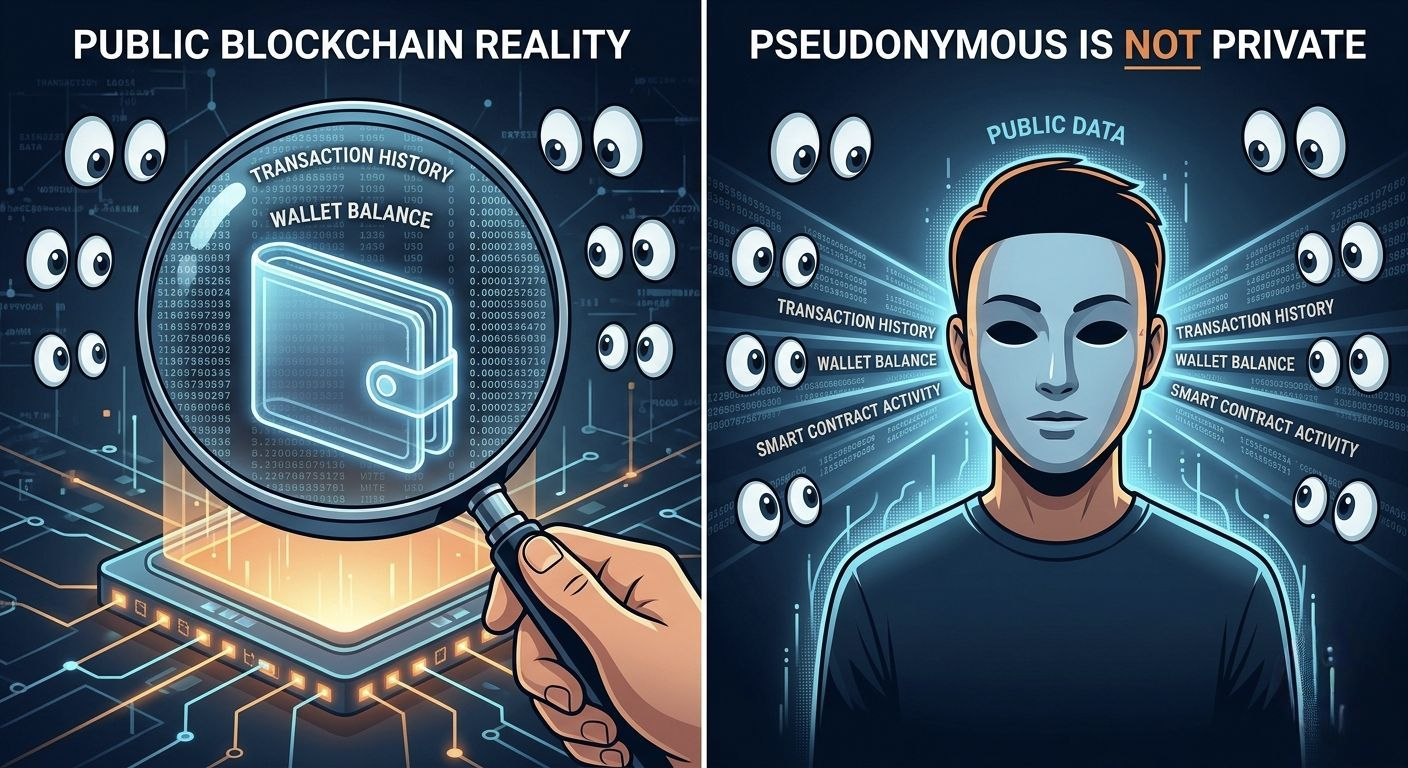
Everyone talks about blockchain like it’s this grand solution to trust. Decentralized. Transparent. Unstoppable. Sounds amazing. And yeah, it is amazing… until you realize that everything you do on most blockchains is basically public forever.
That’s not a small detail. That’s a big one.
Your transactions? Visible. Your wallet balance? Visible. Your smart contract activity? Visible. People pretend pseudonymous equals private. It doesn’t. Anyone who’s spent five minutes looking at blockchain analytics tools knows that.
And that’s exactly the problem Midnight Network is trying to fix.
Here’s the thing. Blockchain started with Bitcoin. Satoshi built a system where nobody had to trust a bank. Beautiful idea. Then Ethereum showed up and said, “Cool, now let’s program money” Smart contracts changed everything. DeFi exploded. NFTs went crazy. DAOs popped up everywhere.
But the core structure stayed the same. Radical transparency.
Which works great… until it doesn’t.
Imagine running a hospital and putting patient billing logic on Ethereum Or running a trading desk where your competitors can literally see your positions in real time Or executing supply chain agreements that reveal your vendor relationships to the entire planet.
Yeah. Not happening.
This is where Midnight gets interesting.
The people building Midnight looked at this whole setup and basically said: why are we forcing everyone to choose between decentralization and privacy? Why can’t you have both?
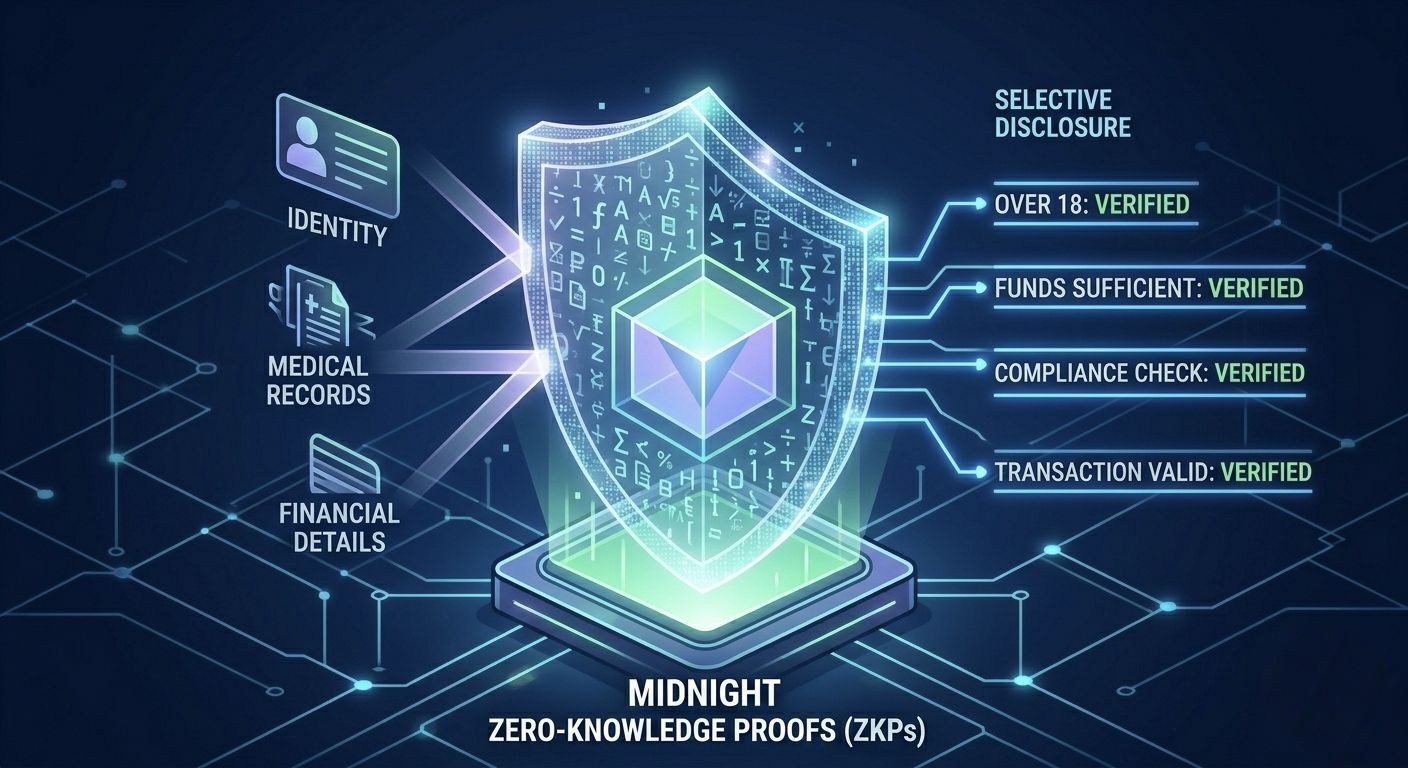
So they built Midnight around zero-knowledge proofs. Not as an add-on. Not as a plugin. As the foundation.
If you’ve never wrapped your head around zero-knowledge proofs, don’t worry. They sound more intimidating than they are. The idea is simple: you can prove something is true without revealing the actual data behind it.
You can prove you’re over 18 without revealing your birthdate.
You can prove you have enough funds without showing your entire balance.
You can prove a transaction followed the rules without exposing every detail.
That’s powerful. Like quietly powerful.
Most blockchains say “Show everything so we can verify it.”
But Midnight says “Prove it mathematically and keep the sensitive stuff hidden.”
That shift matters more than people realize.
Now here’s where some nuance comes in. Midnight isn’t trying to be some fully anonymous, black-box privacy coin. It doesn’t hide everything by default like Monero. Instead, it pushes something called selective disclosure. I actually like that phrase. It’s practical.
You decide what gets revealed. And to whom.
A bank could prove compliance without exposing customer identities. A company could prove supply chain ethics without revealing its suppliers. A user could verify eligibility without exposing personal data.
That’s not secrecy for secrecy’s sake. That’s controlled visibility.
And honestly? That’s what real-world adoption needs.
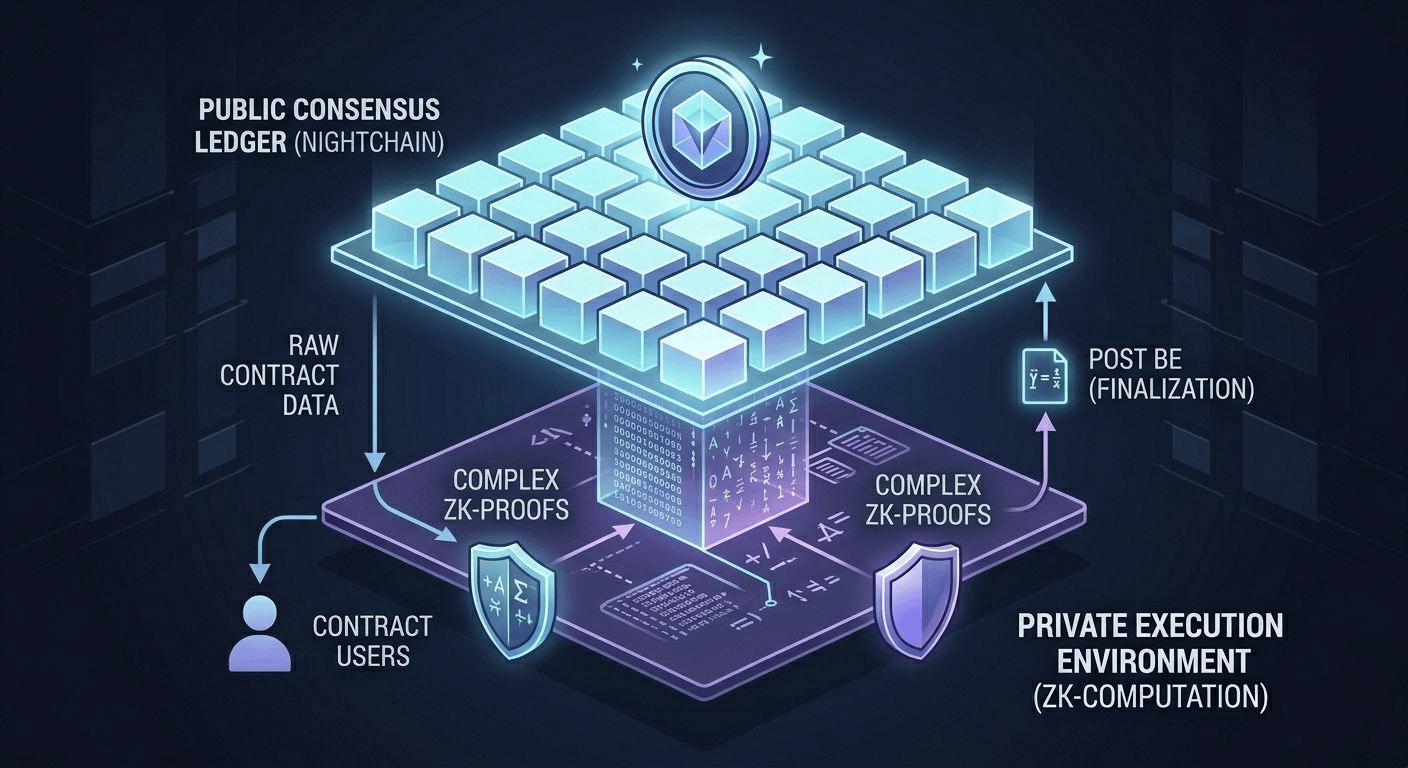
Technically Midnight runs on a dual-state model. There’s a public ledger that handles consensus and governance. That’s where the NIGHT token lives. Then there’s a private execution environment where sensitive smart contract computation happens off-chain.
So instead of blasting all contract data to the world, the system generates a zero-knowledge proof that the computation happened correctly. It posts the proof on the public ledger. Not the raw data. Just the proof.
It works. Period.
I’ve seen this before projects trying to bolt privacy onto public chains. It usually gets messy. Midnight didn’t bolt it on. They built around it.
Now let’s talk about the token structure because people always care about that.
Midnight uses two tokens. NIGHT handles governance and staking. It secures the network. It also generates DUST, which acts as a shielded resource used for executing transactions and smart contracts.
DUST isn’t just another tradable coin. It functions more like a renewable operational fuel tied to NIGHT holdings.
That separation actually makes sense. A lot of networks mix governance, fees, and speculation into one token and then wonder why volatility causes chaos. Midnight splits responsibilities. Clean design.
But here’s where things get tricky.
Zero-knowledge proofs aren’t cheap computationally. They’ve gotten way more efficient over the years ZK-SNARKs especially but generating proofs still takes serious engineering discipline. Scaling private smart contracts globally? That’s hard. Really hard.
People don’t talk about that enough.
And then there’s regulation. Privacy tools make regulators nervous. Every time someone builds strong cryptography someone in a government office starts sweating. Fair or not, that’s reality.
Critics will say privacy equals money laundering. They always do.
But Midnight’s selective disclosure model gives it a stronger argument. It doesn’t remove auditability. It gives control over when and how disclosure happens. That’s a big difference from full anonymity.
Still, perception matters. Adoption depends on whether regulators see Midnight as a compliance tool or a threat.
Now let me get personal for a second.
Every time I log into some financial dashboard and see how much of my data lives in centralized systems, I get that uncomfortable feeling. You know the one. The who else can see this? feeling. Blockchain promised self-sovereignty. But then it exposed everything publicly.
That contradiction always bothered me.
Midnight feels like someone finally admitted the problem out loud.
The future of blockchain isn’t just about faster TPS or cheaper gas. It’s about making decentralized systems usable for real businesses. Healthcare. Finance. Identity systems. Governments.
You can’t ask those sectors to operate on fully transparent rails. They won’t. They shouldn’t.
And zoom out for a second. Data protection laws keep tightening globally. AI systems need secure collaboration across organizations. Institutions want decentralized settlement but can’t leak proprietary information.
Zero-knowledge cryptography keeps popping up in serious infrastructure conversations. That’s not hype. That’s direction.
Could Midnight fail? Of course. It’s still evolving. Ecosystems take time. Developers need to adopt the Compact language. Enterprises need confidence in stability. Network effects don’t magically appear.
But the problem Midnight addresses isn’t going away.
Blockchain without privacy hits a ceiling. Sooner or later.
And here’s my honest take privacy shouldn’t feel like a bonus feature. It should feel default. If Midnight manages to make programmable privacy intuitive and scalable, it won’t just be another chain. It’ll be infrastructure.
That’s a big “if” sure.
But the philosophical shift already happened. Early crypto obsessed over decentralization. Then everyone obsessed over programmability. Now the conversation centers on privacy and data ownership.
About time.
At the end of the day Midnight isn’t just building a chain. It’s making a statement verification doesn’t require exposure. Trust doesn’t require oversharing. And users shouldn’t sacrifice dignity for decentralization.
Honestly? That feels like the direction this space should’ve taken years ago.
We’ll see if they pull it off.
But at least someone’s finally asking the right question.