I have a simple test for any blockchain project now. I’ve used it for years, ever since the second or third “this changes everything” pitch stopped impressing me.
Would I bother explaining this to a friend who isn’t in crypto?
Not a trader. Not a developer. Just someone normal—runs a business, pays bills, maybe uses an app or two and doesn’t care what chain it’s on.
If the answer is no, I usually stop there.
Because most of this industry still talks to itself.
So let me try that test with Midnight.
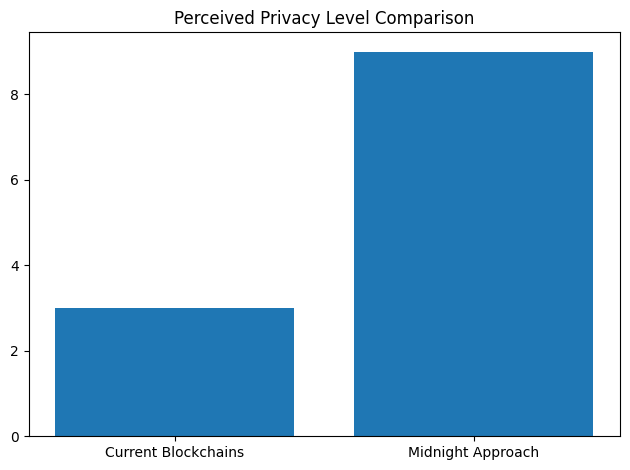
Here’s what I’d say over coffee: imagine doing your banking on a giant public screen in the middle of a bazaar. Not metaphorically—literally. Anyone can glance over and see your balance, your transactions, maybe even piece together your habits if they’re patient enough.
That’s basically how most blockchains work today.
And every time someone tells me, “This is the future of finance,” I have to pause for a second.
Because… really?
Try explaining that to a shop owner or a small business operator. I’ve done it. They don’t argue. They just lose interest. Quietly.
That’s the part people miss. Not rejection—indifference.
Midnight, at least, seems to understand this problem. It’s not trying to win on speed charts or fee comparisons. It’s addressing something more basic, almost embarrassingly obvious in hindsight: people don’t want their financial lives exposed.
It’s strange that this even needs fixing.
I’ve been around long enough to remember when everyone thought transparency was the ultimate virtue in blockchain. “Don’t trust, verify,” and all that. It sounded good. It still does, in theory.
But somewhere along the way, we confused transparency with oversharing.
Midnight’s pitch is actually pretty simple, once you strip away the technical wrapping: prove what you need to prove, and keep everything else private.
That’s it.
Yes, it uses zero-knowledge proofs. And yes, that term gets abused constantly—thrown into decks and tweets like seasoning. But the practical idea is grounded.
You don’t show your bank statement. You prove you can pay.
You don’t reveal your identity. You prove you qualify.
We already do this in the real world, all the time. Showing a boarding pass without explaining your entire travel history. Passing a background check without handing over your life story.
Blockchain, for whatever reason, forgot how normal systems behave.
And now it’s trying to relearn.
I remember a conversation a couple of years ago with a team building on Ethereum during the post-DeFi boom—right around when everyone thought DeFi would eat traditional finance overnight. They had a solid product, real clients lined up. Then reality hit.
Their clients didn’t want their transaction flows visible. Not to competitors. Not to analysts. Not to anyone.
The project didn’t pivot. It just… stalled.
That story isn’t unique. It’s actually pretty common, just not something people like to admit publicly.
Which is why Midnight’s focus feels grounded. Not exciting—grounded.
But let’s slow down for a second.
Because I’ve also seen this movie before.
Privacy coins had their moment. Then regulators stepped in and things got messy. Mixers tried to fill the gap—same story, different ending. Even projects promising “confidential computing” quietly lost momentum when the technical reality caught up with the marketing.
So no, Midnight isn’t the first to notice this problem.
The difference—if there is one—will come down to execution. It always does.
And this is where I get cautious.
Zero-knowledge systems are not easy to work with. They look elegant in theory. In practice, they can be a headache. Heavy computation, tricky implementation, limited tooling. I’ve spoken to developers who were genuinely excited about ZK, right up until they had to build something real with it.
Then the enthusiasm… softened.
So the question isn’t whether Midnight’s idea makes sense. It does.
The question is whether they can make it usable for people who don’t live and breathe cryptography.
Because if they can’t, this ends the same way a lot of ambitious Layer 1s end: great concept, limited traction, slow fade.
I’ve lost count of how many “Ethereum killers” I’ve covered over the years. Most didn’t fail dramatically. They just became irrelevant, one quarter at a time.
Midnight doesn’t position itself that way, which I actually respect. It’s not trying to replace everything. It’s trying to fix one thing.
Privacy that isn’t an afterthought.
And if it works—even partially—it changes how applications get built.
Banks could verify compliance without exposing customer data. Not theoretically—practically.
Apps could confirm identity without storing sensitive information. Which, frankly, would avoid a lot of the data breach headlines we’ve become numb to.
Businesses could operate on-chain without broadcasting their internal strategy to anyone curious enough to look.
That’s not flashy. No one’s tweeting about it at midnight.
But it’s useful.
And useful tends to win, eventually.
There’s a broader point here that I keep coming back to, especially after watching this space for over a decade: the best technology doesn’t stay in the spotlight.
It fades.
Email isn’t exciting. HTTPS isn’t exciting. Nobody wakes up thinking about encryption protocols. But remove them for a day and everything breaks.
That’s the future privacy in blockchain needs.
Quiet. Reliable. Almost invisible.
Midnight seems to be aiming in that direction. At least on paper.
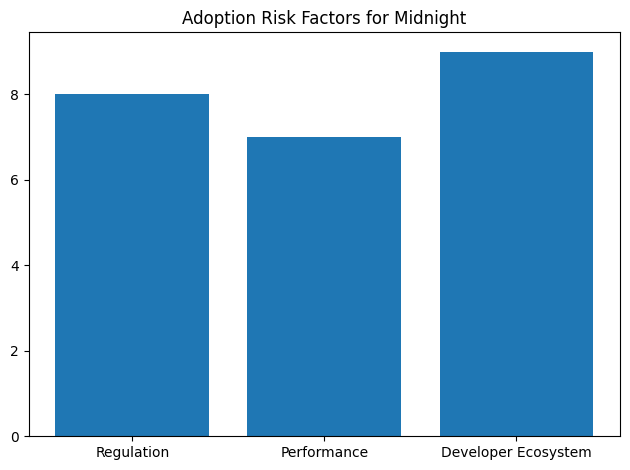
But there are still real risks.
Regulation is one. Privacy makes governments uneasy—it always has. Even if Midnight leans toward selective disclosure instead of full anonymity, it’s still operating in a gray area that can shift quickly.
Performance is another. Generating these proofs isn’t cheap. If users feel even a slight delay or added cost, they’ll notice. And they won’t wait around out of principle.
They never do.
And then there’s the ecosystem problem. You can build something technically sound and still fail if developers don’t show up. I’ve seen better tech lose to better tooling more times than I can count.
So yes, I’m cautiously interested.
Not excited. Not convinced. But interested.
Because for once, the pitch isn’t about doing more—it’s about exposing less.
And if Midnight actually delivers on that, you won’t hear people talking about zero-knowledge proofs at all.
You’ll just notice something subtle.
Using blockchain apps doesn’t feel risky anymore. Or awkward. Or overly revealing.
It just feels… normal.
And maybe that’s the point.
If this works, Midnight won’t feel special.
It’ll feel boring.
And after everything I’ve seen in this industry, that might be the most convincing signal there is.
@MidnightNetwork #night $NIGHT