
Sign Protocol is redefining how identity and reputation function in the Web3 ecosystem by introducing a decentralized, user-owned credentials layer. Unlike traditional platforms where user profiles are controlled and stored by centralized entities, Sign Protocol enables individuals to build a portable, on-chain identity that they fully own and manage.
This identity is constructed through attestations—verifiable digital records that represent a user’s achievements, roles, contributions, and participation across various platforms. These attestations act like trusted credentials or “badges,” providing proof of a user’s history and reputation without relying on intermediaries. As a result, users can establish a credible and transparent digital presence that is both secure and tamper-resistant.
A key component of this system is the decentralized social graph. In this model, relationships, interactions, and credentials are interconnected and stored on-chain, forming a dynamic and verifiable network of user activity. Rather than relying on self-reported information, users can showcase real engagement through assets and actions such as NFT ownership, DAO memberships, governance participation, and event attendance. This creates a richer and more authentic representation of identity in Web3.
For developers and projects, this opens up new possibilities for user engagement and personalization. Instead of collecting sensitive personal data or maintaining centralized databases, applications can utilize on-chain credentials to determine access, assign roles, or distribute rewards. For example, a project can grant exclusive features to users who hold specific NFTs or have contributed to a DAO, all without requiring intrusive data collection practices.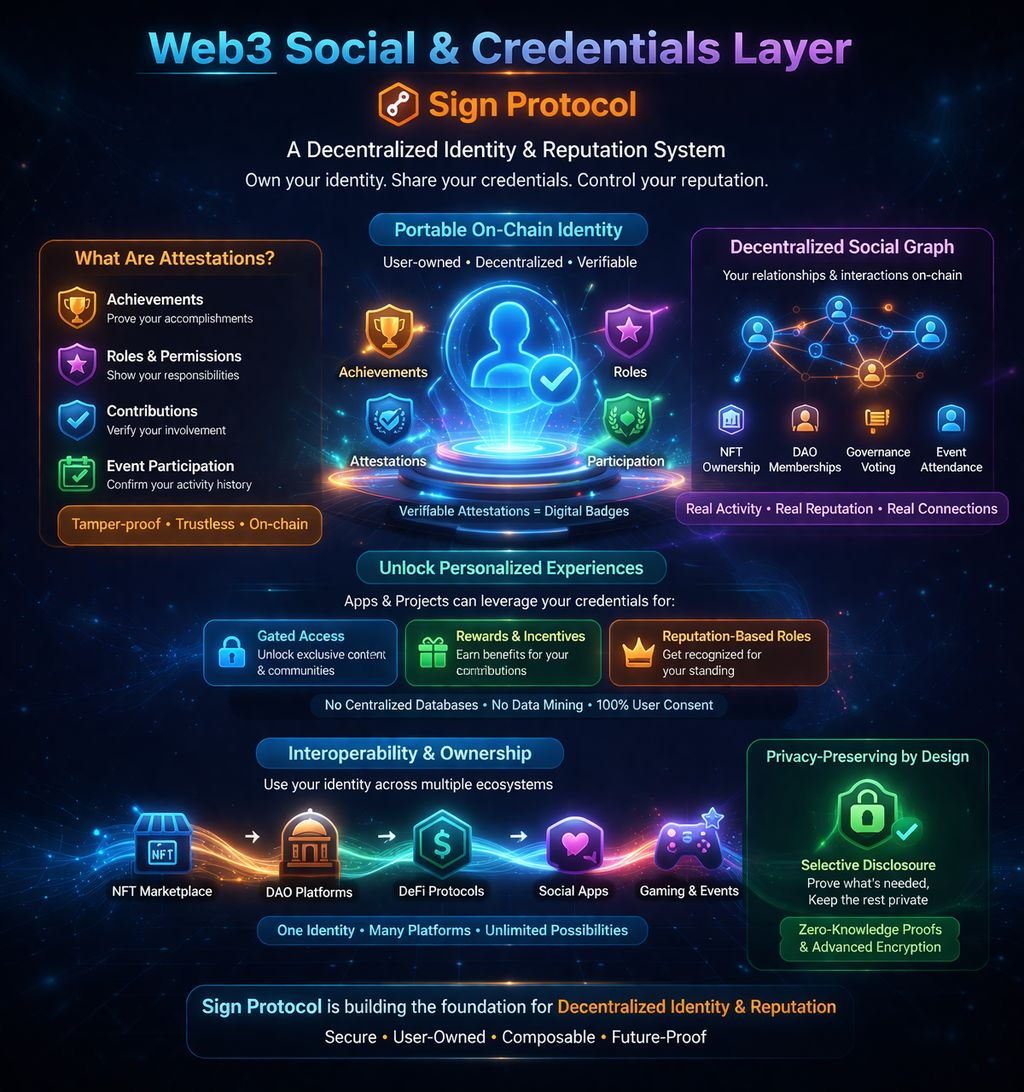
One of the most powerful aspects of Sign Protocol is its emphasis on interoperability. User credentials and reputation are not confined to a single platform or ecosystem. Instead, they can be seamlessly transferred and recognized across multiple applications, networks, and communities. This ensures that users do not need to rebuild their identity from scratch when they move between platforms.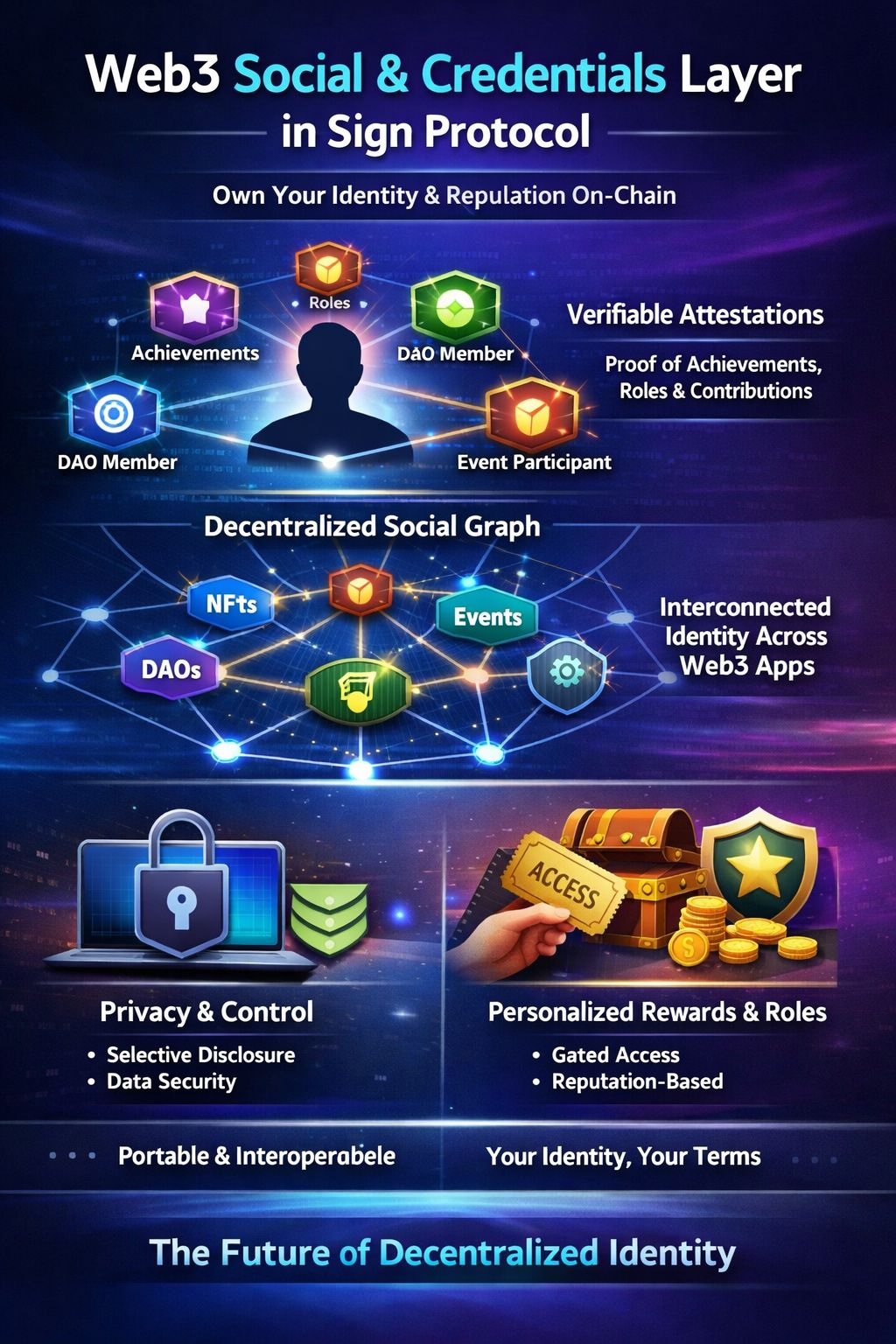
In addition to interoperability, privacy is a fundamental feature of the system. Through the use of advanced cryptographic techniques, users can selectively disclose specific information about their identity while keeping other details private. This allows individuals to prove certain attributes or qualifications without exposing their entire data history, striking a balance between transparency and confidentiality.
Ultimately, Sign Protocol represents a foundational shift toward a more open, secure, and user-centric digital identity framework. By combining verifiable credentials, decentralized social graphs, interoperability, and privacy, it empowers users to take full control of their reputation while enabling developers to build more trustworthy and efficient applications. As Web3 continues to evolve, this credentials layer is poised to play a critical role in shaping the future of decentralized identity and trust.
