
When I first looked at @MidnightNetwork , what caught me wasn’t the promise of privacy. We’ve heard that before. It was the quieter claim underneath it, this idea of being “regulation-ready” while still protecting individual rights. That tension usually breaks systems. Here, they’re trying to make it the foundation.
Right now, that matters more than ever. In the past 18 months, regulators across the US, EU, and Asia have moved faster than most crypto infrastructure expected. The EU’s MiCA framework alone covers over 450 million people, and it doesn’t just suggest compliance, it enforces it. At the same time, privacy tools like mixers have faced shutdowns or sanctions. So you end up with a strange gap. Builders want to innovate, users want privacy, and regulators want visibility. Most networks pick a side. Midnight is trying to sit in the middle.
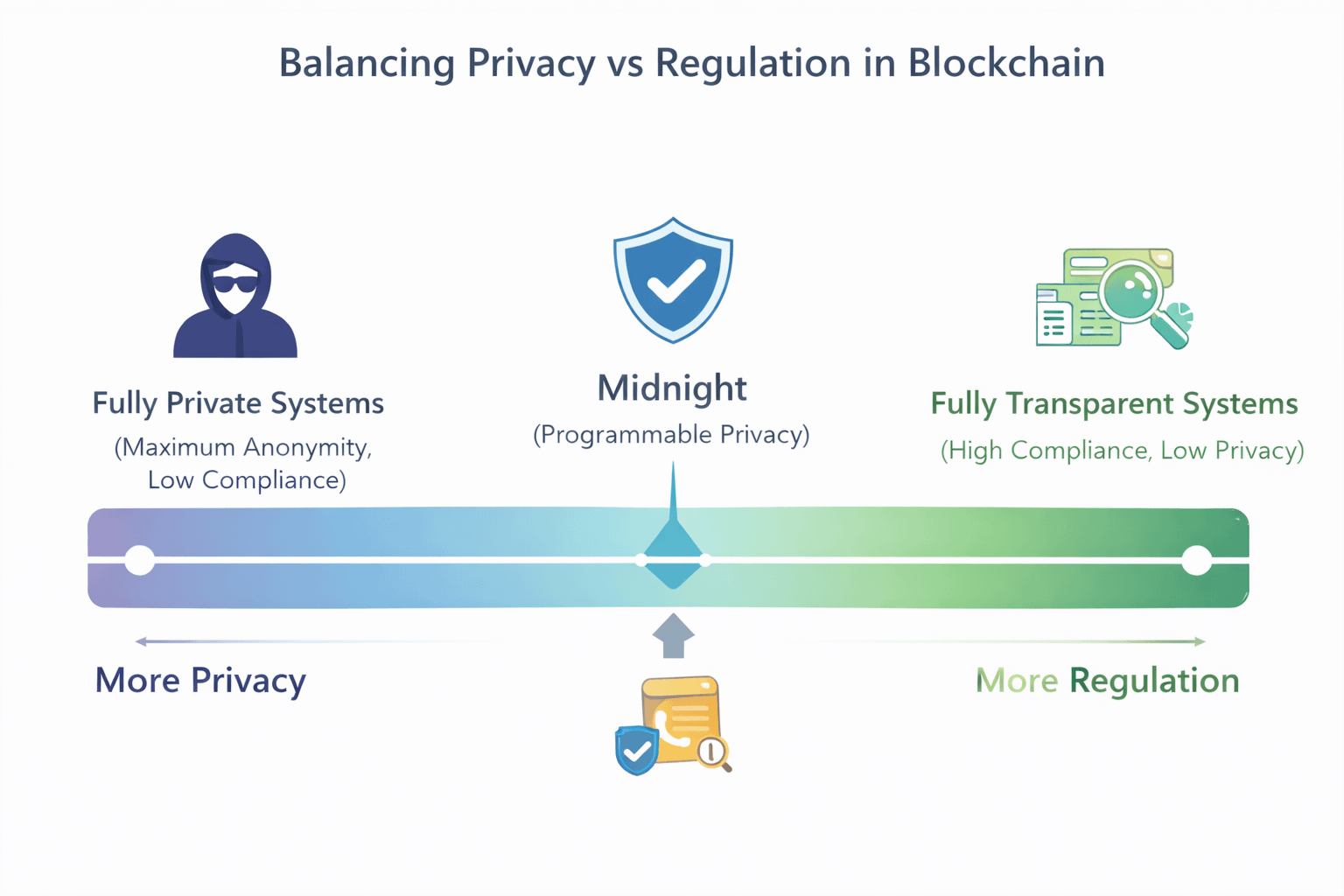
On the surface, it looks like another privacy-focused blockchain. Zero-knowledge proofs, selective disclosure, all the familiar pieces. But what’s happening underneath is more deliberate. Instead of making everything hidden by default, Midnight introduces programmable privacy. That means data can stay private until it needs to be revealed, and even then only the necessary parts come forward. Think of it like showing your age to prove you’re over 18 without revealing your birthday. The math proves the claim without exposing the detail.
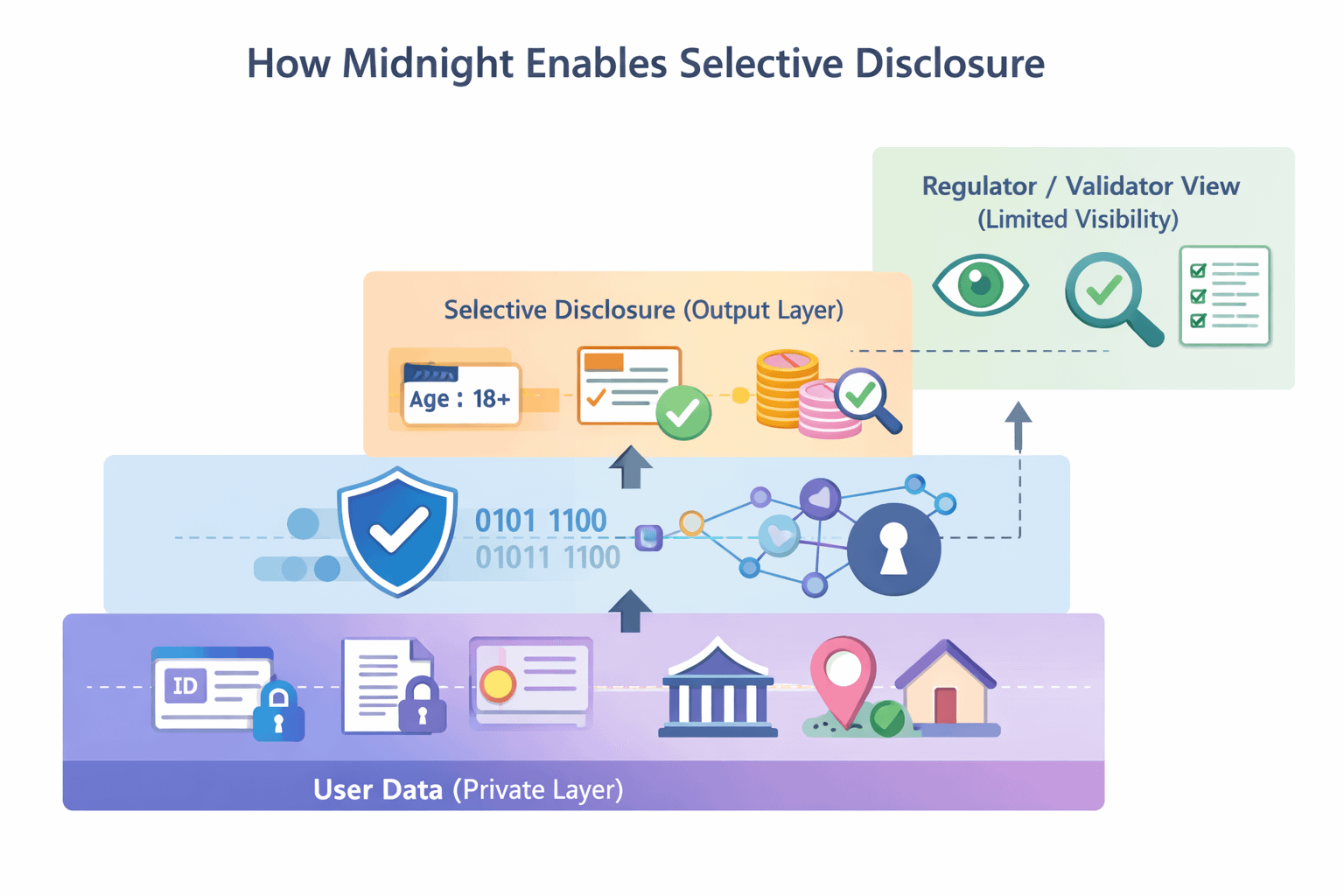
That small shift changes how institutions can interact with blockchain systems. Banks, for example, operate under strict reporting requirements. They need to verify identities, track transactions, and respond to audits. A fully anonymous system doesn’t work for them. But a system where privacy can be selectively unlocked, where compliance is built into the logic itself, starts to look usable.
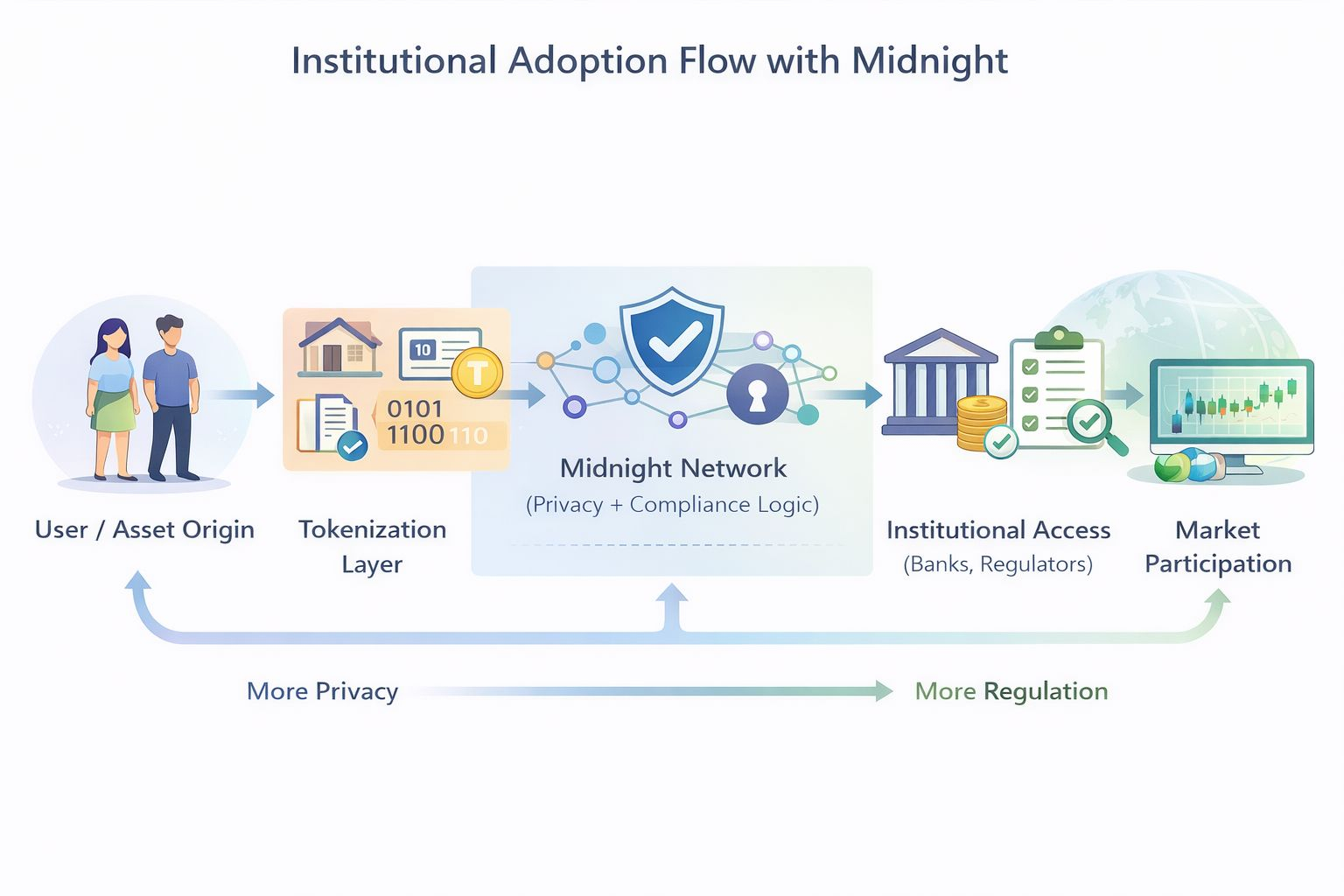
Early signs suggest this is where enterprise interest is moving, especially as tokenized assets continue to grow. The tokenization market is already estimated in the trillions if you include real estate and bonds, but it stalls without compliant infrastructure.
That momentum creates another effect. Developers don’t just build for ideology, they build where users and capital meet. If a network can offer both privacy and a path to regulatory acceptance, it lowers the risk of building something that gets shut down later. That’s not a small concern. In 2023 alone, several major crypto projects either pivoted or exited markets due to regulatory pressure. The cost of being wrong is high.
Meanwhile, there’s a deeper layer that’s easy to miss. Privacy isn’t just about hiding information. It’s about control. Midnight’s model suggests that users can decide when and how their data is shared, rather than surrendering it entirely to platforms or exposing it entirely to the public. That sits somewhere between Web2 and traditional crypto. Not fully decentralized in the purist sense, but not extractive in the way most platforms operate today.
Of course, this approach carries its own risks. Selective disclosure depends heavily on trust in how the rules are written and enforced. If the system leans too far toward compliance, it could feel like surveillance with extra steps. If it leans too far toward privacy, regulators may still push back. That balance is not something you solve once. It has to be maintained, adjusted, and tested under pressure.
Understanding that helps explain why Midnight is positioning itself less as a rebellion and more as an infrastructure layer. It’s not trying to replace the system. It’s trying to fit into it without losing the core values that brought people to blockchain in the first place.
Zooming out, this reflects a broader shift in the space. The early era was about proving what was possible. The current phase is about proving what’s acceptable. Networks that survive won’t just be technically sound, they’ll align with legal and social realities. Privacy, in that sense, is no longer absolute. It’s negotiated.
What Midnight is betting on is that the future of crypto won’t be fully open or fully closed. It will be conditional, context-aware, and quietly governed by code that understands both sides.
If that holds, the real innovation here isn’t privacy itself. It’s making privacy something institutions don’t have to fear.
