
What made me stop on SignOfficial this time wasn’t the ZK layer or the sovereign narrative.
WIt was governance.
Not in the usual “vote and upgrade” sense that crypto likes to repeat, but in a way that actually feels connected to how real systems operate. Because the moment you step into government infrastructure or regulated environments, governance stops being a feature and becomes the entire foundation.
Most projects still treat it as one thing. One mechanism. One layer.
But that idea doesn’t survive contact with reality.
Sign seems to approach it differently.
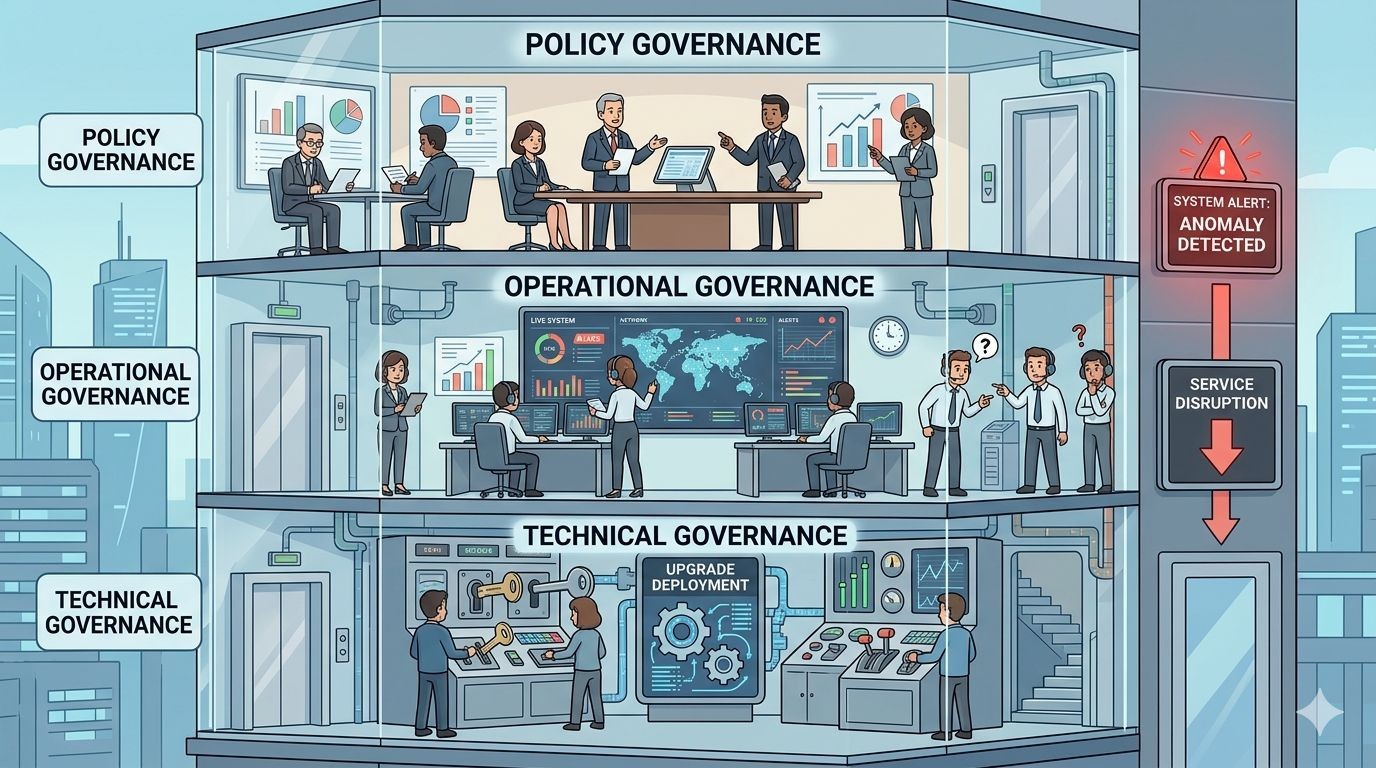
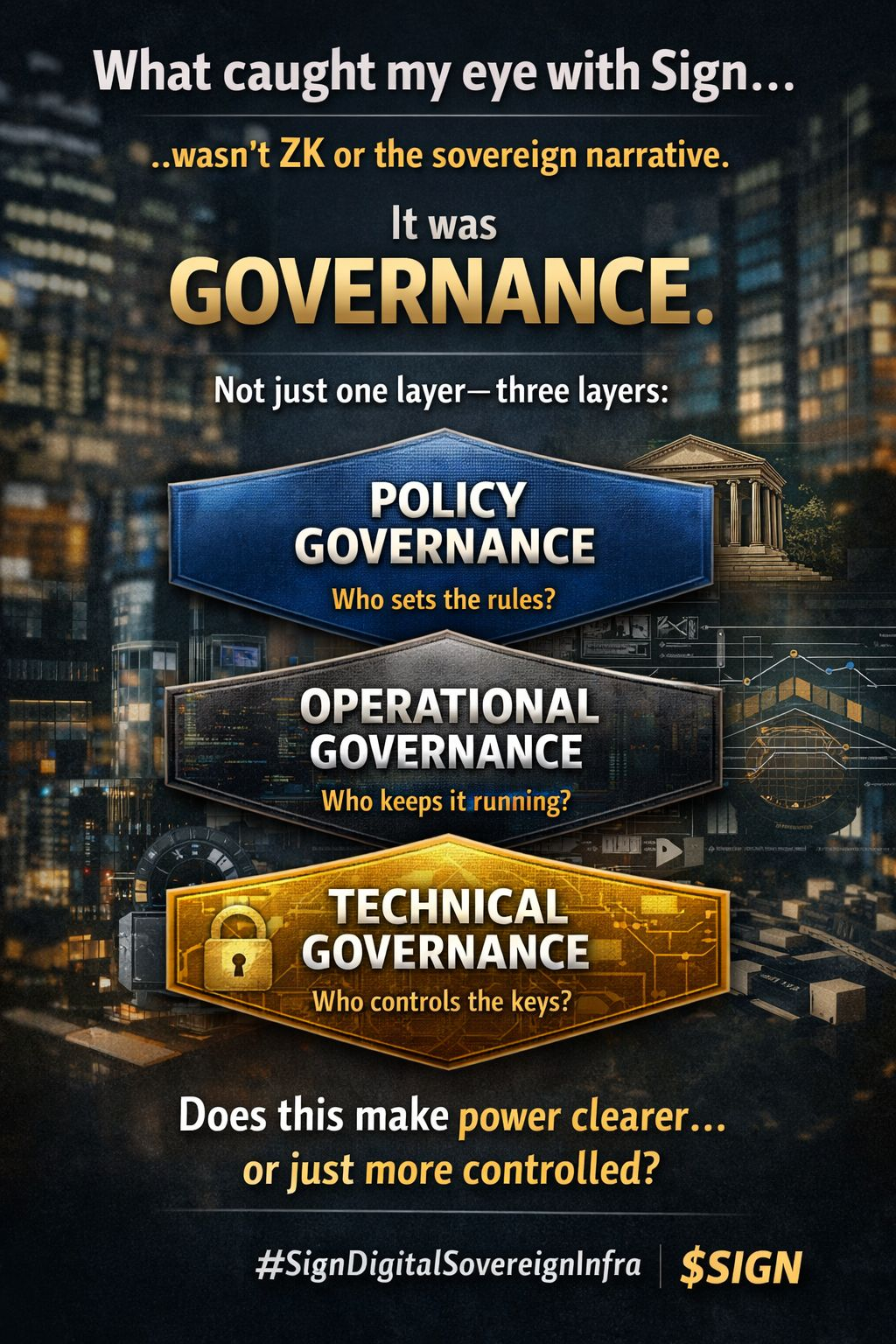
It breaks governance into three layers, and that separation is what makes it interesting. Policy governance decides what the system is allowed to do—who can participate, what rules apply, what level of privacy or compliance is required. That’s not just configuration. That’s where real authority sits.
Then there’s operational governance, which is where most systems quietly fail. Day-to-day reliability, incident handling, auditability. This is the layer that determines whether institutions can actually trust the system when something goes wrong, not just when everything is working.
And finally, technical governance—the control layer. Upgrades, key management, emergency actions. This is where power becomes visible. Because no matter how strong the design is, the ability to change the system is still a form of control.
What stands out isn’t just that these layers exist. It’s that they’re separated.
Policy decides what should happen.
Operations keep it running.
Technical governance controls how change is allowed.
That structure feels less like crypto… and more like infrastructure.
And that’s probably why it stayed with me.
Because if you’re building something meant for governments, identity systems, or financial rails, governance can’t be abstract. It has to reflect how responsibility actually works in the real world.
But that also leads to a harder question.
If governance is this clearly defined, does it make power easier to understand…
or just easier to organize?
Because in systems like this, the real test isn’t how they work when everything is smooth.
It’s who holds control when something breaks.