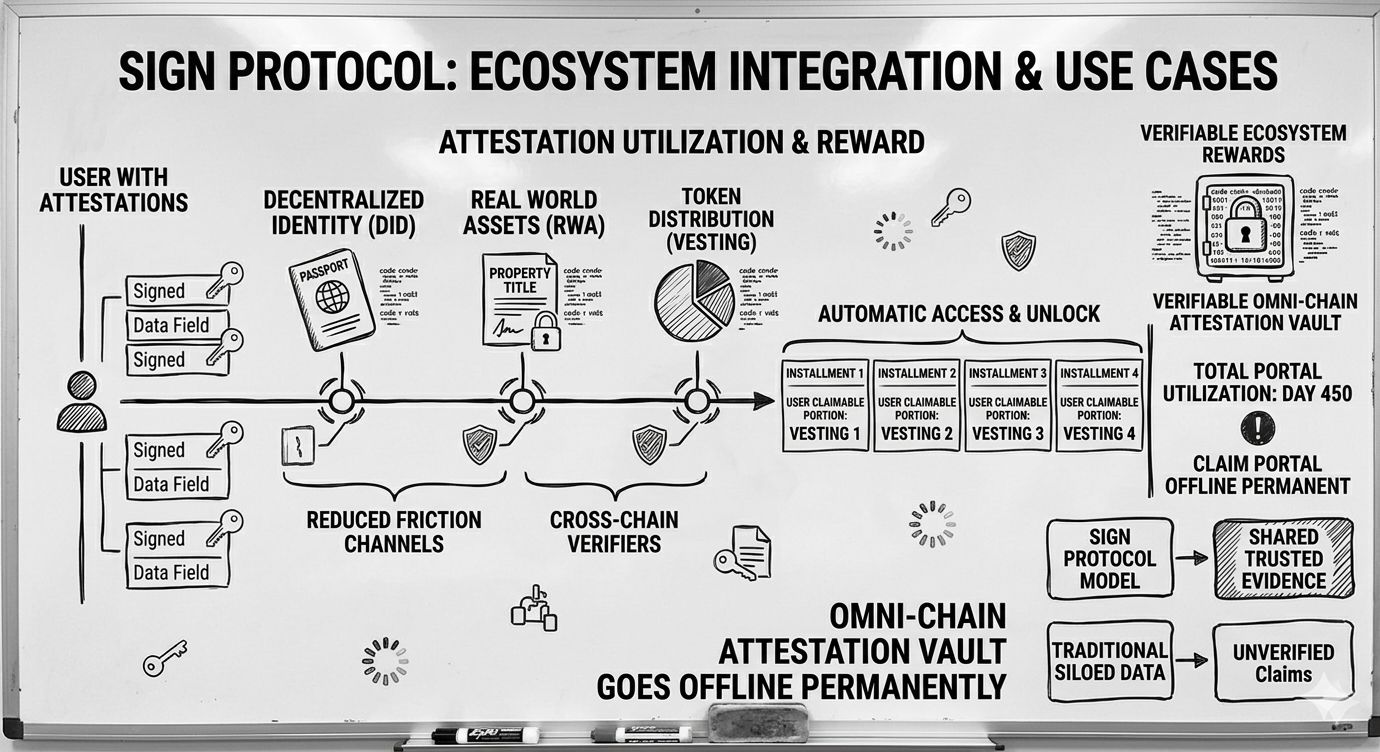
I remember the first time I realized how much of our daily life depends on trust. You sign a document, show an ID, or share your qualifications, and the other person has to believe you or chase down some central authority to check. It always felt a little fragile, like one weak link could cause everything to fall apart. That is why discovering Sign Protocol felt refreshing. It is not just another blockchain tool. It feels like a calm, practical way to make trust stronger and simpler. Here, claims about who you are, what you own, or what you have done can stand on their own, checked by anyone without needing to trust a middleman every single time.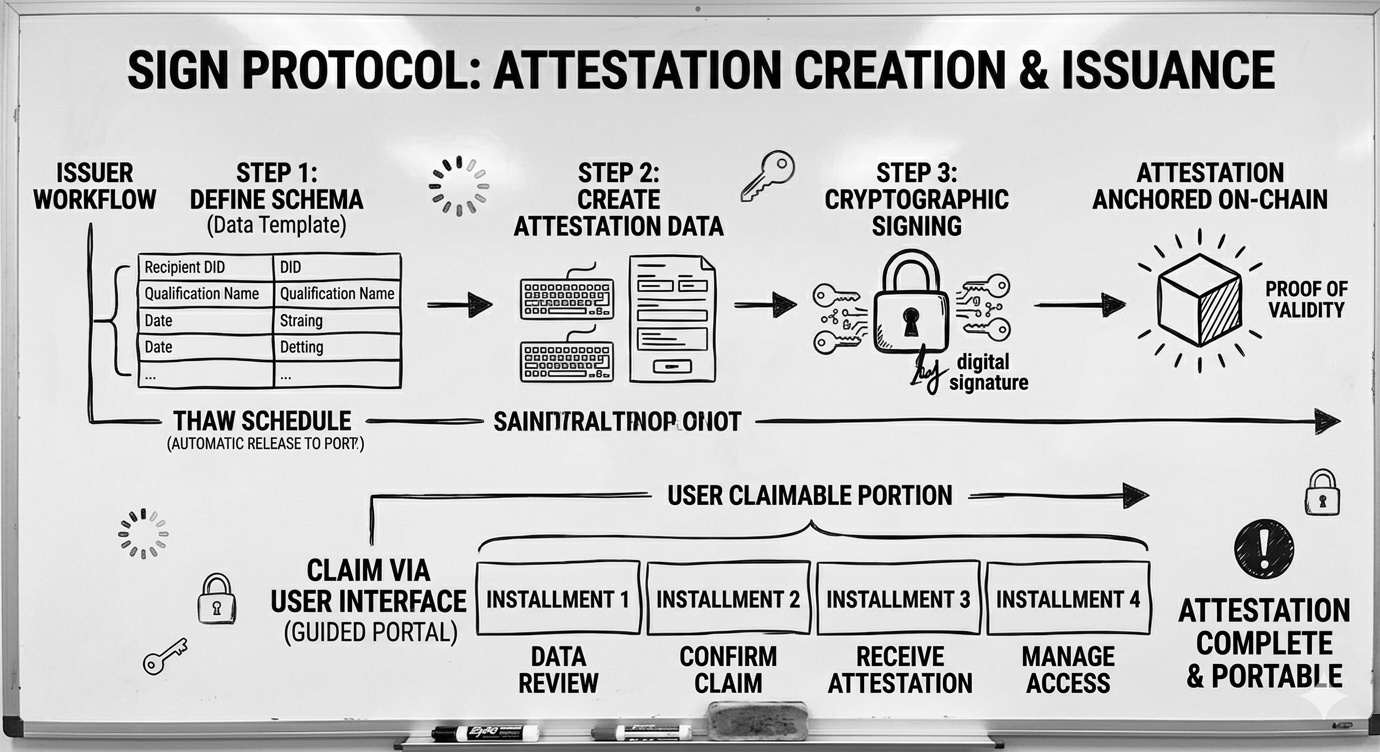
At its core, Sign Protocol is an omni-chain attestation system. In everyday language, it lets people and organizations create digital statements called attestations. These are signed with cryptography, so they carry real proof. You might attest that someone finished a course, that a piece of property belongs to a certain person, or that an event happened on a specific date. Once created, these attestations can be verified across different blockchains without starting over each time. It works on Ethereum, Solana, TON, and more. That cross-chain ability matters a lot to me. Many projects force you to choose one network, but Sign understands that real life does not stay in one place. People and data move between chains, and the system should follow naturally.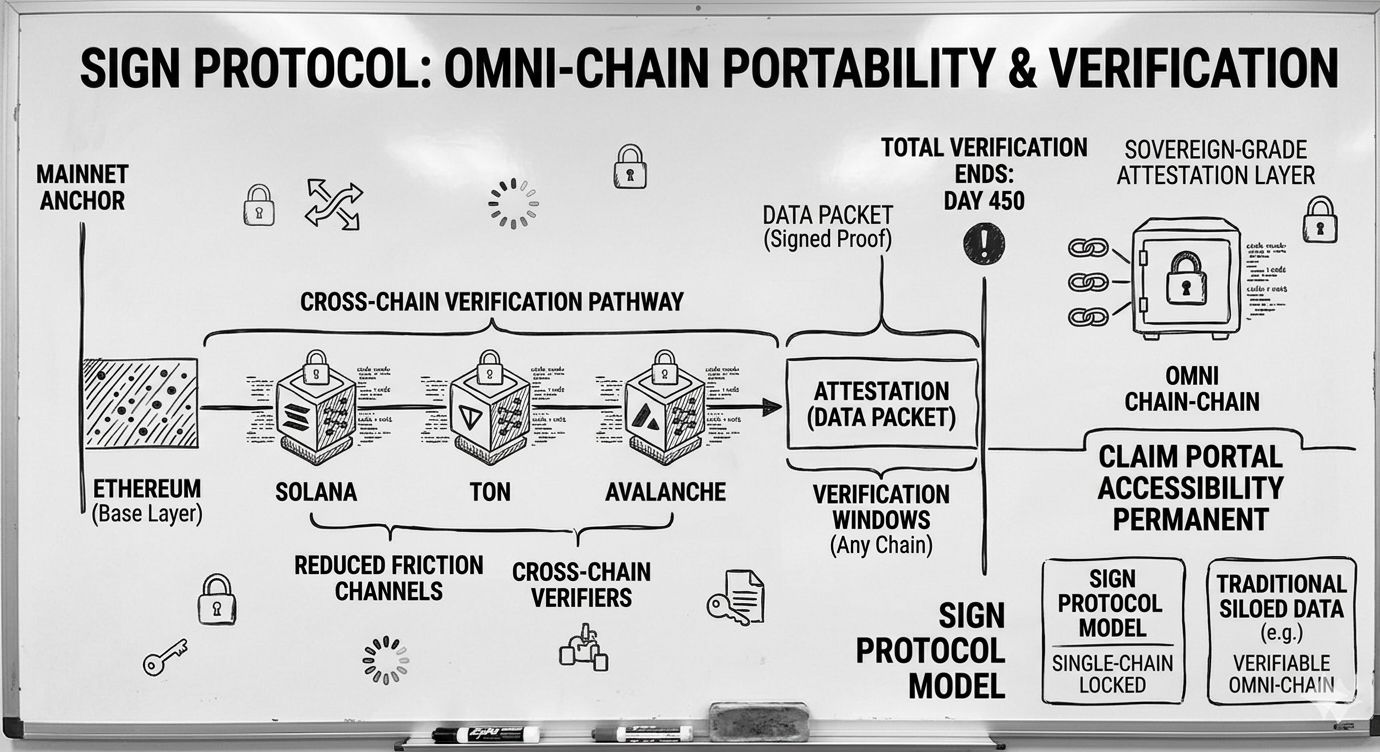
What makes this feel personal is how it changes ordinary situations. Imagine applying for a job or a loan. Usually you collect papers, get stamps, and hope the other side accepts them. With Sign Protocol, you could have a verifiable record that travels with you. The issuer creates a structured attestation using a schema, which is basically a clear template for the information. Then it gets signed and anchored on the blockchain. Anyone who needs to check can do it directly. No phone calls, no waiting for emails, no risk of fake documents. It is like having a permanent, tamper-proof receipt for important facts in your life. I have watched friends struggle with credential checks when moving countries or changing jobs. A system like this could remove so much of that hidden stress.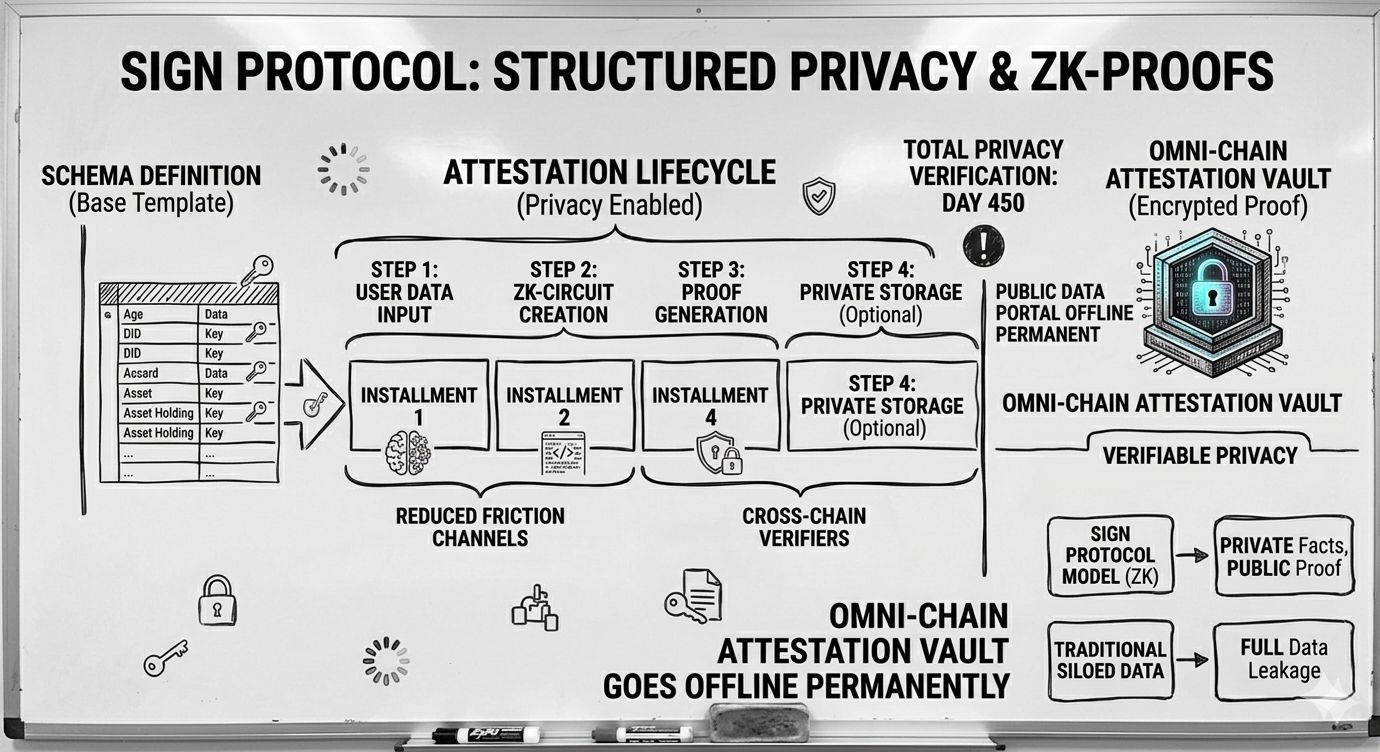
The protocol also handles privacy with care. Not every detail needs to be public, especially for personal identity or sensitive business matters. Sign uses zero-knowledge proofs, letting you prove a fact without revealing everything underneath. You can show you meet a requirement, like being old enough or holding a valid license, without sharing your exact birth date or full document. That balance between openness and protection feels right and respectful. In a time when data leaks happen too often, keeping control over what is shared gives people back a sense of dignity.
Another thoughtful part is how Sign supports bigger systems, even governments or large institutions. It is built with sovereign-grade strength, meaning it has the reliability and auditability that serious organizations need. Countries working on digital identity or secure systems can use the same attestation layer for clear, inspection-ready evidence. It is not about replacing everything at once but providing a stronger foundation. I find that reassuring. Big changes should happen carefully, with real accountability. Attestations can be stored fully on-chain or with secure off-chain anchors, allowing both transparency where it helps and privacy where it protects.
Beyond identity, the protocol connects smoothly to practical uses like token distribution. Through tools such as TokenTable, teams can manage token releases in a compliant and verifiable way. Attestations can prove who is eligible, track vesting schedules, or confirm conditions before funds move. This cuts down on arguments and builds confidence for everyone involved, whether it is a community airdrop, employee rewards, or a regulated financial program. I have seen projects face complaints about unfair distribution. When every step has signed, checkable records, those issues lose their power. The focus shifts from blind trust to shared evidence.
The way Sign thinks about schemas is especially smart. A schema is like a shared language. Everyone agrees upfront on the structure of a certain type of claim. That consistency means attestations from different issuers can be understood and compared easily. It is similar to how standard forms make paperwork smoother in daily life, but here the standard is cryptographic and works across borders and blockchains. Developers can build applications knowing the data will be reliable. For users, it means less confusion and fewer mistakes when trying new platforms.
I often pause to think about the human side. Trust has always grown through relationships, repeated interactions, and sometimes formal institutions. Blockchain attestations do not remove that human part. They simply reduce the unnecessary friction and doubt that appear when distance or scale increases. When you can verify a claim quickly and privately, conversations move forward with more openness. Partnerships form more easily. Opportunities reach people who might have been overlooked because their credentials were hard to confirm. There is a gentle hope in that idea, one that honors both technology and the people using it.
Of course, no system is perfect by itself. Sign Protocol still relies on responsible issuers. If someone creates a false attestation, the signature may be valid but the truth underneath could be wrong. The protocol makes verification possible, but it does not guarantee honesty. That duty remains with the people and organizations involved. What it does offer is a clear record that can be audited later if questions come up. In that way, it encourages better behavior over time. Knowing your attestation can be examined by anyone adds a layer of care when making claims.
Looking forward, the possibilities feel grounded. Education credentials could move smoothly between schools. Supply chains could prove where goods came from without piles of paperwork. Decentralized communities could reward contributions based on real participation. Real-world assets, from property titles to carbon credits, could gain stronger digital forms. Each use builds on the same simple idea: turn a claim into something provable, portable, and private when needed. The omni-chain design means none of this has to be limited to one technology or one group. It invites wider adoption without forcing everyone onto the same road.
What stays with me most is the calm focus on evidence. In a noisy digital world full of unverified posts, deepfakes, and conflicting stories, having a shared layer for verifiable facts offers quiet stability. It does not promise to fix every trust problem, but it gives tools to handle daily ones with more clarity and less doubt. For developers building new apps, it lowers the barrier to trustworthy features. For ordinary people, it can make dealings with institutions, employers, or online platforms feel fairer and less tiring.
I have thought about how Sign Protocol might have changed moments in my own life. Times when I waited weeks for background checks or struggled to prove past work to a new client. Small frustrations that build up. Systems that prioritize verifiable attestations do not replace human judgment, but they free that judgment to focus on what really matters instead of chasing papers or doubting sources. That feels like meaningful progress, the kind that respects both innovation and everyday reality.
As more projects and organizations explore this, the network effect can grow naturally. Each new attestation adds to a web of reliable information. Each verified claim strengthens the whole. It is not loud or flashy, but it is steady and sincere. In the end, Sign Protocol is about making trust less of a leap of faith and more of a shared, checkable foundation. That is something worth paying attention to, not for overnight revolution, but for quietly improving the ground we all stand on when we interact, transact, and build together.