
I have started to believe that most of what we call “trust” in crypto is just confidence in a system that has not yet failed. That is not a cynical take. It is an honest one. We build these networks, we call them trustless, and then we quietly rely on the fact that most of the time, nothing goes wrong enough to expose the gap between a record and its meaning. But that gap is there. It is always there.
I have been on the wrong side of that gap more times than I want to count.
A project I was involved with had everything lined up. Capital was ready. Regulatory approvals were in place. The partners were at the table. Then someone asked for the evidence behind one of those approvals—not the approval itself, but the trail of decisions that led to it. And suddenly, weeks turned into months. Because the record existed, but the context around it had scattered across email threads, internal notes, and the fading memory of the person who originally signed off. Nothing was false. Nothing was missing. The problem was that the justification had become untethered from the claim.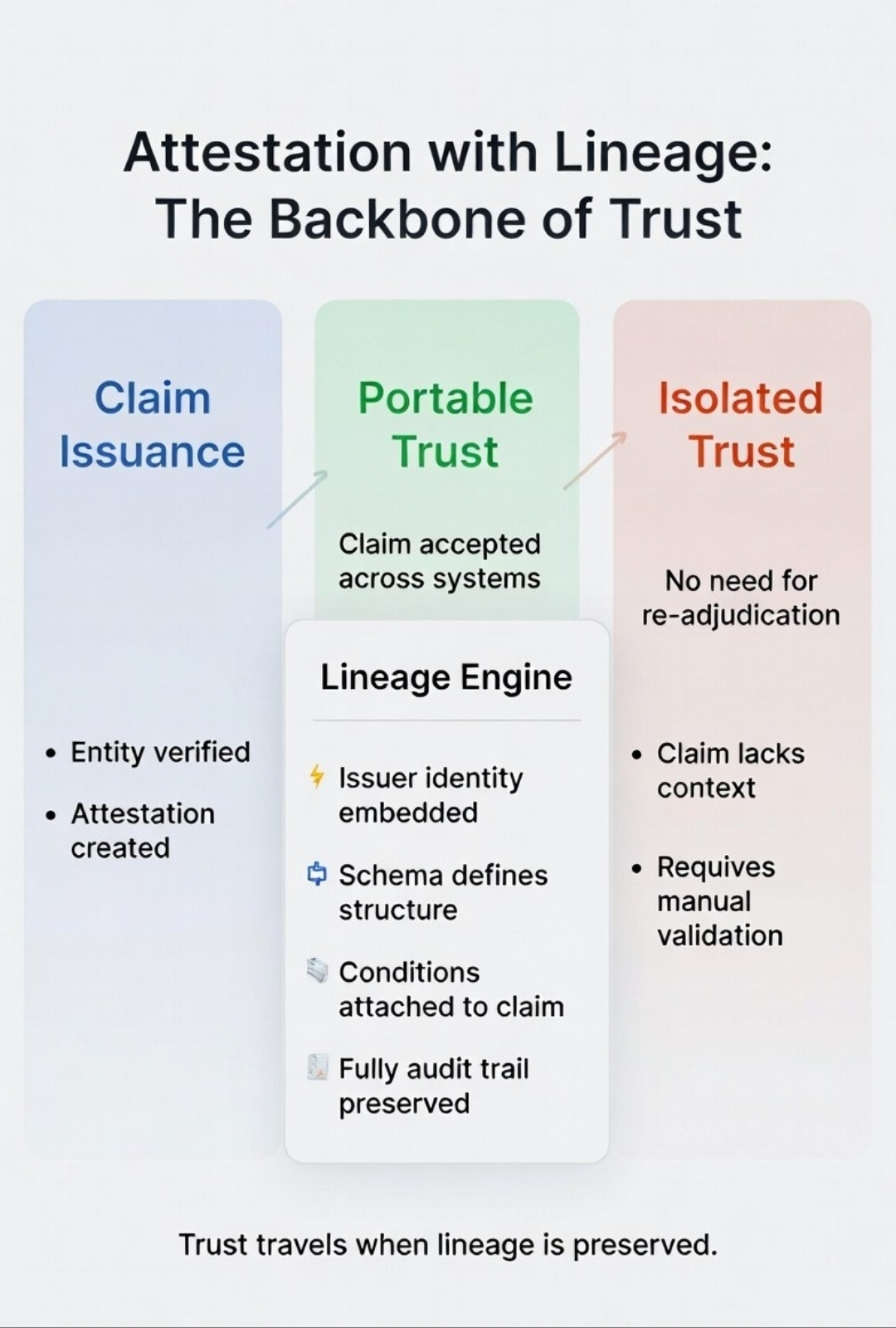
That experience changed how I look at infrastructure.
What I realized is that most systems are designed for moments, not for memory. They capture the outcome—approved, verified, authorized—but they treat the path to that outcome as disposable. And that works until it does not. Until someone downstream needs to understand not just that a decision was made, but how and why and by whom. That is when the machinery of trust stops looking like code and starts looking like a pile of broken workflows held together by goodwill and PDFs.
I have watched that fragility become structural. In finance, in cross border coordination, in the quiet spaces where real capital moves. A business gets approved in one jurisdiction, but the proof of that approval is a PDF that could have been screenshotted from anywhere. A fund passes due diligence, but the compliance trail is a folder on someone’s desktop. A user qualifies for access, but the logic of that qualification disappears the moment the person who clicked “approve” leaves the company.
We accept this because we have to. But it is not acceptable. It is a design flaw that we have normalized.
That is why Sign Protocol hits differently for me than almost anything else in this market.
I am not drawn to it because of the technology. I am drawn to it because the problem it is solving is the one that has quietly broken more systems than all the hacks and exploits combined. The problem is not that records are forged. The problem is that real records become unverifiable the moment they leave their original context. And in a world where capital, identity, and coordination increasingly cross borders, that is not an inconvenience. It is a structural liability.
What Sign Protocol is trying to do is give records a backbone. Not just a timestamp, but a lineage. Not just a stamp of approval, but the conditions, the issuer, the schema that makes that approval legible to someone who was not in the room. It is building a layer where a claim does not have to be re adjudicated every time it moves. It can carry its own justification.
That sounds abstract. But the reality is brutal. I have sat across from people who spent months trying to get a valid entity recognized in a new market. The credentials were real. The approvals were real. But because the trail was not structured, not portable, not verifiable without calling the original issuer and hoping they remembered, the whole thing stalled. And in that stall, opportunities disappeared. Trust became the bottleneck not because it was absent, but because it was trapped.
That is the kind of friction that does not make headlines. It is the slow bleed that kills momentum, wastes talent, and makes serious capital hesitate. And the industry has spent years pretending that decentralization alone solves it. It does not. Decentralization moves value. It does not move the meaning behind value unless someone builds that layer.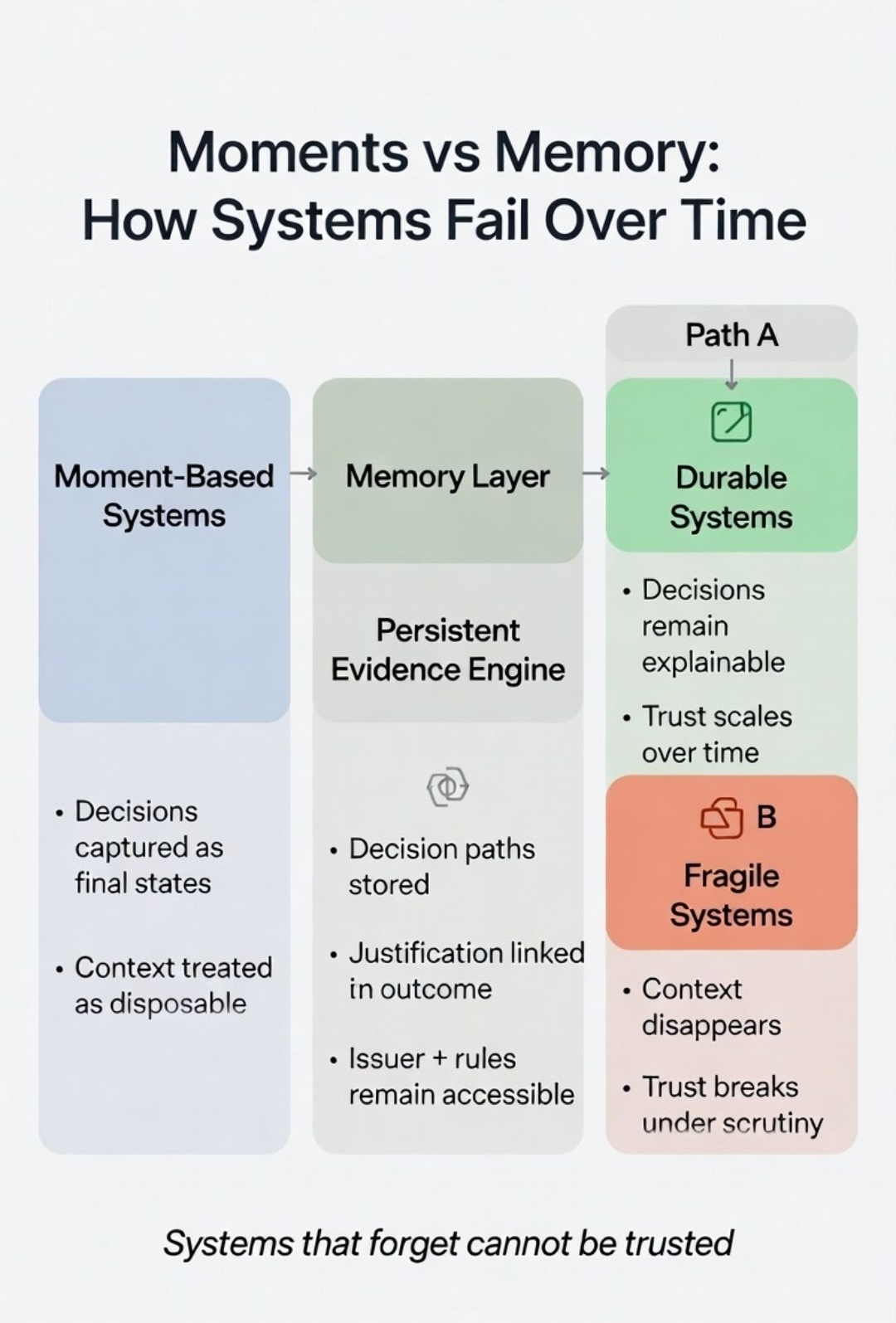
I think Sign Protocol is that layer. Or at least it is trying to be.
I do not say that because I want to hype something. I say it because I have spent enough time in the mess to recognize when a project is aiming at the right part of the stack. Not the part that gets attention. The part that gets ignored until everything else starts breaking.
The market rewards what is loud. What is simple. What fits into a tweet. Sign Protocol is none of those things. It is complex. It is infrastructural. It is the kind of project that only becomes obvious in hindsight—after a system fails because nobody could prove why a decision was made, and everyone stands around realizing that the technology was never the weak point. The record was.
I am not here to pretend this is a sure thing. Execution eats ambition every day. But I am here to say that if Sign Protocol works, it will not be because it captured a narrative. It will be because it closed a gap that has been open since the first time someone tried to trust a record that arrived without its history.
That is more valuable than most of what the market is chasing right now. And I am paying attention.