


BitcoinWorld  Pakistan Delivered a Critical US Proposal to Tehran – Reuters Reveals High-Stakes Diplomacy
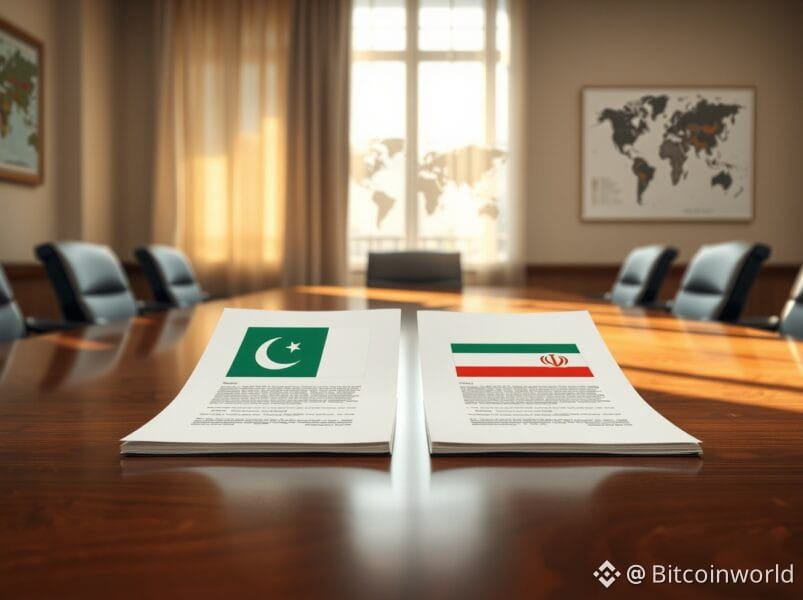
In a significant development reported by Reuters, Pakistan has acted as a diplomatic conduit, delivering a formal proposal from the United States to Iranian officials in Tehran. This move, confirmed by regional sources in early 2025, highlights Islamabad’s potential role as an intermediary in one of the world’s most complex geopolitical relationships. The nature of the US proposal remains undisclosed, but its delivery through Pakistan suggests a nuanced diplomatic strategy aimed at de-escalating regional tensions or exploring new avenues for dialogue.
Pakistan Delivered US Proposal: The Reuters Report and Its Context
According to the Reuters report, Pakistani officials facilitated the transfer of a written communication from Washington to Tehran. This action did not occur in a vacuum. For decades, Pakistan has maintained a delicate balancing act between its strategic partnership with the United States and its historical, cultural, and economic ties with neighboring Iran. The current geopolitical climate, marked by stalled negotiations over Iran’s nuclear program and ongoing regional proxy conflicts, creates a pressing need for backchannel communications. Consequently, Pakistan’s geographic and diplomatic position makes it a plausible candidate for such a sensitive mission.
Experts point to several factors that make this development noteworthy. First, it indicates a possible shift or exploration of alternative diplomatic pathways outside the formal P5+1 framework. Second, it underscores Pakistan’s own foreign policy priorities, which include stabilizing its western border and managing cross-border security concerns. Finally, the report signals that despite public posturing, behind-the-scenes diplomatic efforts between the US and Iran may be more active than publicly acknowledged.
Analyzing the US-Iran Diplomatic Landscape in 2025
The relationship between the United States and the Islamic Republic of Iran remains one of the most consequential and fraught in international affairs. Key sticking points include:
Nuclear Program: The status of the Joint Comprehensive Plan of Action (JCPOA) and Iran’s uranium enrichment levels.
Regional Influence: Iranian support for proxy groups across the Middle East.
Sanctions: The extensive US-led economic sanctions regime on Iran.
Security Concerns: Maritime security in the Strait of Hormuz and threats to US allies.
Any proposal delivered via Pakistan would likely touch upon one or more of these core issues. Diplomatic analysts suggest potential topics could range from a temporary freeze on nuclear activities to establishing new lines of communication for crisis management. The choice of Pakistan as a messenger is strategic; it is a nation with which both sides maintain working relations, however complicated they may be.
The Strategic Rationale for Pakistan’s Role
Pakistan’s involvement is not arbitrary. From a US perspective, Islamabad offers a direct line to Iranian leadership without the political baggage of using European or Gulf Arab intermediaries. For Iran, receiving a message through a neighboring Muslim state, rather than a traditional Western power, may be more palatable domestically. Furthermore, Pakistan has a vested interest in reducing Iran-US tensions, as spillover effects directly impact its own security and economic stability. This role, however, carries significant risk. Pakistan must carefully avoid appearing to take sides, lest it jeopardize its relationships with other key partners, including Saudi Arabia and China.
Historical Precedents and Regional Reactions
This is not the first instance of third-party diplomacy in US-Iran relations. Oman famously hosted secret talks that led to the 2015 nuclear deal. Switzerland often represents US interests in Iran. Pakistan’s last major foray into high-profile mediation was arguably during the Soviet-Afghan war. The regional reaction to this news will be closely watched. Key players will likely respond based on their own interests:
Country/Entity Likely Primary Concern Israel Any potential US-Iran deal that affects regional security balance. Saudi Arabia Being sidelined in diplomatic processes and the content of any proposal regarding Yemen or Gulf security. China Impact on its strategic partnership with Iran and economic interests in the region. European Union Preservation of the JCPOA framework and non-proliferation goals.
Initial statements from regional capitals have been cautious, with most adopting a “wait-and-see” approach pending further details about the proposal’s substance.
Potential Impacts and Future Scenarios
The immediate impact of this diplomatic maneuver is the simple re-establishment of a communication channel. In the medium term, several scenarios could unfold. An optimistic view holds that this could be the first step toward renewed formal negotiations, potentially reducing the risk of military confrontation. A more pessimistic assessment suggests it may merely be a procedural move to manage a specific crisis without leading to broader dialogue. The most significant impact, however, may be on Pakistan’s own international standing. Successfully facilitating even minor progress could bolster its image as a responsible regional actor capable of pragmatic diplomacy.
Conclusion
The report that Pakistan delivered a US proposal to Tehran, as broken by Reuters, illuminates the ongoing, complex dance of diplomacy between adversaries. While the contents of the proposal remain confidential, the act itself is a powerful signal. It demonstrates that diplomatic channels, however indirect, remain open. It also highlights Pakistan’s unique position as a potential bridge in a divided region. The success of this initiative will depend on the political will in Washington and Tehran, the specifics of the proposal, and Pakistan’s skill in navigating the delicate trust deficits on all sides. This development underscores a fundamental truth of international relations: even amidst public discord, the search for dialogue and de-escalation often continues quietly behind the scenes.
FAQs
Q1: What was in the US proposal delivered by Pakistan to Iran?A1: The specific contents of the proposal have not been made public. Reuters’ report confirmed the delivery of the communication but not its substance. Analysts speculate it could relate to nuclear talks, regional security, or prisoner exchanges.
Q2: Why would the US use Pakistan as an intermediary with Iran?A2: Pakistan maintains diplomatic relations with both nations and shares a long border with Iran. This provides a direct, regional channel that may be less politically charged than using traditional Western intermediaries, allowing for discreet communication.
Q3: Has Pakistan played this kind of diplomatic role before?A3: While not common in US-Iran relations, Pakistan has historical experience in regional mediation, particularly during the Soviet-Afghan war. Its current role is seen as an extension of its geographic and strategic positioning.
Q4: How have Iran and the US officially reacted to this news?A4: As of this reporting, neither the US State Department nor the Iranian Foreign Ministry has issued an official statement confirming or denying the details of the Reuters report. Both sides often keep such backchannel communications confidential.
Q5: What are the risks for Pakistan in acting as a go-between?A5: The primary risk is alienating other key allies. If the proposal is seen as favoring one side, Pakistan could face backlash from other regional powers like Saudi Arabia or Israel, or strain its critical relationship with the United States itself.
This post Pakistan Delivered a Critical US Proposal to Tehran – Reuters Reveals High-Stakes Diplomacy first appeared on BitcoinWorld.