
Modern digital systems run quietly in the background, shaping who holds power, often without us even noticing. Every time you log in somewhere, make a transaction, or prove who you are, there’s usually an intermediary in charge someone else gets to decide who gets in, what’s allowed, and how value flows. The issue isn’t just that these systems are centralized. It’s that the power dynamic tilts heavily: you create all this data, but institutions get to verify it, move it, and profit from it. Sovereign systems aim to flip that script. They hand back control of identity, assets, and permissions to the individual.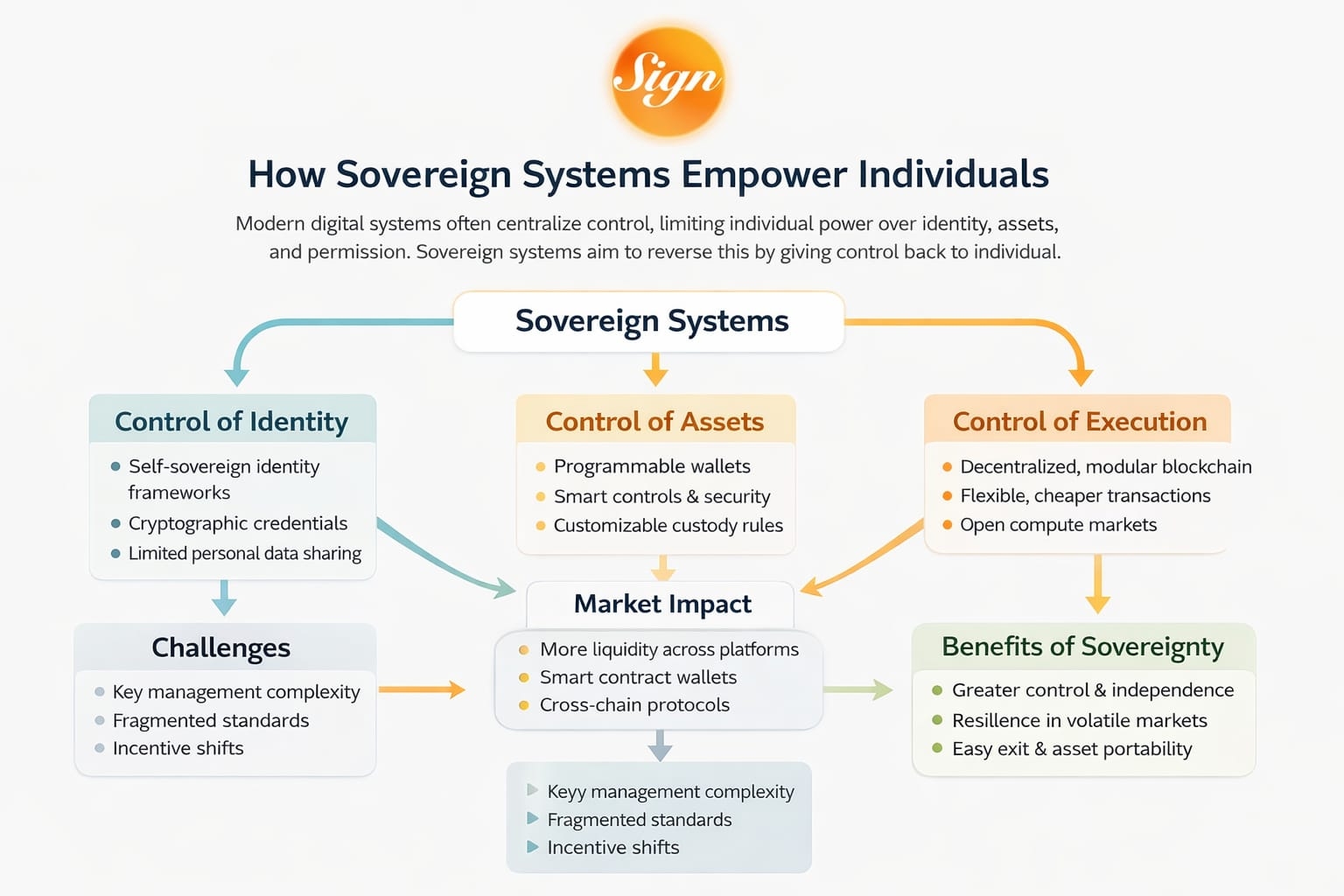
At the heart of sovereign design is a straightforward idea: you shouldn’t need permission to own what’s yours. That principle stretches across three pillars identity, assets, and execution. With self sovereign identity frameworks, you don’t just have a dozen separate logins anymore. You carry cryptographic credentials you can show anywhere, proving only what’s needed your age, your reputation, your ability to pay without offering up all your personal details. This limits unnecessary data leaks and lets different platforms actually work together.
For assets, things are getting even more interesting. Custody is becoming programmable. Instead of depending on a custodian, users can now use wallets that have smart controls: think multi signature security, ways to recover from lost keys, and rules for how funds can be spent. Risk shifts from a black box trust the middleman to something you control and customize yourself. Security becomes a tool at your fingertips, not a service you rent.
Execution is where sovereignty starts to make economic sense. With decentralized and modular blockchain designs, users now pick where and how transactions happen. New data layers mean you can separate storage from computation, which makes transactions cheaper and more flexible. Plus, with open compute markets, users can choose to send their transactions based on how much they want to pay, how private they want to be, or how quickly they need things done you're not tied to one platform’s limitations.
In terms of market impact, this shift is happening now. Liquidity is scattered across more places than ever, and sovereign control lets users navigate that chaos without getting stuck in the arms of centralized custodians or unreliable bridges. You can see the evidence in the rise of smart contract wallets, account abstraction, and demand for cross-chain protocols. These aren't just bells and whistles they’re changing how people use markets altogether.
Of course, sovereignty brings new problems. Key management is still the biggest weak spot. With more control comes more responsibility, and mistakes can’t always be undone. Fragmented standards also create confusing user experiences, which slows adoption. And as platforms lose their lock-in advantage, they lose reasons to heavily subsidize users so some incentives may fade.
Sovereign systems aren’t set to wipe out centralized ones overnight. Instead, they quietly raise the bar for what people expect. Soon, users will want to leave platforms as easily as they join, take their identity wherever, and move assets without getting boxed in by someone else’s rules.
The core idea is simple: sovereignty isn’t about utopian ideals. It’s about having options. The more control you have over your identity, your assets, and your choices, the more resilient you are especially when the market gets choppy. In the long run, it’s resilience, not just returns, that sets you apart.
@SignOfficial #sign #SignDigitalSovereinInfra $SIGN
