
I keep noticing this small thing that keeps coming back.
The tools people adopt the fastest are always the ones they don’t have to think about.
You open them, you understand them instantly, and you just start using them. No questions. No hesitation.
But infrastructure doesn’t work like that.
It actually does the opposite.
It slows you down.
It makes you pause.
It makes you feel like you’re missing something.
And most people don’t like that feeling.
Because with infrastructure, nothing feels obvious in the beginning.
There’s no instant clarity. No quick reward. No simple okay, I get it.
It just feels… unclear.
And that uncertainty is where everything starts to slip.
I’ve been watching how projects like SIGN keep explaining themselves again and again.
AMAs, threads, breakdowns same ideas, different angles.
From the outside, it looks like normal activity.
But honestly, it doesn’t feel like marketing to me.
It feels like they’re trying to help people catch up
Because what they’re building isn’t something people naturally understand.
Verification layers. Attestations. Schemas.
These aren’t things you can just see and instantly get.
You actually have to sit with them for a bit.
And that creates this quiet gap.
On one side, the system is already moving forward, doing its job, evolving.
On the other side, people are still trying to make sense of it.
And in between that…
There’s confusion.
At first, it’s small.
But it doesn’t stay small.
It slowly turns into doubt.
Then hesitation.
And sometimes people just walk away from it.
Not because it’s bad.
Just because it never felt clear enough to trust.
That’s the part people don’t really talk about.
Infrastructure doesn’t fail because it doesn’t work.
It fails because people never fully understand it.
And if you don’t understand something, you don’t really trust it.
And if you don’t trust it, you don’t rely on it.
And if you don’t rely on it…
It might as well not exist.
That’s the uncomfortable truth.
So projects like SIGN aren’t just building systems.
They’re also trying to build understanding around those systems.
Every AMA, every explanation, every breakdown
it’s not just content.
It’s translation.
Because what they’re building sits underneath everything.
It’s not loud. It’s not visible. It’s not something you interact with directly.
And that makes it harder.
Because you can use a product without understanding it.
But you can’t depend on infrastructure you don’t believe in.
That’s where things start to feel a little fragile.
You realize the system is moving faster than people are.
It keeps evolving.
It keeps getting more complex.
It keeps building on top of itself.
But people don’t move that way.
People take time.
People hesitate.
People need things to feel clear before they trust them.
And if that gap keeps growing…
Something breaks.
Not in the system.
In the connection between the system and the people.
The system is there.
It works.
But people don’t fully trust it.
They don’t fully understand it.
So they don’t fully use it.
And that’s how something important becomes irrelevant.
That’s the real risk.
And that’s why moments like AMAs matter more than they seem.
They’re not just updates.
They’re attempts to make something complicated feel simple enough to trust.
To make something unfamiliar feel a little more real.
Because in the end…
Infrastructure doesn’t win when it’s launched.
It wins when people finally understand it.
And if that understanding never happens…
Nothing breaks on the surface.
It just stays there.
Working.
But unnoticed.
Untrusted.
Unused.
And honestly…
that might be worse.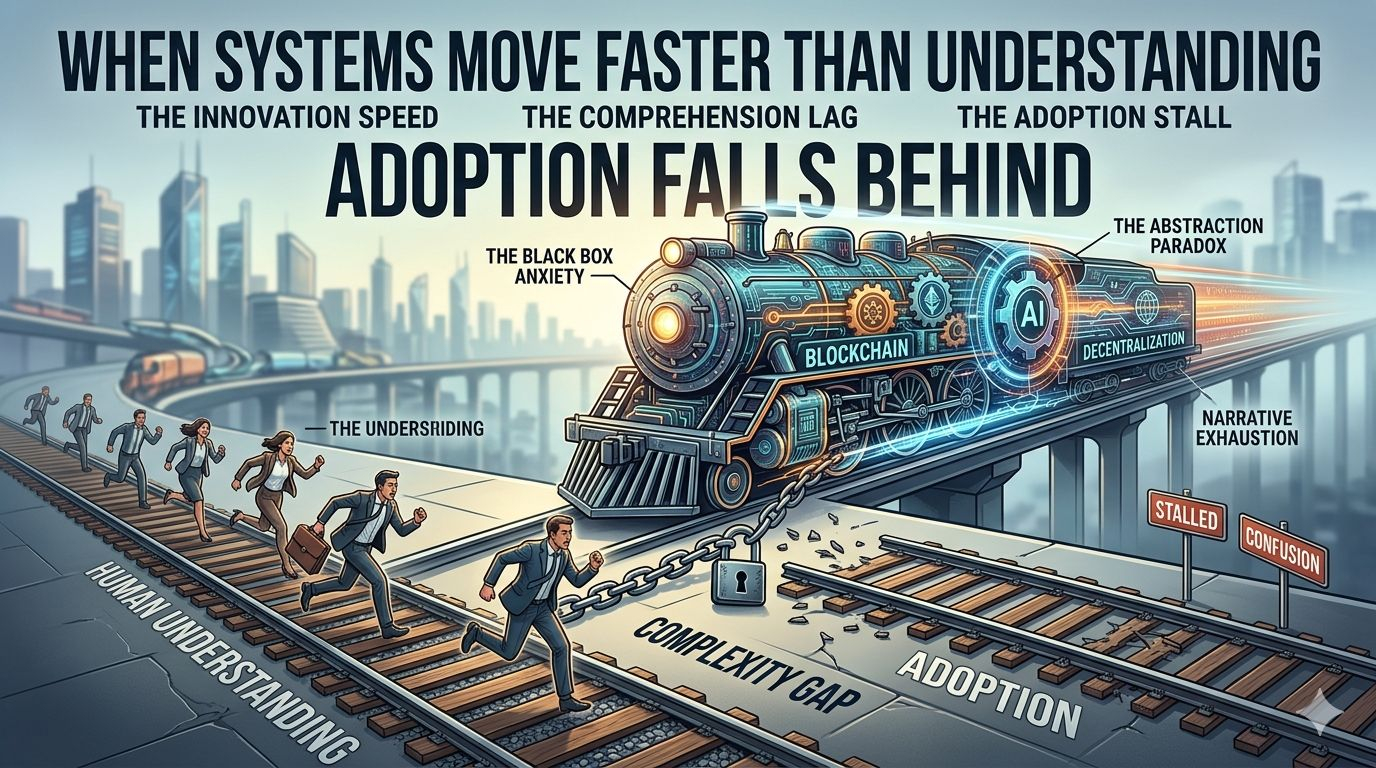
@SignOfficial #SignDigitalSovereignInfra $SIGN
