

It felt like one of those ideas that didn’t need much explaining. You own your data, you prove only what’s necessary, and you move across platforms without starting from zero every time. Simple. Fair. Logical. I thought once people understood it, adoption would follow naturally.
But that’s not what I saw.
What I saw instead was a gap a real one between the idea and how things actually played out. Some projects talked about “self-sovereignty” but still depended on quiet forms of central control. Others were so technical that normal users would never even try them. And slowly, it hit me: the issue isn’t the idea itself. It’s the fact that it never became something people could use without friction.
That’s where my perspective changed.
Now I don’t really care how strong the narrative sounds. I care about whether it works in the real world. Whether it scales. Whether it becomes invisible in the way real infrastructure does.
That’s why something like #SignDigitalSovereignInfra caught my attention. Not because it’s telling a new story, but because it’s asking a harder question: can identity actually function as infrastructure without losing the “sovereign” part along the way?
Because that’s the difficult balance.
It’s easy to say users should own their identity. It’s much harder to build a system where that ownership survives once multiple apps, systems, and verifications come into play. Especially without defaulting back to a central authority holding everything together.
From what I understand, Sign is trying to approach identity in a more grounded way.
Instead of treating identity like a profile stored somewhere, it treats it like something you carry. Your credentials stay under your control, and when you need to prove something, you don’t reveal everything. You use cryptographic proofs to verify only what’s required.
That small shift changes a lot.
It means you’re not constantly exposing your full identity just to access a service. It means you don’t have to rebuild trust every time you move between platforms. And it means no single platform becomes the owner of who you are.
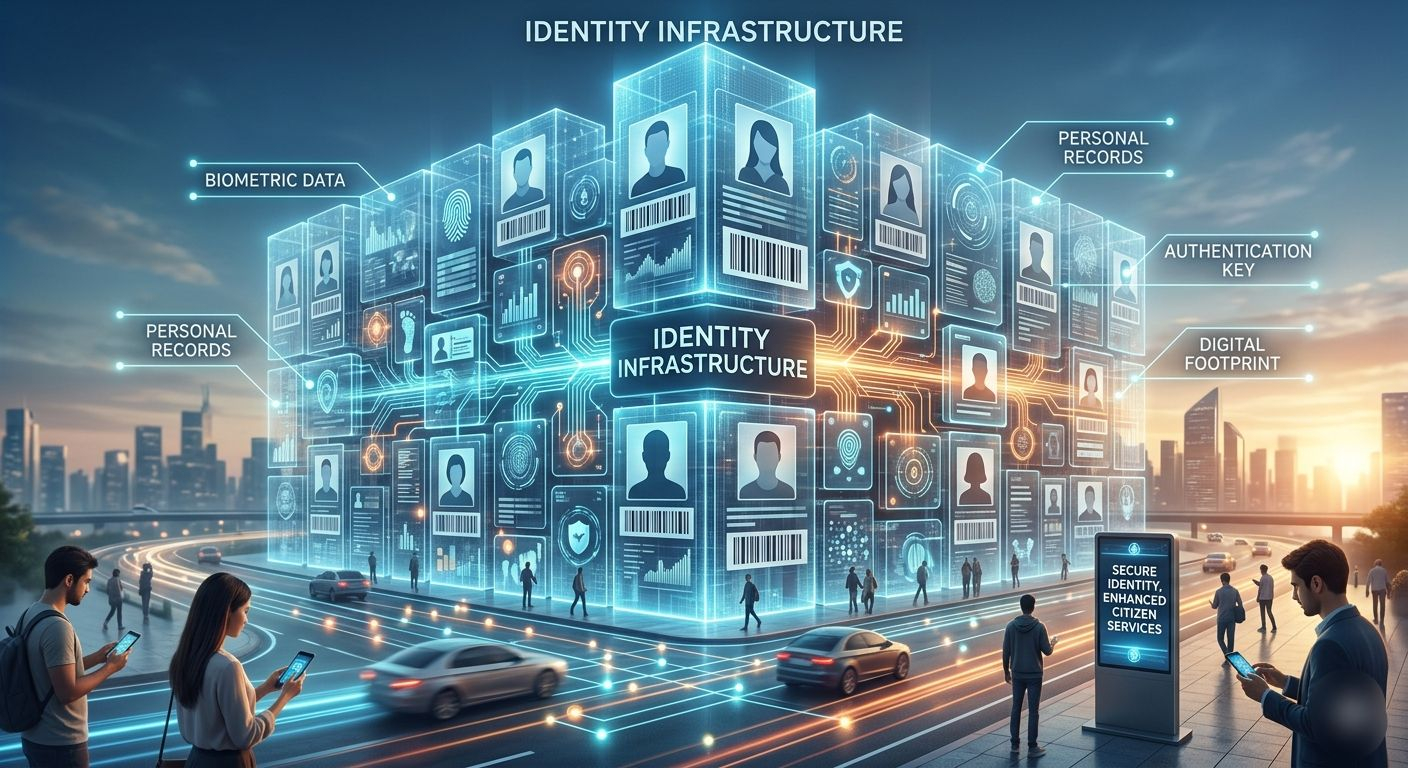
That’s where selective disclosure and interoperability stop being buzzwords and start becoming necessary.
The connection with $EDGE and $UAI adds another layer to this.
AI is naturally becoming part of how data is processed, including identity-related data. So using it off-chain for efficiency makes sense. But what matters is that it doesn’t take ownership away from the user. Sign still anchors control, verification, and portability.
That balance feels important.
Because the moment something becomes useful, the easiest path is always to centralize it. Convenience pushes in that direction. So the real challenge is not just making identity work it’s making sure it keeps working without quietly giving up control.
The token layer is another piece I try to look at realistically.
In theory, it’s simple. Validators help maintain the integrity of identity proofs. Developers build applications that depend on those proofs. And if those applications actually get used, demand for the network grows from real activity.
That’s the only version of token economics that really makes sense to me.
Not driven by hype, but by usage. If the system is being used, the token has a role. If not, then the story doesn’t hold up for long.
Zooming out, the bigger picture makes this even more interesting.
Regions like the Middle East are actively building digital economies, and in that environment, identity becomes a foundational layer. Businesses, institutions, and governments all need ways to verify people and credentials securely without creating unnecessary friction.
In that context, something like Sign doesn’t feel like just a crypto tool. It starts to look more like a coordination layer something that could connect different systems and make them work together more smoothly.
That doesn’t mean it’s guaranteed. But it does make the opportunity more real.
At the same time, I think it’s important to stay grounded.
The market often moves ahead of reality. Attention builds, prices react, and narratives form long before actual usage catches up. You can see growing holder numbers without real engagement. You can see activity that’s driven more by speculation than by necessity.
Right now, it feels like the market is pricing what this could become, not what it already is.
And that’s a fragile place to be.
Because eventually, the system has to prove itself.
Are developers building applications where identity is essential, not optional? Are users coming back because it actually makes their experience easier? Is the network activity growing in a way that feels natural?
Those are the signals that matter.
If they start to show up more builders, more real interactions, stronger validator participation then confidence builds over time. But if activity stays mostly speculative, if applications don’t stick, or if developer momentum slows down, then it’s a reason to be cautious.
That’s where I’ve landed.
I don’t think digital sovereignty wins just because it’s a good idea. I think it only works if it becomes something people rely on without even thinking about it.
Quiet. Invisible. Necessary.
That’s what real infrastructure looks like.
And that’s the real test.