
Everyone talks about “on-chain identity” like it solves everything.
It doesn’t.
👉 It just moves the problem somewhere harder to see.
At first glance, reputation on-chain feels clean.
You interact.
You build history.
You earn trust.
👉 Sounds fair.
But here’s what I didn’t expect when I started digging deeper.
That “reputation” isn’t neutral.
It’s defined.
A protocol doesn’t understand you.
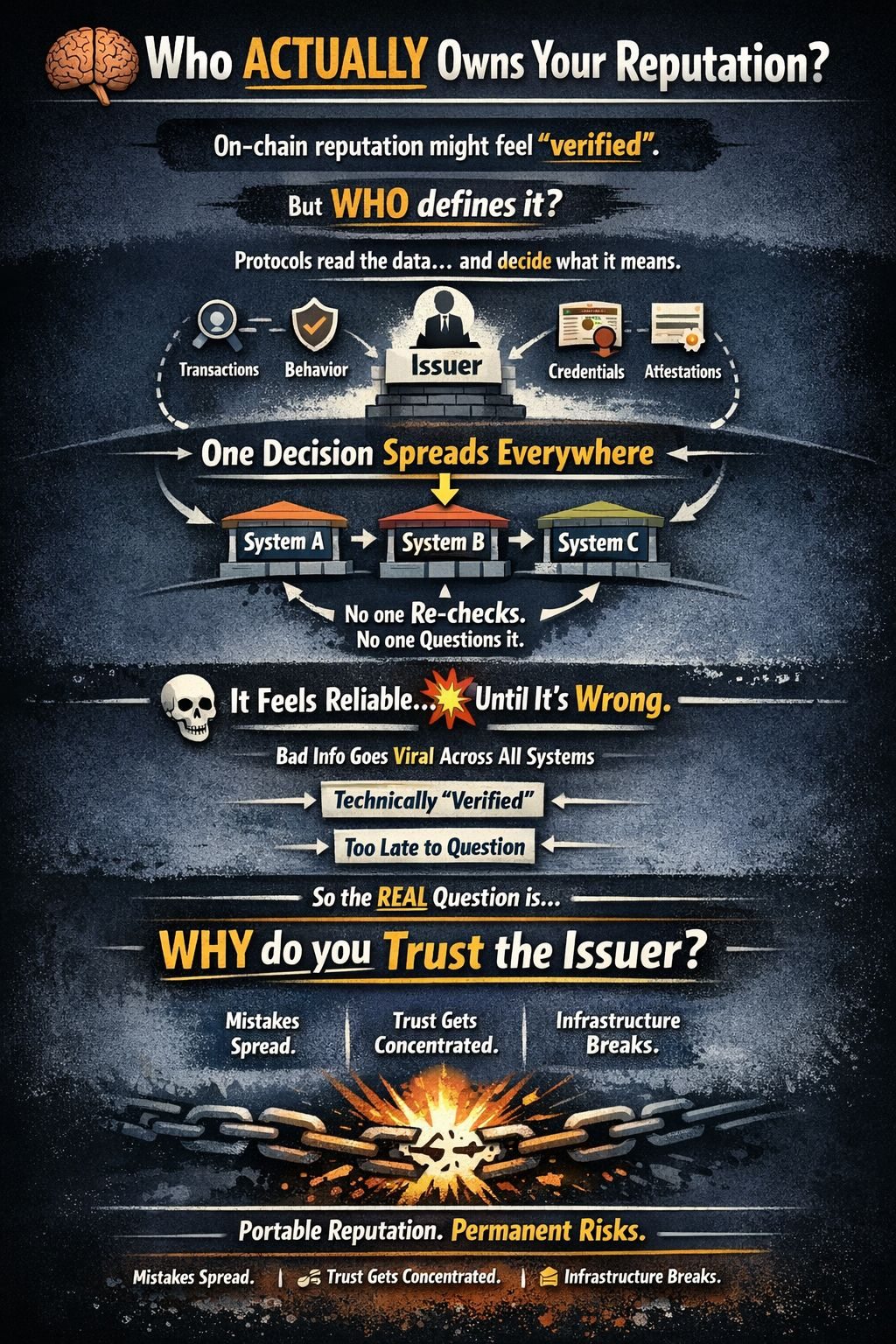
It reads signals:
transactions
behavior
credentials
attestations
👉 And then it decides what they mean.
⚠️ And that’s the part people skip.
Because meaning doesn’t come from data.
👉 It comes from whoever defines it.
Now scale that.
One system says:
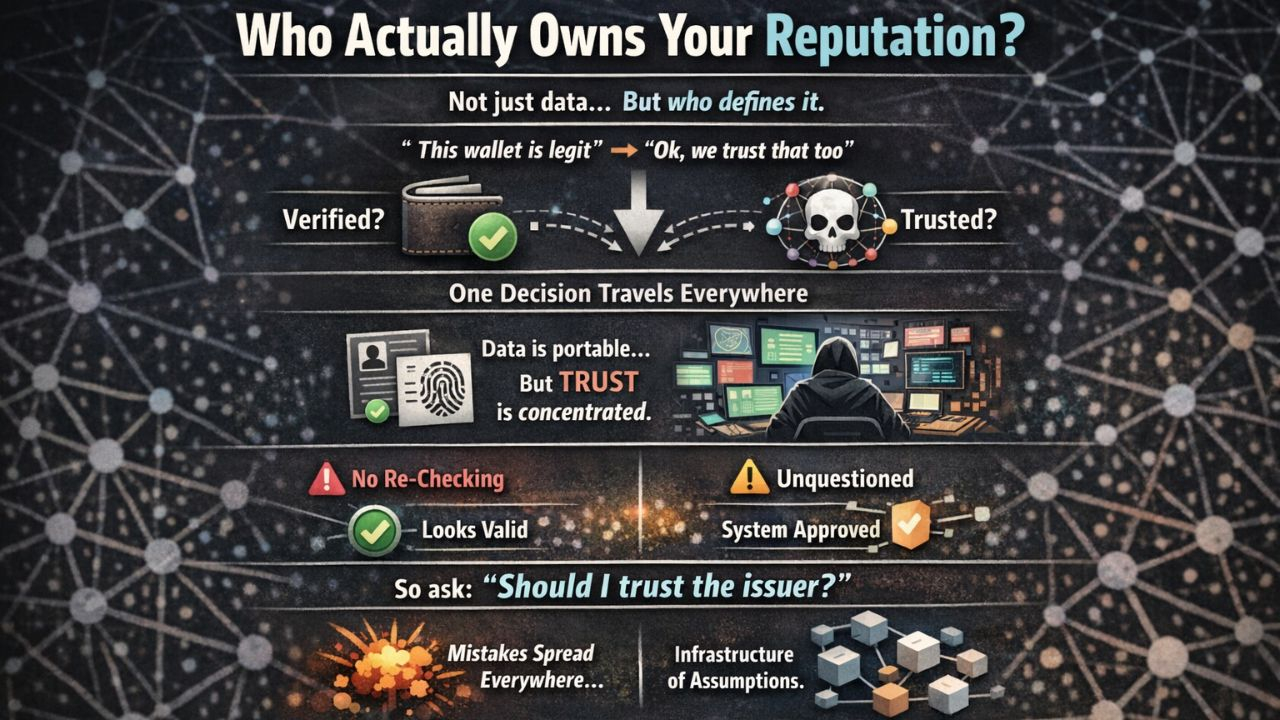
👉 “this wallet is legit”
Another system sees that and says:
👉 “ok, we trust that too”
And just like that…
💀 one decision starts traveling.
No one re-checks.
No one questions it again.
Because technically?
👉 it’s already “verified”
🔗 This is exactly the layer $SIGN is building.
Not just proving something happened…
👉 but making that proof reusable across systems.
On paper, it’s powerful.
You verify once → you don’t repeat the process everywhere.
👉 Less friction
👉 More efficiency
But here’s where it gets uncomfortable.
The more portable that proof becomes…
👉 the less often it gets questioned.
And that shifts something fundamental.
You’re not just trusting data anymore.
👉 You’re trusting whoever issued it.
$SIGN doesn’t hide that.
Through schemas and attestations, it standardizes how claims are structured.
But it doesn’t decide:
👉 whether the issuer is right.
So if one issuer gets it wrong?
It doesn’t stay local.
It spreads.
Across every system that accepts that claim.
💀 And the system won’t flag it as an error.
Because technically…
👉 everything checks out.
🎯 That’s the shift most people miss.
Portability doesn’t eliminate trust problems.
👉 It concentrates them.
So maybe the real question isn’t:
“Is this verifiable?”
👉 It’s:
“Why should I trust whoever verified it in the first place?”
Because once reputation becomes portable…
👉 mistakes don’t stay contained.
They become infrastructure.
💣 And by the time you notice…
👉 it’s already too late to question it.