

This is one of those frustrations that keeps resurfacing for me whenever I look at how crypto actually operates day to day: we keep rebuilding trust from scratch, over and over, like it’s the only way things can work.
You prove who you are on one platform, earn a credential somewhere else, or get verified for a program on yet another chain and none of it carries forward. The next app, the next ecosystem, the next opportunity treats your wallet like it has no history at all. Same person. Same facts. Fresh hurdles. It’s not just annoying for users; it quietly drains momentum from everything builders are trying to create. Developers waste time on duplicate logic. Projects lose users at every gate. Ecosystems stay isolated because there’s no shared memory of what’s already been confirmed.
It feels almost absurd once you notice how deeply we’ve accepted it as normal.
That’s the cycle Sign is quietly trying to interrupt.
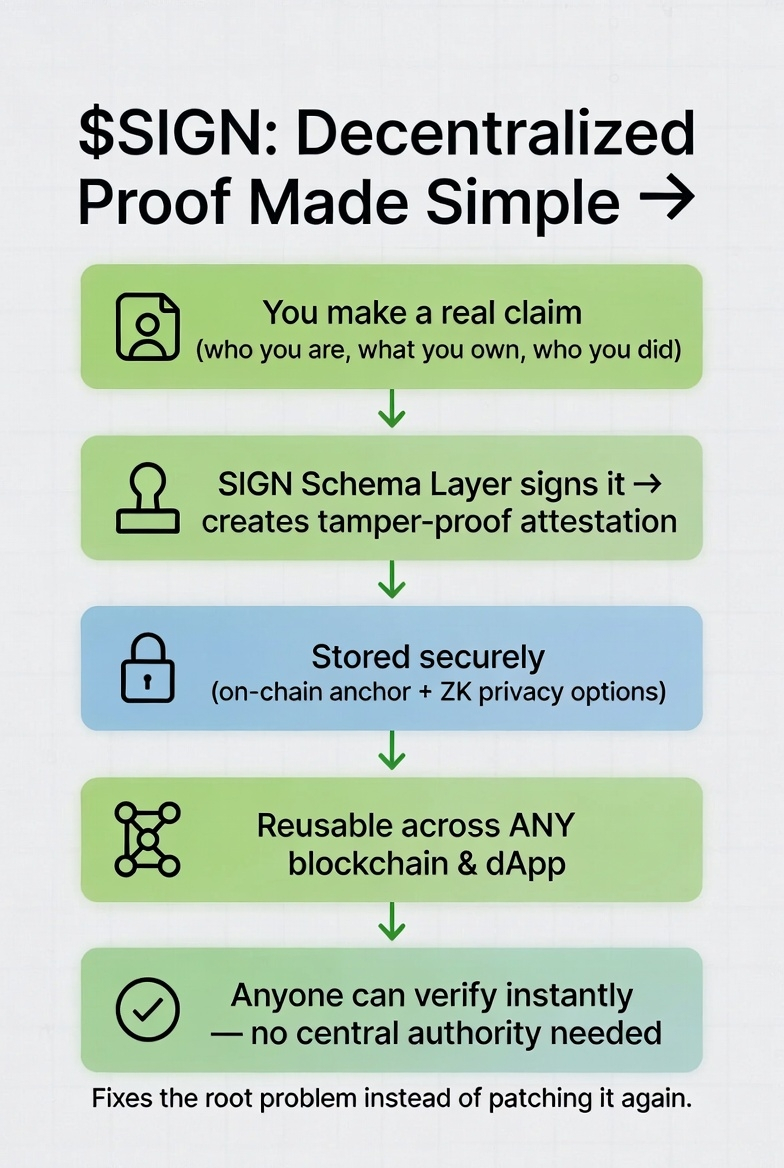
Instead of adding another layer that forces everyone to start over, it’s building the kind of foundational rails that let a verified claim actually persist. A ZK-backed attestation issued once can be recognized across different environments no repeated proofs, no manual resets, no rebuilding the trust layer every single time a user moves. The proof travels with the wallet. Other systems can read it, act on it, and move forward without acting like paranoid gatekeepers all over again.
The shift sounds straightforward, but the implications run deeper than most conversations give it credit for. Coordination becomes less painful. Incentives can flow more cleanly. Sovereign programs or cross-chain initiatives don’t have to reinvent verification every step of the way. It’s not about replacing what exists; it’s about removing one of the silent taxes that keeps the whole space fragmented and inefficient.
Of course, stopping that cycle isn’t automatic. Ecosystems still have to choose integration over isolation, and old habits die hard in a world that rewards new launches more than shared standards. Plenty of technically sound ideas have stumbled right at the adoption line.
Even so, the more I watch how much energy gets burned on redundant trust-building today, the more I respect the structural ambition behind what Sign is doing. It’s not chasing the spotlight. It’s aiming at the quiet inefficiency most of us have stopped questioning and trying to make it obsolete.
I’m not chasing it. Just paying attention.
@SignOfficial #SignDigitalSovereignInfra $SIGN

I was just scrolling at 2 am. Yesterday night and $SIGN hit different…
Not gonna lie, I wasn’t even looking for another project. Just doom-scrolling the feed like usual, coffee gone cold, when a couple lines about attestations caught my eye. Most projects talk big about “trust” but then it’s the same old screenshots, Discord pings, or some off-chain Google Form nobody can actually verify later.
$SIGN feels… different.
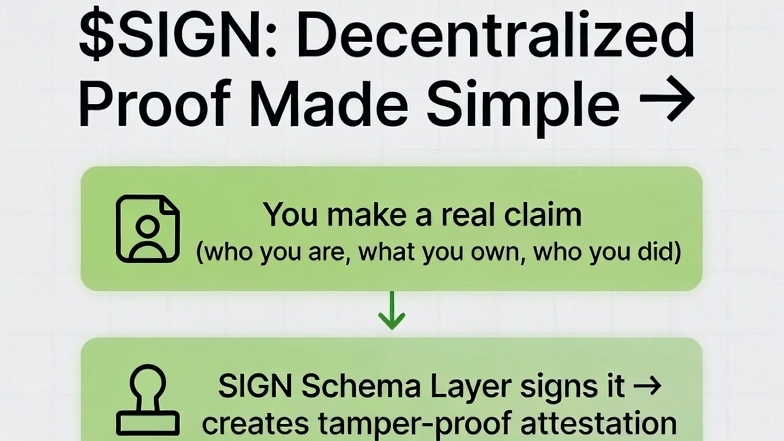
It’s not trying to be the next meme coin or the hundredth DeFi fork. It’s building the actual plumbing for verifiable proof in Web3 the kind you can carry across chains, reuse anywhere, and actually trust because it’s tamper-proof on the data layer. Everyday claims (who you are, what you own, what you did) turned into clean, signed attestations that smart contracts or apps can read without asking a central authority every single time.
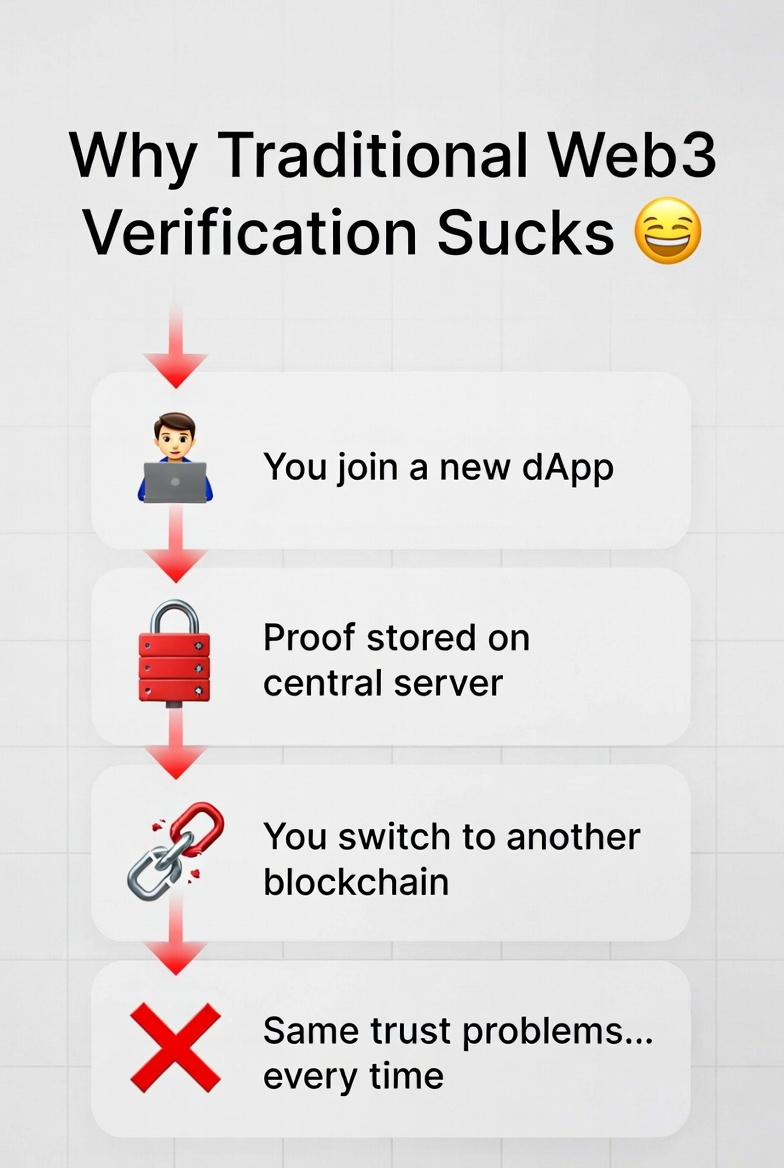
I’ve been thinking about this a lot lately. We keep rebuilding the same trust problems in every new dApp KYC from scratch, reputation that resets when you switch chains, “proof” that disappears the second the server goes down. SIGN’s schema layer + omni-chain setup + flexible storage (on-chain anchors, ZK privacy options, the whole thing) is basically saying: nah, let’s fix the root issue instead of patching it again.
I’m not here caping or promising moonshots. I just keep coming back to it because it feels like the first time someone’s seriously treating verification as infrastructure instead of an afterthought. Digital sovereignty that actually works for real people and real use cases, not just hype threads.
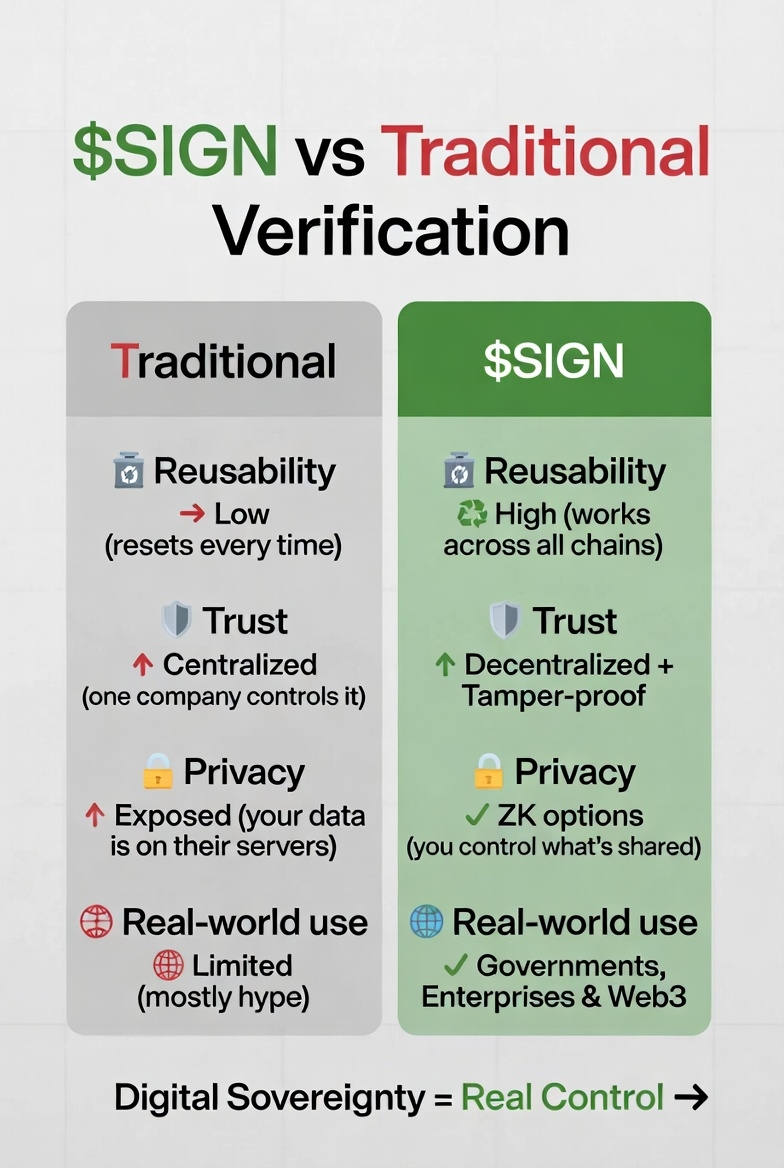
Anyway… 2 a.m. thoughts, you know how it goes. What’s your take is decentralized proof finally getting the attention it deserves, or am I just sleep-deprived 😆