
Something doesn’t add up in Web3, and people just live with it now.
Everything is transparent. Every move on-chain can be tracked. Wallets, transactions, votes… all visible. On the surface, it looks like trust should already be solved.
But it isn’t. Not even close.
Because seeing data is not the same as understanding who is behind it.
A wallet can be active for years and still feel like nothing. No context. No reputation that actually travels. No real way to know if the next interaction comes from a proven contributor or someone just passing through.
Everything looks equal. Too equal.
And that creates a strange problem nobody talks about directly. Systems become permissionless, but judgment becomes guesswork again.
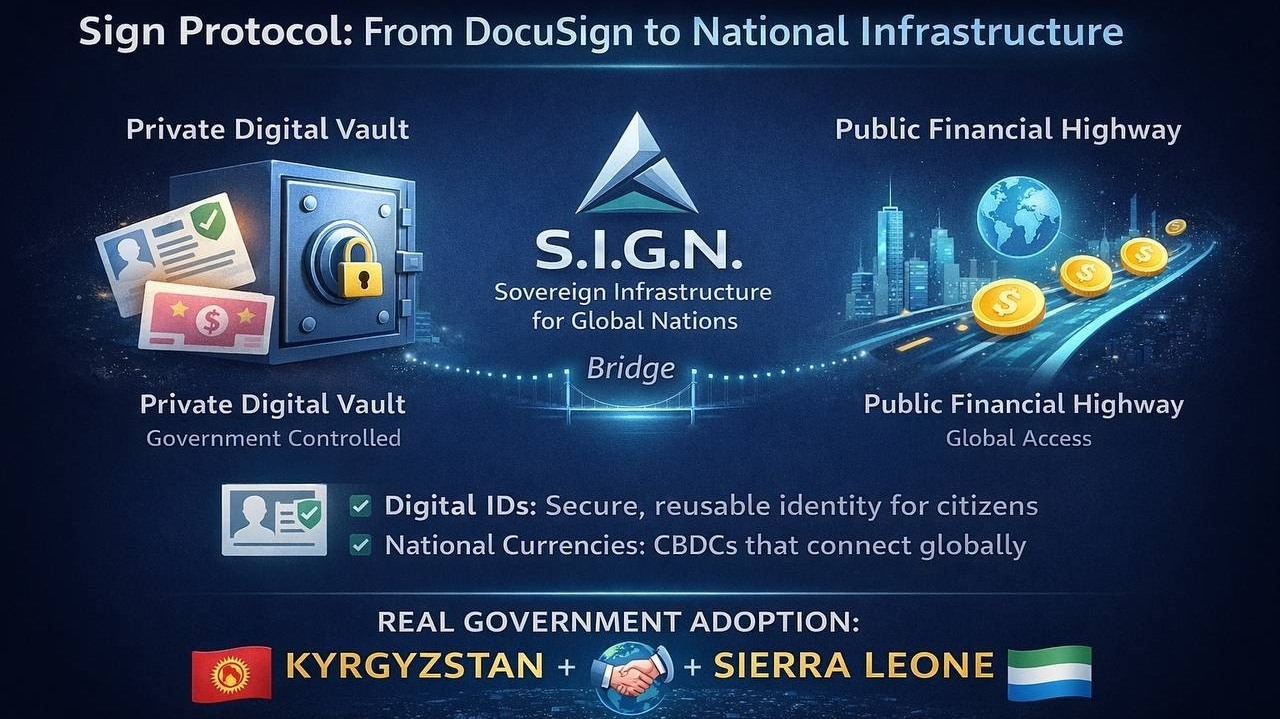
This is where projects like @SignOfficial come into the picture, with $SIGN sitting in that identity layer discussion.
Not in a flashy way. Not trying to be another “social identity” experiment either.
More like infrastructure that sits underneath everything else.
The idea is simple when you strip the language away: identity, credentials, and agreements should not reset every time you move across ecosystems.
Right now they do.
That’s the gap.
Think about how most DAOs actually work today.
A contributor joins. They participate. They build history. Maybe they stay for months, sometimes years.
Then they move to another DAO.
And they start again from zero.
Same process. Same uncertainty. Same lack of portable proof that they ever did anything before.
So each ecosystem rebuilds trust manually. Again and again.
Screenshots. Links. Reputation carried from Discord. Social proof from outside platforms.
It works, but it’s messy. And slow. And surprisingly fragile for something that’s supposed to be decentralized.
What $SIGN is pointing at is different.
Instead of treating identity like a profile sitting somewhere off-chain, it pushes the idea that identity should be composed of verifiable on-chain pieces.
Things like credentials, agreements, participation proofs all tied directly to the chain in a way that can be checked, not assumed.
No need to “believe” someone’s history. You verify it.
That shift sounds small until you think about scale.
Because once ecosystems grow, humans stop being able to manually track credibility.
It just breaks.
Too many users. Too many protocols. Too many overlapping histories.
At that point, trust either becomes centralized again… or it needs a system that can carry identity natively.
That’s the real tension.
Not hype cycles. Not token prices.
Just whether trust can scale without breaking.
And that’s why identity matters more than most people realize right now.
Because Web3 is still in a phase where everything is built around activity, not context. You can see what happened, but not who consistently made things happen.
That gap keeps repeating across DAOs, protocols, and communities.
Nothing about this space is fully solved yet. Identity especially feels like one of those problems that gets ignored until it becomes unavoidable.
Still early. Still fragmented.
But that’s usually where infrastructure ideas sit before they matter.
What stands out about $SIGN is not noise or narrative timing.
It’s the fact that it sits in that overlooked layer the part of Web3 that everything else eventually depends on if it keeps scaling.
Because if identity stays broken, everything else just becomes harder to trust at scale.
And trust is not something you can patch later.