
@SignOfficial #SignDigitalSovereignInfra $SIGN
At first glance, upgradeable systems sound reasonable. The address stays the same. Users do not have to move. Bugs can be fixed. Improvements can happen without breaking everything.
That sounds efficient.
But in crypto, “efficient” often has a second meaning.
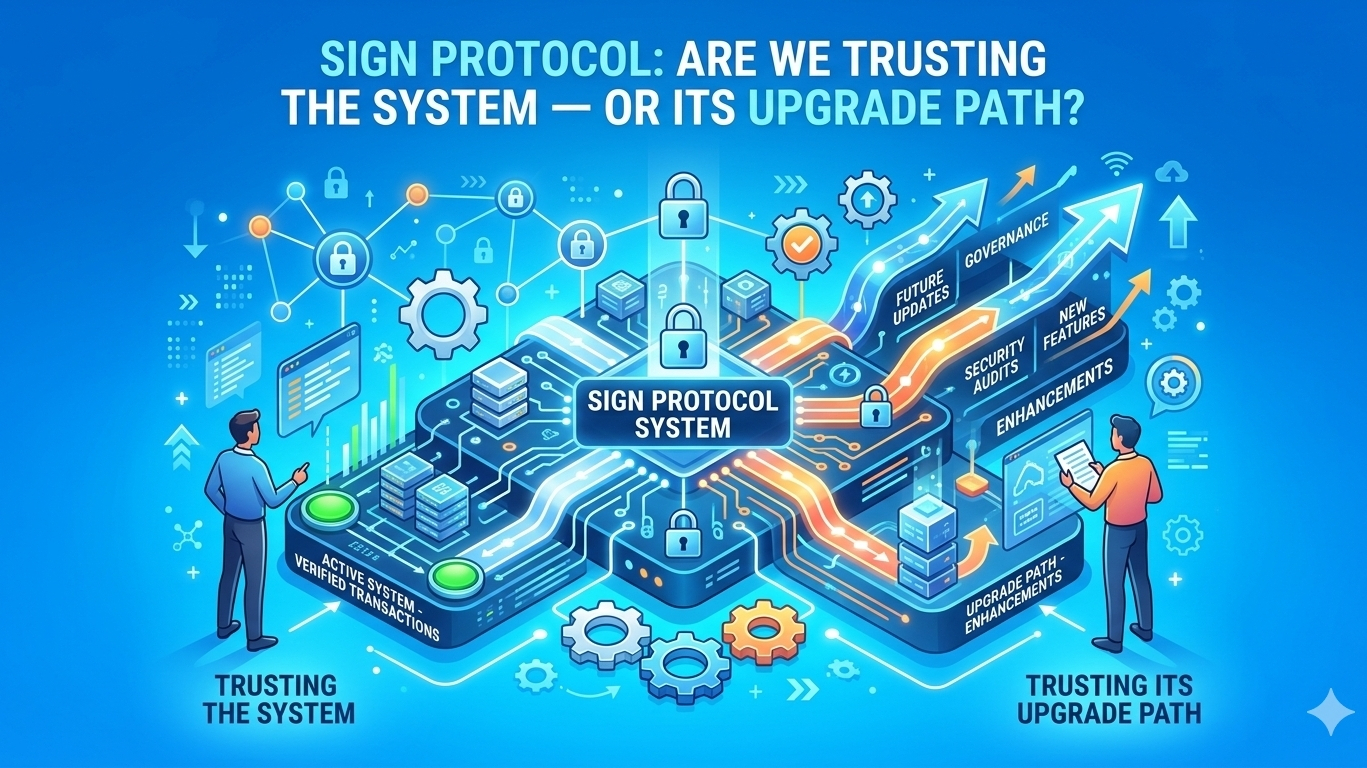
What makes Sign Protocol worth paying attention to is not just that it uses an upgradeable setup. It is the fact that upgradeability quietly changes who holds real control. From the outside, the system can look stable. The address stays familiar. The product feels continuous. But inside that same familiar shell, the actual logic can be changed.
And that is where the real question begins: who is the system actually trusting, and who gets to change it later?
That is why the word “maintenance” can be misleading. A patch may look harmless. An update may sound routine. But in a system tied to trust, verification, or identity, an upgrade can do much more than fix code. It can change behavior, rules, and outcomes.
That is not a small detail. That is governance.
This is why upgradeable architecture always feels a little uneasy to me. Yes, it makes sense technically. Real products need flexibility. No system is perfect on day one. Sometimes updates are necessary. Sometimes they are the only way to keep something usable.
But flexibility also means control can be concentrated in fewer hands. And when that happens, the system may still look decentralized on the surface while the real authority sits somewhere else.
That is the part people often miss.
If a small group can rewrite the logic behind the same address, then the visible contract is only part of the story. The deeper story is who controls the upgrade path, because that is where real power lives.
So when I look at Sign Protocol, I do not just see a technical architecture. I see a control structure. The question is not only whether the system works today. The bigger question is whether it can be changed tomorrow without users fully realizing how much has shifted.
That is the uncomfortable truth.
Sometimes the most important part of a system is not the part users interact with. It is the part that can quietly redefine everything underneath it