
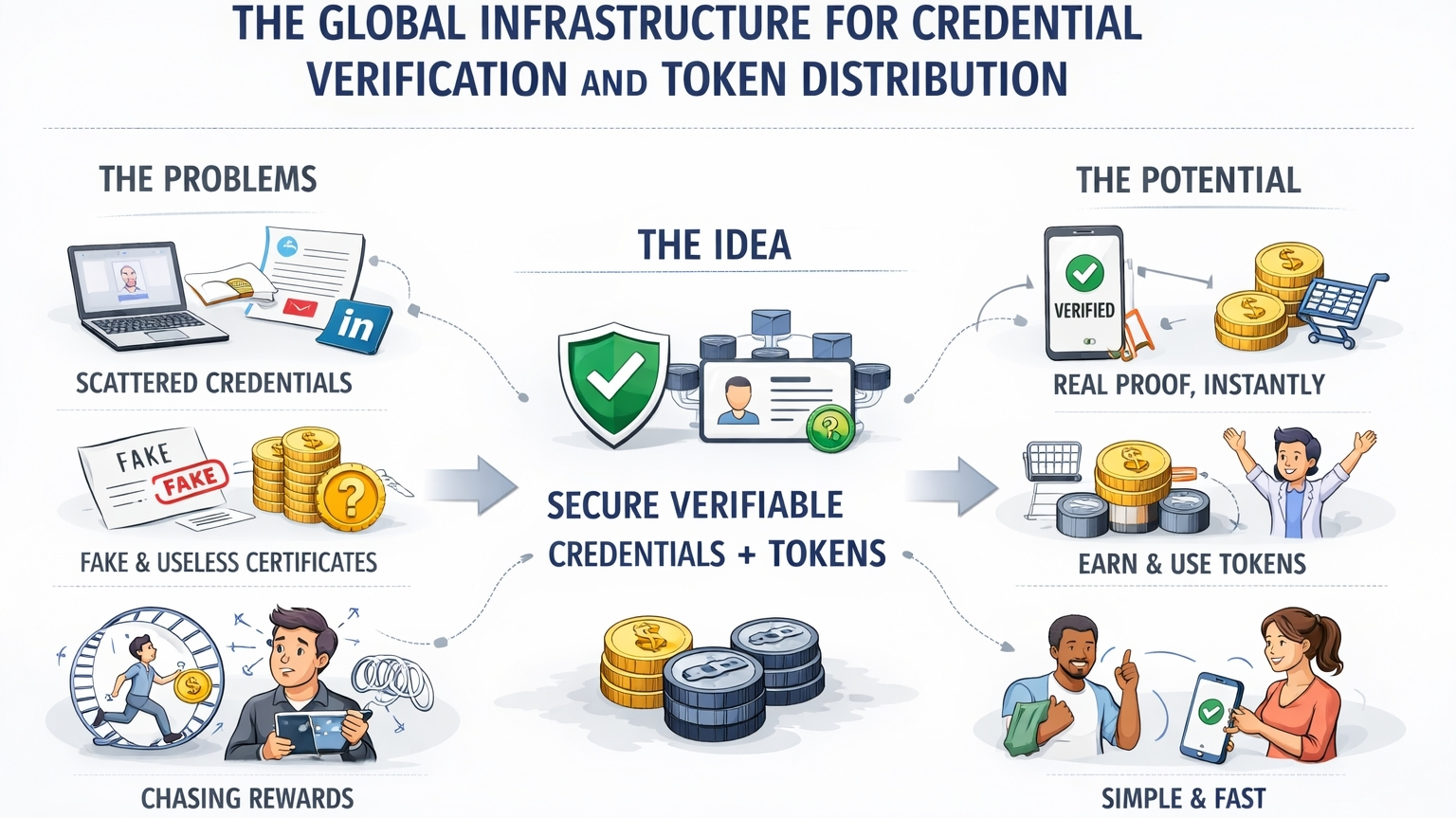

nothing works the way it should. that’s the starting point.
you’ve got degrees that nobody can quickly verify. certificates sitting in random portals. work history spread across linkedin, emails, screenshots. half the time you’re just trying to prove you did something, and the other person still doesn’t fully trust it. so you resend stuff. again and again.
it’s slow. it’s annoying. and honestly, it feels outdated.
and now crypto people come in and say “we’ll fix it.” yeah, sure. they always say that.
but to be fair, the problem is real. credentials are broken. not fake, just messy. disconnected. stuck in systems that don’t talk to each other. and every system wants control.
so the idea here is simple. store your credentials somewhere that can’t be messed with. let anyone verify them instantly. no middlemen. no emails. no waiting.
sounds good. almost too good.
but then you think about it for more than five minutes and things start to fall apart.
first problem. who decides what counts as a real credential?
because if anyone can issue one, then it’s useless. spam everywhere. fake achievements. people minting “proof” for things that don’t matter. noise.
but if only big institutions can issue them, then we’re back to the same system we already have. same gatekeepers. same control. just with a new logo slapped on top.
so which one is it. open chaos or controlled system. pick your poison.
second problem. tokens.
this is where it usually gets stupid.
the idea is you get rewarded for your credentials. you do something useful, you get tokens. sounds fair. but people don’t behave the way you expect. they optimize for rewards, not for actual value.
you’ve seen it before. people farming likes. spamming content. doing low effort stuff just because it pays.
same thing will happen here.
if the system rewards activity, people will fake activity. if it rewards credentials, people will game credentials. simple.
so now instead of fixing the system, you just created a new way to exploit it.
third problem. usability.
nobody wants to deal with complicated wallets, keys, signing messages, whatever. normal people don’t care. they just want stuff to work.
if i have to watch a 20 minute tutorial just to prove my own certificate, i’m out.
and that’s where most of these projects fail. they build for themselves, not for real users.
then there’s privacy.
everyone talks about “owning your data” but nobody talks about what happens when everything is permanent. every credential. every action. stuck there forever.
what if you want to move on. what if something from your past shouldn’t follow you forever.
no clear answers there. just vibes.
but okay. let’s not ignore the good part.
if this actually works, it fixes a lot.
you do something once. it gets recorded. anyone can check it instantly. no back and forth. no doubt. that alone saves time.
and it could open doors for people who don’t have connections. no fancy degree. no big name company. just real work.
right now, those people struggle to prove themselves. in a better system, their work speaks for itself.
that part matters.
and yeah, platforms like binance are already trying small versions of this. tying user activity to rewards, verification, all that. not perfect. but you can see where it’s going.
still early. still messy.
and honestly, most of it feels like hype again.
because we’ve heard this before. “this will change everything.” it usually doesn’t.
but this time… maybe there’s something here. not the token part. that’s always overhyped.
the credential part. that’s the real problem worth solving.
if they can make it simple. actually simple. not “crypto simple.”
if they can balance trust without turning it into another closed system.
if they can stop people from gaming it.
big if.
then yeah. it could work.
but right now?
it’s just another idea trying to survive real world problems.
and the real world doesn’t care about whitepapers. it cares about whether things actually work.
so let’s see if this one does.
#SignDigitalSovereignInfra $SIGN @SignOfficial
