

Neither the author, Tim Fries, nor this website, The Tokenist, provides financial advice. Please consult our website policy prior to making financial decisions.
Iran’s Islamic Revolutionary Guard Corps has named Alphabet Inc. (NASDAQ: GOOGL), Microsoft Corporation (NASDAQ: MSFT), and Tesla Inc. (NASDAQ: TSLA) among at least 18 Western companies facing explicit cyber retaliation threats as of April 1, 2026, escalating a confrontation that has steadily widened from military exchanges to critical technology infrastructure. The IRGC framed the targeting as a direct response to what it characterized as U.S. and Israeli involvement in the assassinations of senior Iranian officials, positioning the named corporations not as incidental targets but as deliberate leverage points against American economic and technological power.
What separates this announcement from routine state-sponsored posturing is the specificity of the target list and its concentration in the three companies that collectively anchor the S&P 500’s technology weighting – a signal that Iran is calibrating its threat for maximum market and psychological impact rather than operational convenience. For investors already navigating oil price surges and broader market turbulence tied to the Iran crisis, the extension of that conflict into cyberspace against named large-cap equities introduces a risk premium that is harder to price and slower to resolve than a commodity shock.
Iran IRGC Names Critical Tech Infrastructure as Retaliation Targets in Escalating U.S.–Iran Conflict
The threat announcement, attributed to IRGC-linked channels on April 1, 2026, cited the ongoing U.S.–Iran confrontation and alleged targeted killings of Iranian military and government figures as justification for expanding hostilities into the cyber domain. Iran’s posture mirrors a doctrine it has articulated since at least the Stuxnet era: that attacks on Iranian sovereign capabilities – whether nuclear, military, or political – warrant asymmetric responses against the economic infrastructure of adversary nations. Naming Google, Microsoft, and Tesla by brand rather than by sector is a deliberate escalation in specificity.
The IRGC has a documented history of cyber operations against Western targets, including destructive wiper malware campaigns, distributed denial-of-service attacks against U.S. financial institutions, and intrusion campaigns targeting critical infrastructure sectors flagged by the U.S. Cybersecurity and Infrastructure Security Agency.
The threat’s stated form encompasses data breaches, infrastructure disruption, and ransomware-style operations against the named companies’ regional and cloud-facing systems – categories that each of the three named firms has meaningful exposure to through Middle East data center footprints and connected-product ecosystems. The broader context of how the Middle East conflict has already pressured large-cap technology operations is visible in the impact on oil price surges and broader market turbulence tied to the Iran crisis earlier in the conflict cycle.
U.S. President Donald Trump publicly dismissed Tehran’s warning, a response Iranian state media characterized as confirmation that the threat had registered at the highest level. No statements from Alphabet, Microsoft, or Tesla security teams had been issued as of the time of writing. CISA had not published a specific advisory tied to this announcement, though the agency’s standing guidance on Iranian cyber actors – last substantively updated in late 2025 – identifies all three companies’ sectors as priority targets in any escalation scenario.
GOOGL, MSFT, and TSLA Stock Brief: Cyber Exposure, Price Action, and Key Reactions to Iran
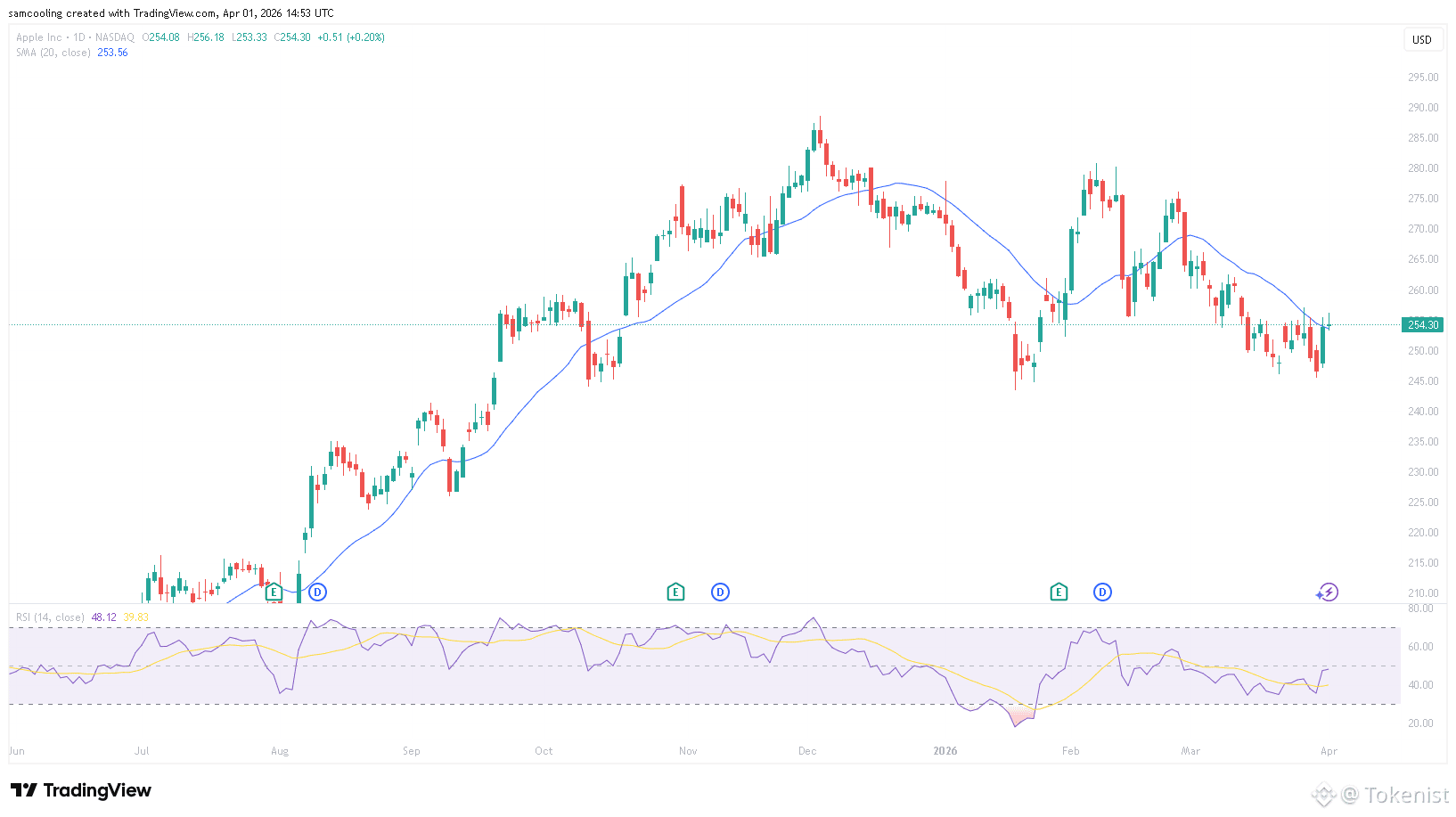
Source – APPL USD, TradingView
Alphabet Inc. (GOOGL) was trading at a price of $154.25 as of 16:00 GMT on Wednesday, April 1, 2026, off roughly 1.2% on the session, with a 52-week range of $140.53–$207.05 and a market cap of approximately $1.91 trillion. Google Cloud, which generated $12.0 billion in Q4 2025 revenue – up 30% year-over-year – represents the most direct cyber exposure surface: a sustained infrastructure attack against regional nodes would carry both operational and reputational cost in an increasingly competitive hyperscaler market. GOOGL carries a trailing P/E of 19.8 and a forward P/E near 17.4; the stock is down approximately 18% year-to-date against the S&P 500’s decline of roughly 8%.
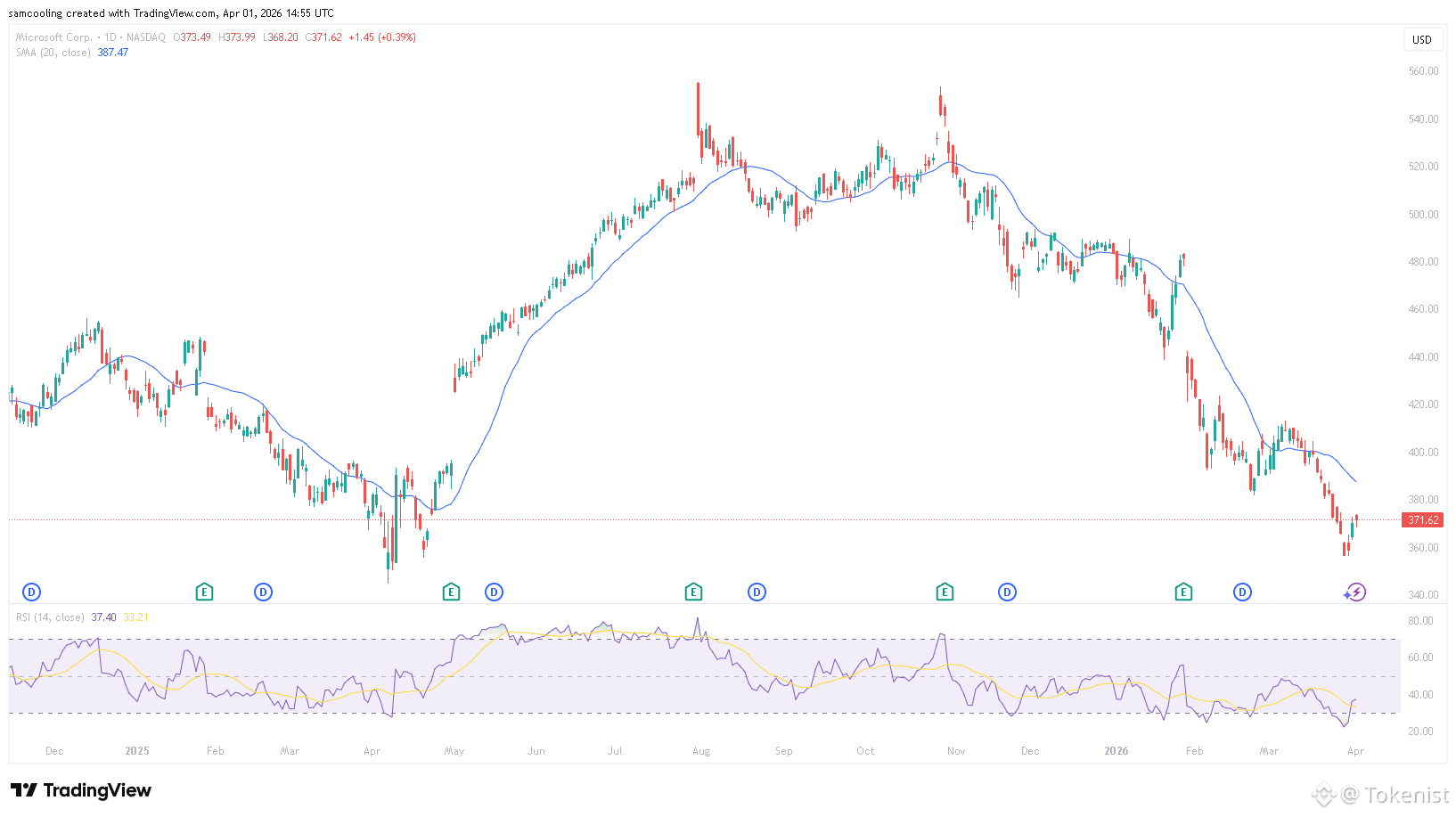
Source – MSFT USD, TradingView
Microsoft Corporation (MSFT) was quoted at a price of $371.56 as of 16:00 GMT on April 1, 2026, within a 52-week range of $344.79–$468.35, with a market cap near $2.80 trillion. MSFT carries the most direct cybersecurity revenue exposure of the three named companies – its Security segment surpassed $20 billion in annualized revenue as of fiscal Q2 2026, meaning a credible threat environment due to Iran is simultaneously a commercial tailwind and an operational liability. The stock trades at a trailing P/E of 30.1 and a forward P/E near 26.8, and is down approximately 12% year-to-date. Wedbush maintained its Outperform rating on MSFT with a $550 price target as recently as March 2026, citing AI and cloud durability.
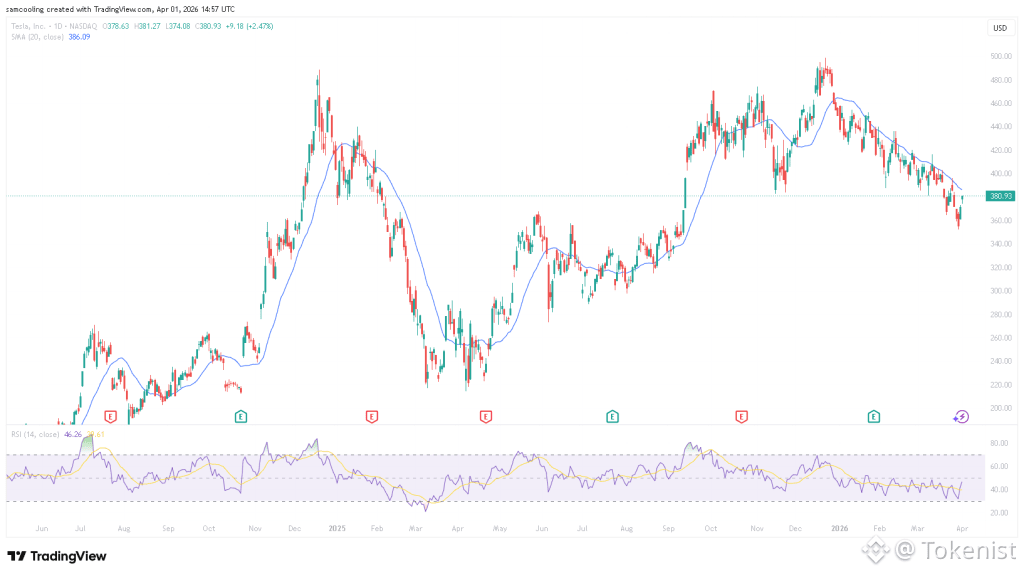
Source – TSLA USD, TradingView
Tesla Inc. (TSLA) traded at a price of $380 as of 16:00 GMT on April 1, 2026, within a 52-week range of $214.25–$479.86, and had a market cap near $795 billion. Tesla’s cyber exposure is structurally different from the other two: its connected vehicle fleet, over-the-air update architecture, and Autopilot/FSD systems represent attack surfaces that a state-sponsored actor with demonstrated intrusion capability could target for disruption or data exfiltration rather than infrastructure destruction. TSLA carries a trailing P/E of 116.2 and is down approximately 40% year-to-date – the steepest decline of the three named companies and a valuation that leaves a limited buffer against additional geopolitical risk premium. The geopolitical headwinds now facing these names echo the revenue pressure already documented at other large industrials, including how the Iran conflict has threatened Honeywell’s quarterly revenue guidance – a pattern that suggests no large-cap with regional exposure is fully insulated from this escalation cycle.
Disclaimer: The author does not hold or have a position in any securities discussed in the article. All stock prices were quoted at the time of writing.
The post Iran Threatens Google, Microsoft, and Tesla as Cyber Tensions Escalate appeared first on Tokenist.