
When I first started playing @Pixels it felt very straightforward. Just a simple farming game where you plant crops, gather resources, and move around an open world. Nothing too complex at the beginning.
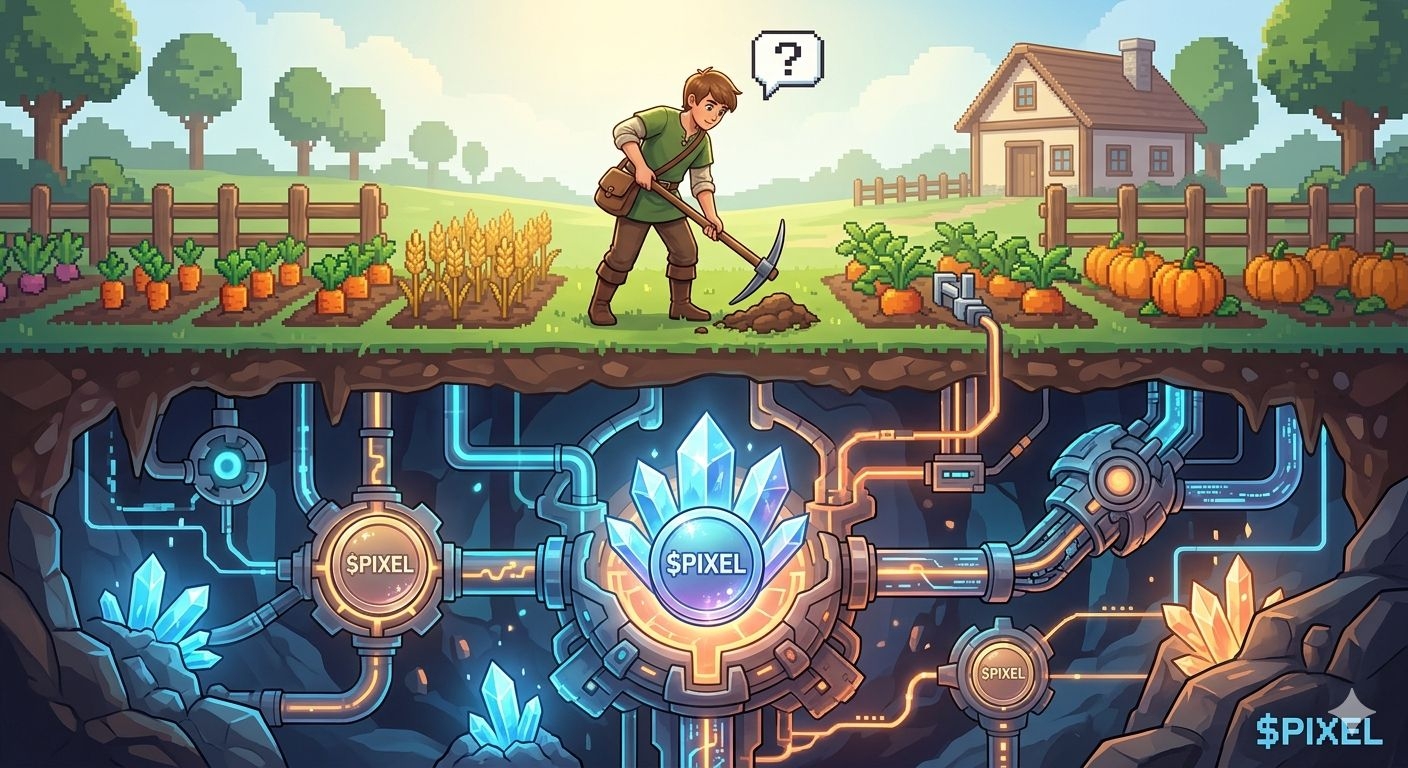
But after spending more time in the game, I started to notice something different.
The simplicity is actually intentional.
Pixels doesn’t try to overwhelm players early on. Instead, it lets you ease into the experience. You begin with basic actions, but gradually, you start understanding how different systems connect—resource management, progression, and how your time in the game translates into value.
What I find interesting is how this design keeps the game accessible while still offering depth for players who want to go further. You can play casually and enjoy the experience, or you can start thinking more strategically about how you spend your time and effort.
This is where the ecosystem behind $PIXEL becomes more meaningful.
It’s not just about doing repetitive tasks. It’s about how your actions fit into a larger system that rewards real engagement over time. The more you understand the game, the more you start to see the bigger picture behind it.
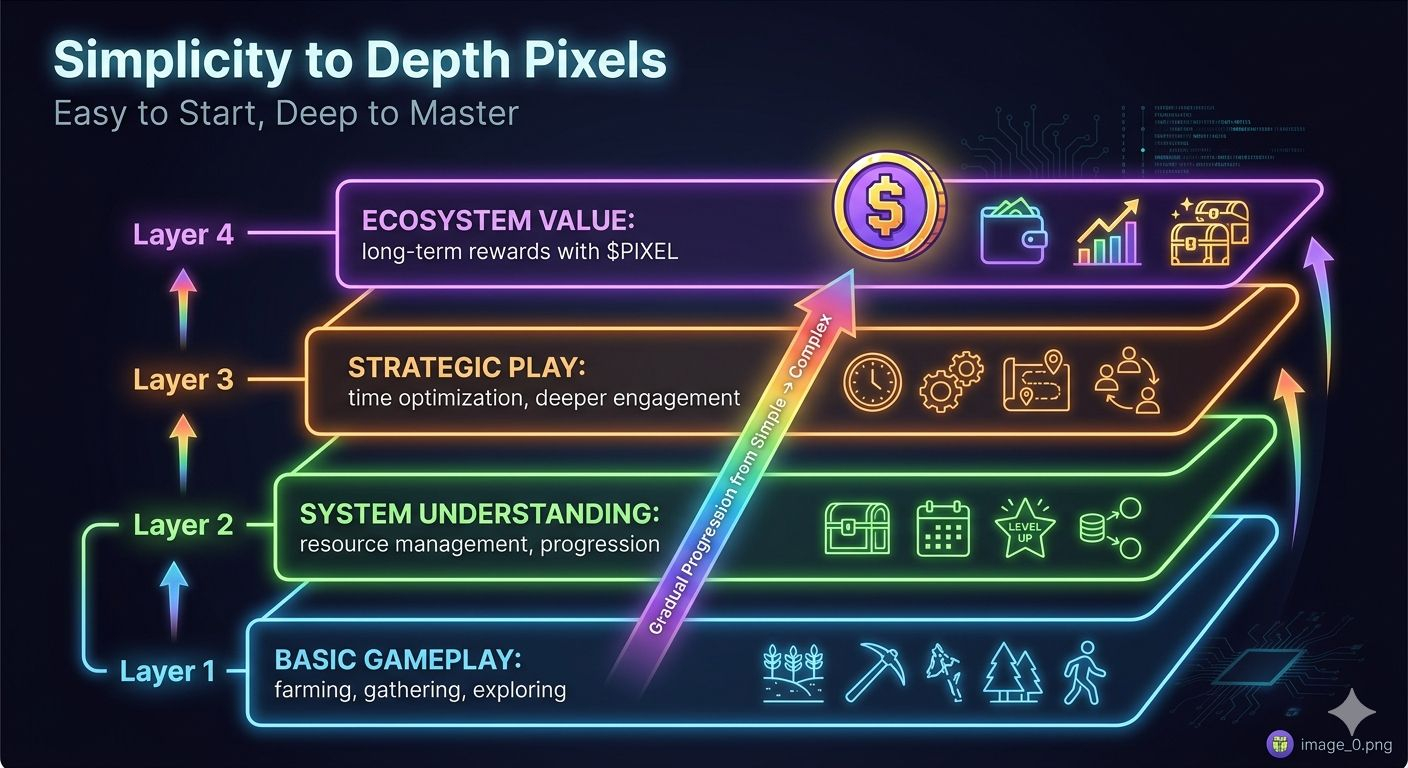
From my experience, this balance between simplicity and depth is what makes Pixels stand out. It doesn’t try to do everything at once—but once you’re in, there’s more to explore than you initially expect.
And that’s what keeps me coming back to @Pixels #pixel $PIXEL