

Bem-vindo de volta, comunidade Tezos. Esta semana se baseia diretamente no que surgiu em Cannes, e o foco está começando a se estreitar em um tema: Metais.
Na Tez/Dev, metals.io destacou-se como um dos exemplos mais claros de ativos do mundo real se movendo para um sistema que as pessoas realmente podem usar. Essa conversa continuou, com análises mais profundas e um olhar mais atento sobre como o acesso a esses mercados está começando a mudar.
Também passamos algum tempo esta semana focando na fundação do Tezos, uma boa infraestrutura. A palestra de Arthur sobre Tezos X trouxe o roteiro para uma visão mais clara, mostrando como a infraestrutura agora suporta aplicações mais complexas em diferentes ambientes, novas ferramentas que estão facilitando a construção, experimentação e impulso de ideias sem atritos.
Venha e aproveite tudo na edição desta semana do The Baking Sheet.
metals.io: Abrindo a Porta para Mercados que Nunca Foram Construídos para Você
Esta semana, estamos passando algum tempo com um dos lançamentos mais interessantes que surgiram do Tez/Dev.
Muitos mercados evoluíram rapidamente na última década, no entanto, metais raros se moveram a um ritmo muito diferente. Esses são ativos ligados à energia, infraestrutura e manufatura, mas o acesso ainda passa por sistemas que parecem ultrapassados e difíceis de navegar, a menos que você já opere dentro deles.
É aí que entra o metals.io.
Em um artigo forte esta semana, a Cryptonio discute a ideia maior por trás da plataforma e por que isso importa. O que começou com uranium.io agora se expandiu para um sistema mais amplo, trazendo ouro, urânio e um conjunto crescente de metais estratégicos para um único ambiente onchain.
A experiência em si é direta, embora haja muito acontecendo por trás. O acesso é contínuo, a propriedade é fracionada e a liquidação acontece on-chain em vez de longos ciclos de liquidação. Por trás disso, o sistema lida com custódia, conformidade, precificação e verificação do respaldo físico.
Alguns detalhes ajudam a tornar a mudança mais clara:
• Acesso a ouro, urânio e uma gama de metais estratégicos dentro de um único sistema • Mercados contínuos com propriedade fracionada em vez de grandes barreiras de entrada • Liquidação on-chain que substitui processos lentos de vários dias • Exposição direta a ativos fisicamente garantidos em vez de proxies indiretos
As adições mais novas são onde as coisas se tornam especialmente interessantes. Metais como háfnio, rênio, índio, neodímio e praseodímio raramente aparecem a menos que você esteja profundamente envolvido em indústrias específicas. Ao mesmo tempo, eles desempenham um papel em semicondutores, veículos elétricos, manufatura avançada e sistemas de defesa. A demanda existe, mas o acesso sempre foi limitado.
Essa é a epifania que o metals.io está introduzindo. Os metais em si permanecem os mesmos, mas a forma como as pessoas acessam eles está mudando.
Precificar esses ativos também se torna mais fácil de ver, a participação na posse desses metais se torna mais direta e a liquidação acontece imediatamente graças ao Tezos. Em mercados que historicamente foram opacos e restritos, essas mudanças começam a se acumular e beneficiar o usuário casual.
Com metais adicionais já a caminho, incluindo prata, paládio, níquel e cobalto, isso começa a parecer menos um único produto e mais uma camada crescente para acessar mercados de metais de forma mais ampla.
Se você quiser um olhar mais profundo sobre o pensamento por trás disso, o artigo completo da Cryptonio vale a pena ser lido.
Essa mesma direção se concretizou em uma transmissão ao vivo dedicada esta semana, onde a equipe e os parceiros discutiram o que o metals.io representa na prática.
A sessão reuniu Ben Elvidge do metals.io, Crispin Clarke da Curzon Uranium, Dimitrios da Noemon Tech, Alexander da VNX e o anfitrião ActionCEO da Genzio. A discussão focou em por que esses metais importam agora e como o acesso a esses mercados evoluiu.
A transmissão ao vivo também incluiu uma demonstração ao vivo da plataforma, que ajudou a conectar o conceito a algo tangível. Ver como acesso, precificação e liquidação se juntam torna o modelo mais fácil de entender.
Juntas, o artigo e a transmissão ao vivo apontam na mesma direção. O metals.io está construindo um caminho mais direto para algumas das commodities mais importantes do mundo, apoiado por uma infraestrutura que torna o acesso mais rápido, claro e mais fácil de navegar.
Esta Semana no Ecossistema Tezos
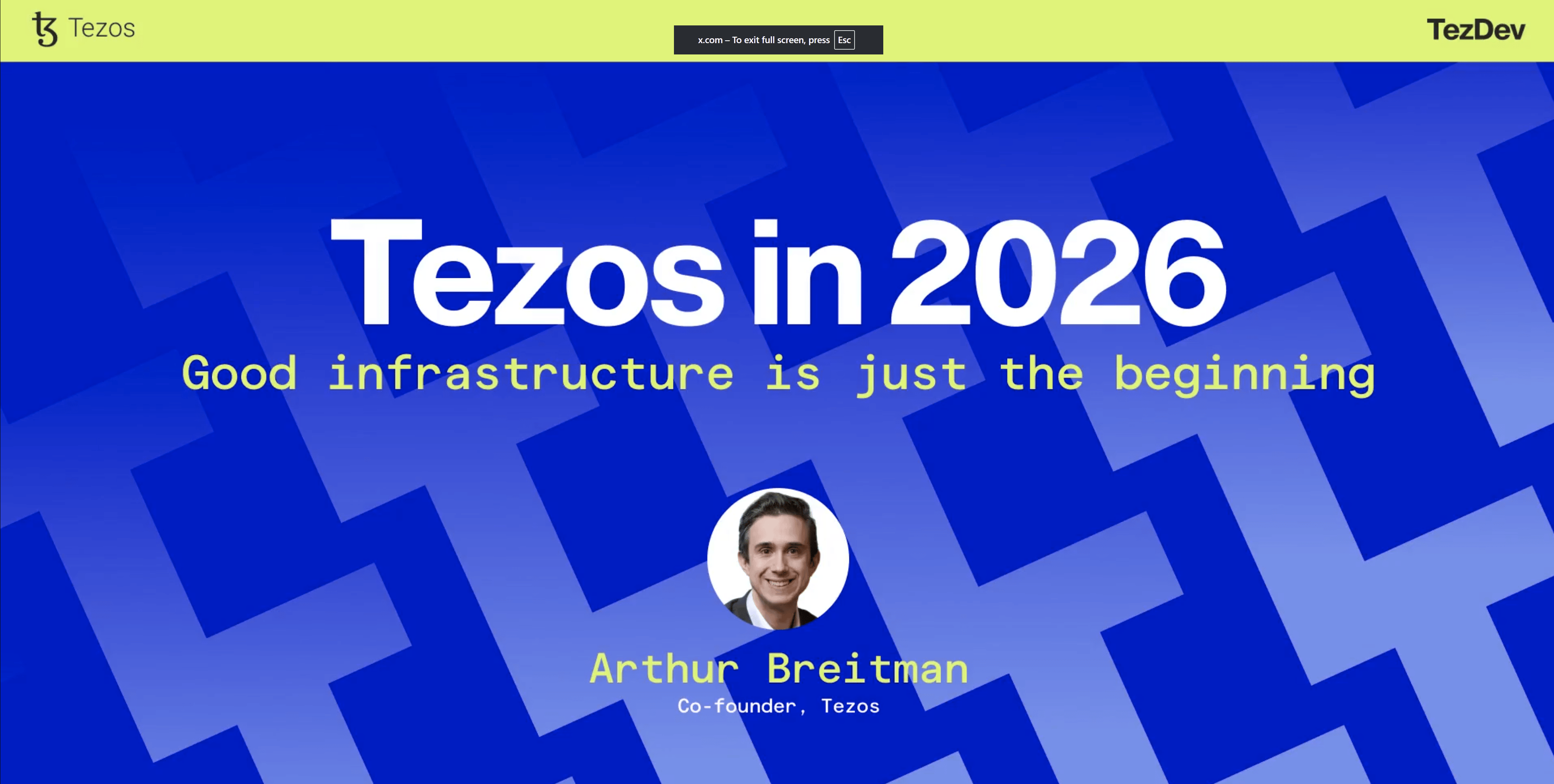 Tezos X: Construindo Através do EVM e Michelson, Juntos
A partir de metais e mercados do mundo real se abrindo, a conversa desta semana também volta à fundação que torna tudo isso possível, uma boa infraestrutura.
No Tez/Dev, a apresentação principal de Arthur Breitman deu uma das visões mais claras até agora sobre para onde o Tezos está indo a seguir e, mais importante, como as peças já em funcionamento começam a se conectar.
Enquadrado em torno de "Tezos em 2026: Uma boa infraestrutura é apenas o começo", o foco se deslocou além das atualizações e para o que essas atualizações possibilitam.
Algumas ideias se destacaram e se estenderam pelo resto da semana:
• Uma camada de execução unificada através do Tezos X • Uma mudança em direção a produtos, receita e uso real • Interação nativa entre ambientes EVM e Michelson
O que isso indica é um sistema onde os desenvolvedores não estão mais escolhendo entre ambientes. Em vez disso, eles podem construir entre eles, acessar diferentes bases de usuários e mover ativos nativamente sem introduzir camadas adicionais ou atritos.
Os desenvolvedores poderão implantar usando Solidity ou Michelson, trabalhar com suas pilhas existentes e estender aplicações por ambos os ambientes sem reescrever a lógica central. Ativos e chamadas podem se mover nativamente entre EVM e Michelson, o que muda a forma como as aplicações são projetadas e como a liquidez flui.
Também há um forte foco em desempenho com latência ultra-baixa, combinada com a segurança do Tezos L1, não há dupla que possa igualar esta oferta.
Além das funcionalidades, agora há um roadmap que oferece uma noção mais clara de como isso será implementado ao longo do resto do ano.
Abril de 2026: o testnet do Tezos X entra ao vivo, permitindo que os desenvolvedores implantem e experimentem em ambos os ambientes
Junho de 2026: ativação da mainnet como uma atualização para o Etherlink, com total composiabilidade entre EVM e Michelson
Mais tarde em 2026: expansão para ambientes de programação mais amplos através de uma transição para RISC-V
Esse último passo abre a porta para linguagens mais familiares e iteração mais rápida, tornando mais fácil para os desenvolvedores construírem sem serem limitados a uma única pilha.
Juntas, isso se baseia no que nos foi apresentado no Tez/Dev. A infraestrutura está alcançando um ponto onde suporta sistemas mais complexos. O foco está mudando para o que é construído em cima disso, como os usuários interagem com isso e como as aplicações escalam entre os ambientes.
Se você quiser assistir à apresentação completa, pode encontrá-la aqui.
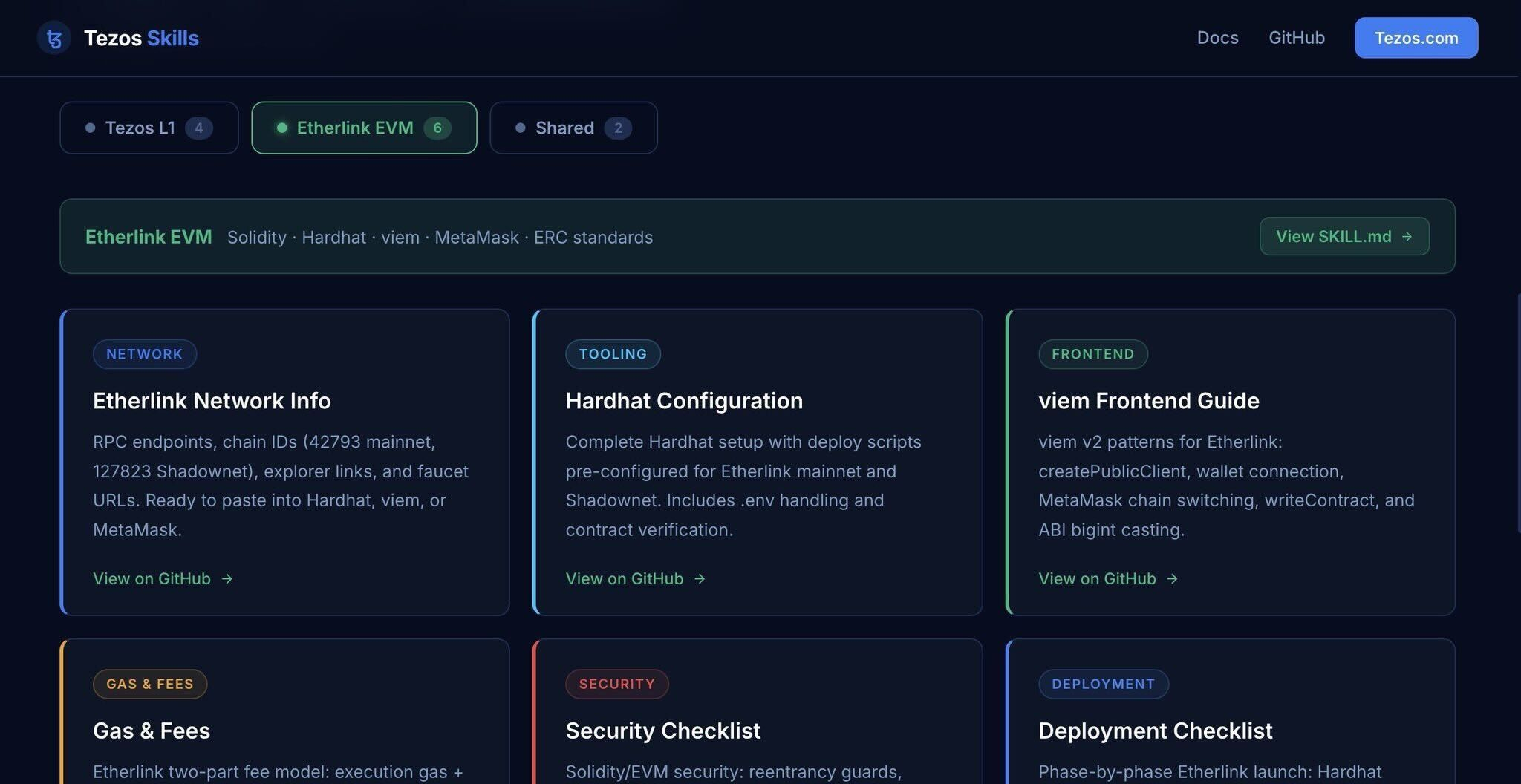 Construir no Etherlink Com Apenas um Prompt
À medida que a semana avança de infraestrutura e ativos do mundo real para como as pessoas realmente constroem, há outra mudança que vale a pena prestar atenção.
Uma nova ferramenta criada por 0xYpsono está tornando possível construir diretamente no Etherlink usando nada mais do que um prompt.
Em vez de escrever código linha por linha, você descreve o que deseja em inglês simples, e o sistema cuida do resto. Usando uma configuração dedicada de Claude Skills, ele pode gerar, estruturar e implantar dApps e contratos inteligentes em um único fluxo.
A experiência é simples na superfície, embora mude a forma como as pessoas abordam a construção:
• Descreva sua ideia em linguagem simples • Gere contratos e lógica de aplicativo automaticamente • Implemente diretamente no Etherlink
O que se destaca aqui é quão rapidamente a barreira de entrada muda. Você passa de precisar de uma configuração completa de desenvolvimento para poder testar uma ideia quase imediatamente.
Isso também se relaciona com tudo o que está acontecendo no ecossistema. Execução mais rápida, ambientes unificados e agora ferramentas que reduzem a lacuna entre a ideia e a execução.
Se você quiser tentar por conta própria, pode entrar aqui.
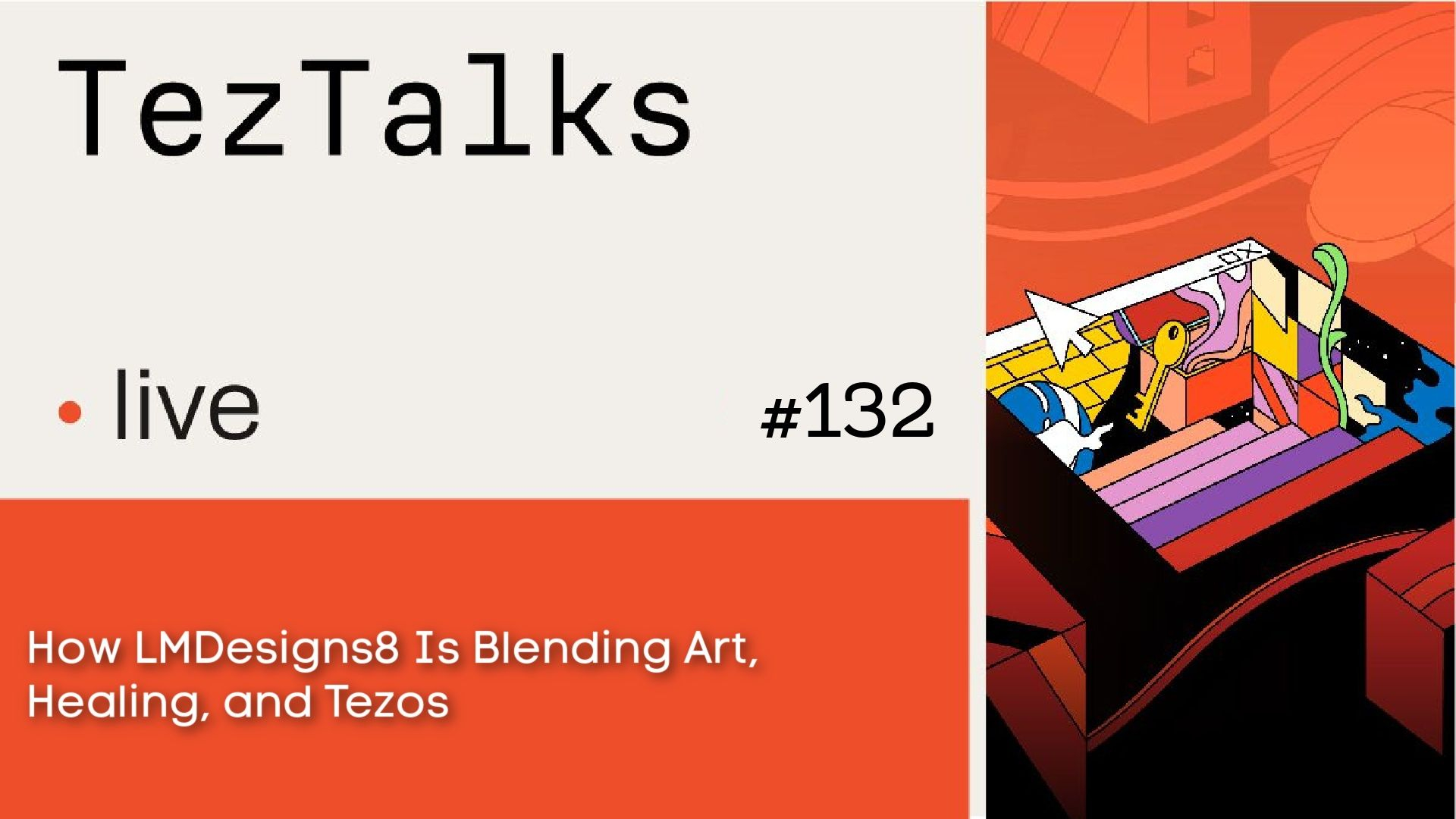 🔴 Agora Transmitindo: Destaque da Comunidade | Como LMDesigns8 Está Misturando Arte, Bem-Estar e Tezos
Esta semana no TezTalks Live, o anfitrião Stu se junta a Leah Michelle, também conhecida como LMDesigns8, uma artista multidisciplinar criando experiências XR imersivas, espaços de jogo AR e mundos virtuais meditativos.
Nesta conversa, Leah compartilha como sua jornada pessoal, incluindo desafios de saúde, moldou sua direção criativa e como essa perspectiva a levou a construir trabalhos focados em cura, presença e conexão.
Agora transmitindo no YouTube.
Powered by beehiiv