
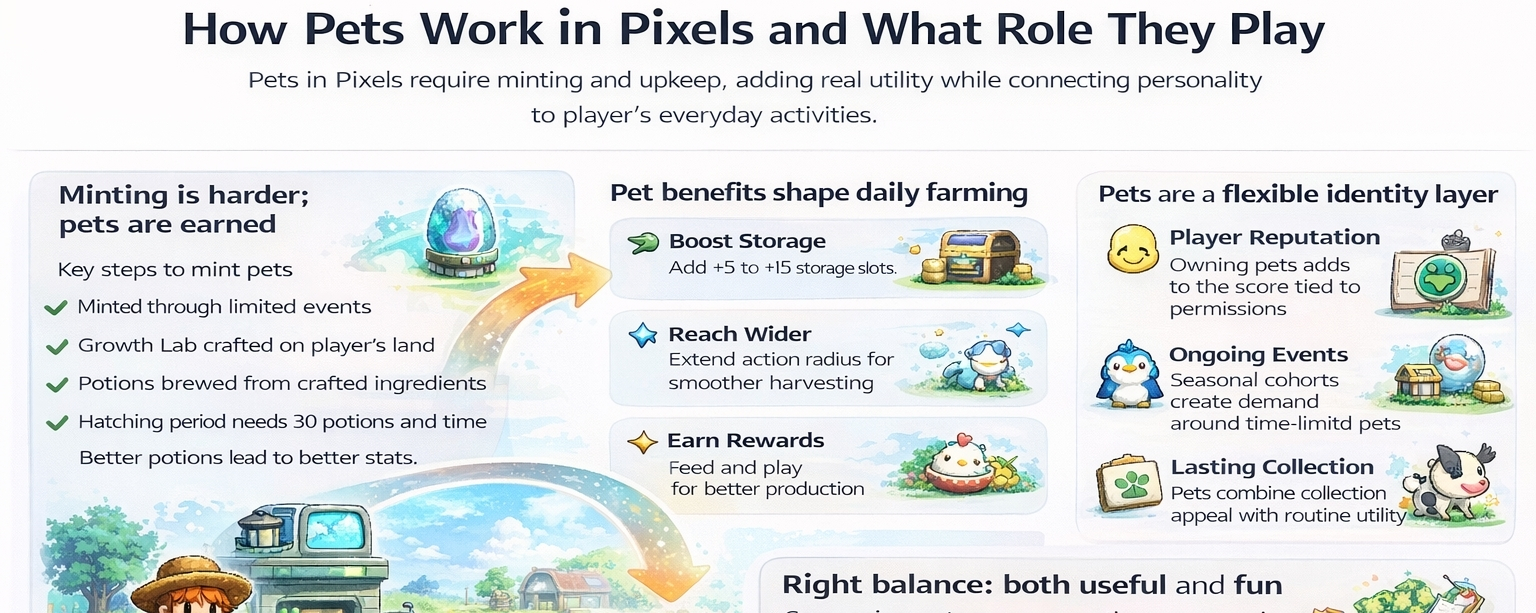

@Pixels I think the easiest mistake people make with pets in Pixels is treating them like decorative side assets. From the way the system is built I see something more important. Pets are one of the clearest examples of Pixels turning collection into utility. They are not just there to add personality to a wallet or a profile because they are meant to affect how the game feels from one session to the next. That is why I think they are worth taking seriously right now.
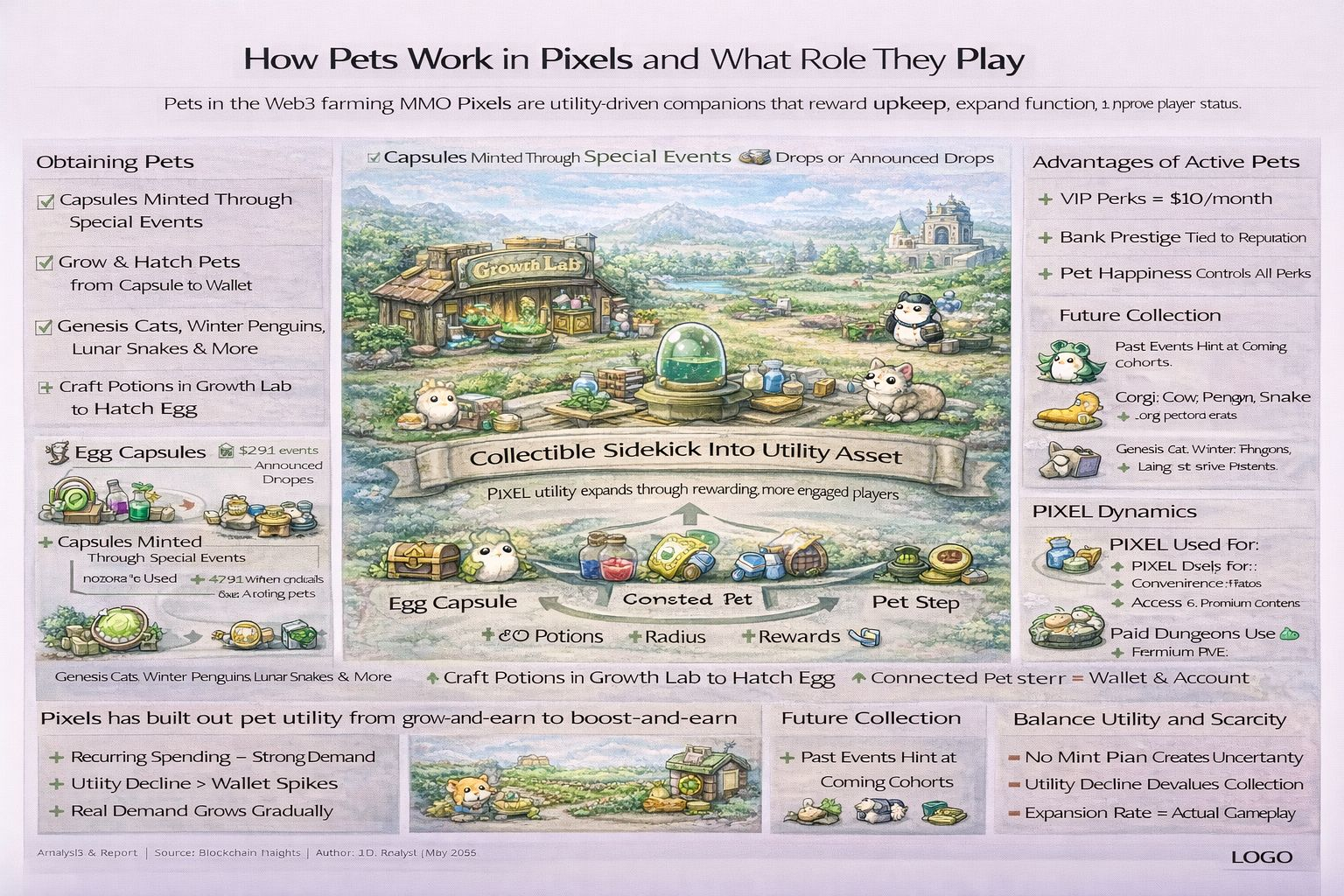
What stands out to me first is the way pets enter the game. Pixels does not present them as simple cosmetic items that appear in a shop and then disappear into an inventory. A player needs a pet capsule and those capsules arrive through special events or announced mints. Hatching also takes work because a player needs a Growth Lab on land, has to craft potions, use 30 of them, and then wait for the hatch to finish. Better ingredients lead to better potions and better potions can influence a pet’s stats. After that the pet still has to be connected through the player’s wallet and account before it becomes usable in game. I like that structure because it creates friction in the right places and makes pets feel earned instead of instantly consumed.
That matters more than it may seem. In a lot of online games companion systems are little more than visible accessories. They might look nice but they rarely change behavior in a lasting way. Pixels takes a different route. Once active pets can add storage, widen interaction radius, and reward regular upkeep. Those benefits may sound modest on paper yet in a farming and routine driven game small conveniences build on each other over time. A bit more storage means fewer interruptions while a wider interaction radius makes repetitive actions smoother. Over long sessions those changes can reduce friction in a way players actually feel even if they would struggle to explain it in one neat line.
To me that is the real design insight. Pixels is not using pets just to sell identity because it is using them to shape habit. An active pet only keeps delivering value if I keep it happy with food, water, and playtime. That condition matters because it turns the pet from a passive collectible into a living part of my daily loop. A static item is easy to forget once the excitement fades but a pet that needs care becomes part of the rhythm of logging in, managing time, and making tradeoffs. In a live game rhythm matters more than people often admit. Retention is rarely built on dramatic moments alone and is more often supported by systems that quietly make players want to return tomorrow.
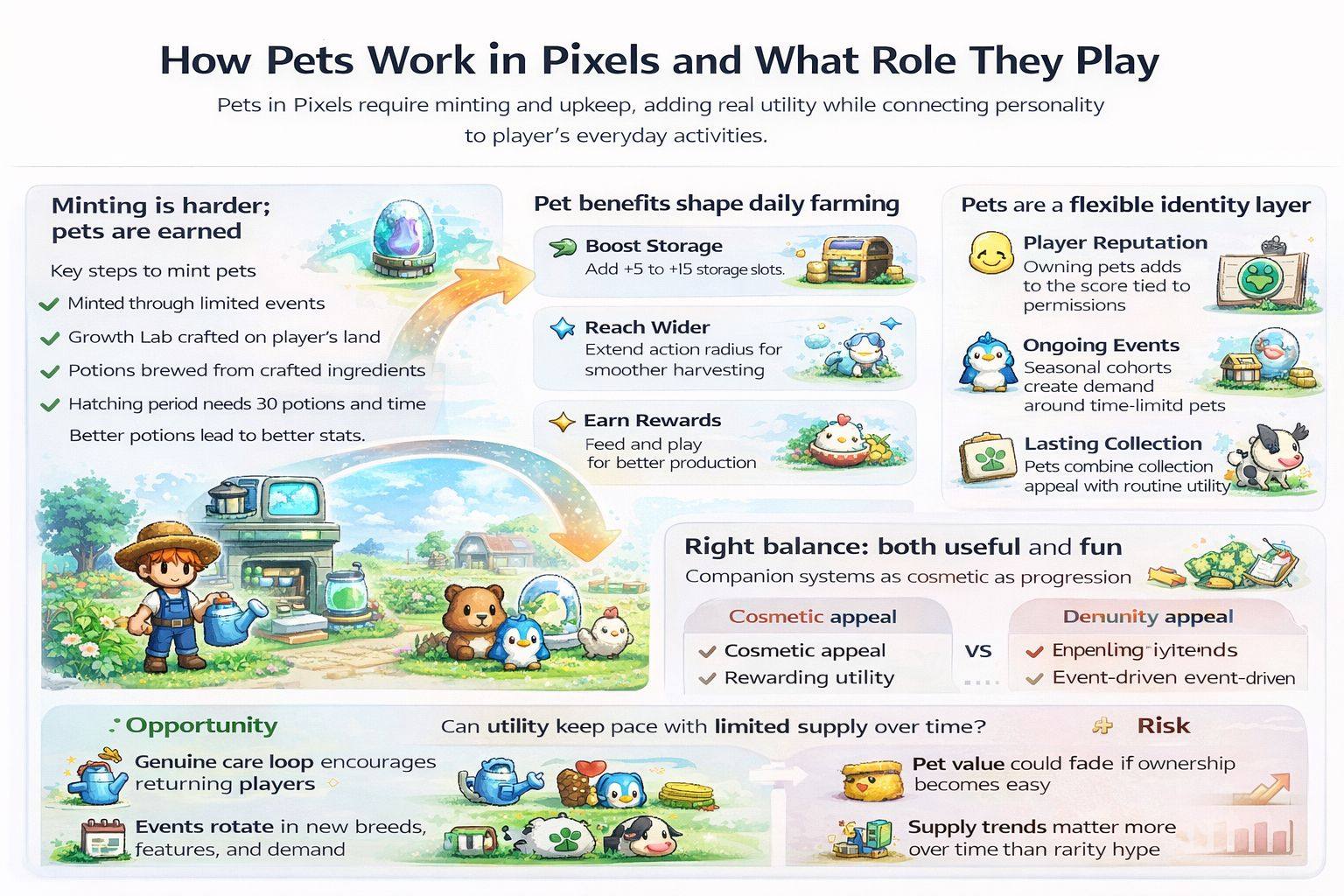
I also think the market sometimes misreads what Pixels is trying to do here. Digital companions are often valued like cosmetics with a story attached. Pixels has tried to make pets closer to productivity tools with personality and that is a more durable role. The game’s reputation system even includes pet ownership as one way to improve standing while reputation affects who can trade, use the marketplace, and withdraw. I would not overstate that point because the exact weighting is not publicly broken down in a way that lets outsiders model it cleanly. Still the message is clear enough. Pets are tied to the broader incentive structure instead of floating outside it.
What gives me more confidence is that the system did not end with the original Genesis release. Pixels kept returning to pets through later events including Penguin Pets during the Winter Carnival and a Lunar Snake Pet as a major reward during the Lunar New Year event. The pet registry also points to later cohorts such as dogs, cows, penguins, snakes, and St. Patrick’s pets. That follow through matters because it tells me pets are not abandoned inventory left over from an earlier phase of the game. They remain a live design tool that Pixels can reuse for events, engagement, and player identity.
Even so I think the strongest way to read pets is with balance. In the short term they benefit from novelty, visibility, and the social pull of limited collectibles. In the long term their value depends on whether Pixels keeps utility meaningful without turning upkeep into chore tax. There is also supply risk. Pixels has said there is no fixed plan for how often future pet mints will happen and traits can vary by mint. For me that means anyone thinking seriously about pets whether as a player or a trader should watch utility updates more closely than rarity slogans. If supply grows faster than the gameplay reasons to own a pet then the narrative can outrun the function.
My takeaway is simple. I do not see pets in Pixels as magic assets and I do not dismiss them as cosmetic fluff either. I see them as a useful middle layer between emotional attachment and mechanical value. They are collectible enough to feel personal, functional enough to matter in play, and flexible enough for the team to build around over time. That is why I think pets still matter. They show Pixels at its most practical by trying to turn digital ownership into everyday game function. If the team keeps building that carefully pets may stay relevant long after the latest event reward stops feeling new.