
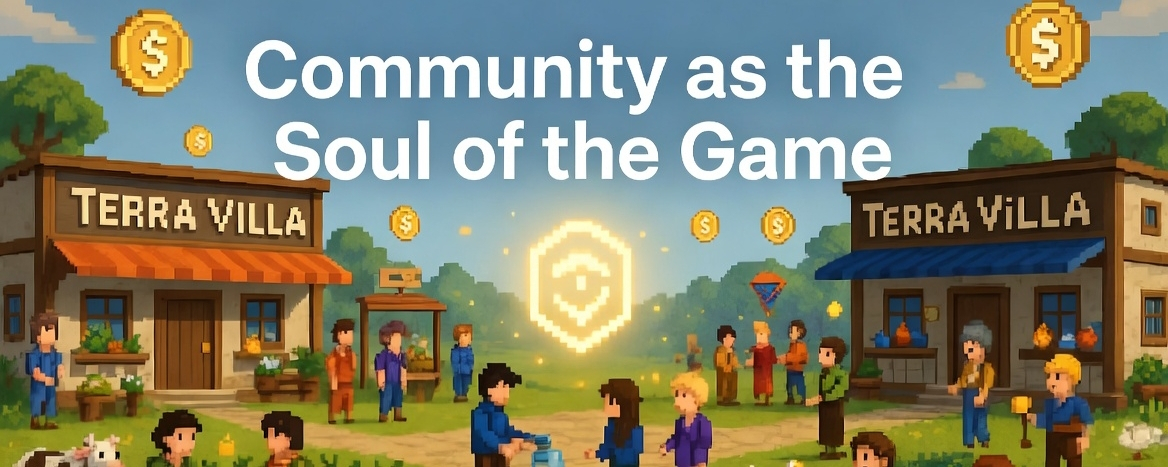
In the crowded world of Web3 gaming, most titles promise riches through play-to-earn mechanics but often forget one essential ingredient: genuine human connection. @Pixels the browser-based social farming game on the Ronin network, takes a different path. The team has consistently described the community as the “soul” of the game — not a marketing slogan, but a foundational philosophy that drives development, retention, and long-term value.
At its heart, #pixel blends cozy farming, crafting, and exploration with deep social elements. Players till virtual soil, gather resources, build on land plots, and level up skills in a charming pixel-art world called Terra Villa. Yet what keeps hundreds of thousands returning daily is not just the relaxing gameplay — it is the living, breathing community that emerges around it.
Terra Villa: The Digital Town Square
Terra Villa serves as the central hub where players naturally congregate. Here, strangers become friends through casual chats, collaborative events, trading, and spontaneous hangouts. Unlike solitary farming simulators, Pixels turns the virtual world into a “third place” — a welcoming space for social interaction beyond work or home.
This social layer feels authentic because it is player-driven. Community members organize events, share strategies, mentor newcomers, and even influence the in-game economy through collective decisions on resource values and popular activities.
Guilds, Unions, and Collaborative Competition
$PIXEL nurtures community through structured yet accessible group features. Guilds allow dedicated players to form tight-knit teams for shared land management, resource pooling, and coordinated events. Creating a guild requires a minimum reputation score and some $PIXEL, ensuring committed leadership.
Chapter 3’s Unions — Wildgroves, Seedwrights, and Reapers — take this further by offering lightweight, inclusive factions open to all players. These unions compete in seasonal events, stacking resources and racing toward shared goals like raising “Hearth Health.” The competitive yet collaborative format rewards participation without gatekeeping, drawing in both free-to-play users and dedicated farmers.
Such systems transform individual grinding into collective achievement, fostering loyalty and a sense of belonging.
Reputation: Rewarding Positive Contributions
The reputation system stands as one of Pixels’ smartest community tools. Your score rises through helpful actions — completing quests, participating in events, owning land or pets, and engaging positively in guilds or unions. Higher reputation lowers trading fees and unlocks benefits, directly incentivizing constructive behavior over toxic competition.
This mechanic signals that the game values contributors who strengthen the ecosystem, not just high-volume farmers. It cultivates a culture of respect, collaboration, and mutual support.
Transparency, Governance, and Shared Ownership
The Pixels team, led by founder Luke Barwikowski, builds in public. Frequent updates, AMAs, and direct feedback channels allow players to shape future features. The project’s long-term vision includes greater decentralization, with $PIXEL staking enabling governance participation through the broader “Stacked” multi-game platform.
Players do not merely consume content — they help steer the direction of the virtual world. This ownership mindset turns users into stakeholders who care deeply about the game’s health.
Why Community Matters More Than Ever
In an era where many Web3 projects chase short-term hype, Pixels’ “fun first, crypto second” approach has proven resilient. The game has seen strong daily active user growth, often ranking among the top titles on Ronin . Its success stems from creating memorable experiences that feel human: friendships formed in Terra Villa, alliances in unions, and shared victories in community events.
The community acts as the soul because it provides purpose beyond tokens. When players invest time, creativity, and emotion into a shared world, the project gains organic momentum. Content creators, guild leaders, and casual farmers all contribute to a vibrant culture that no single update can replicate.
Pixels demonstrates that sustainable Web3 gaming requires more than blockchain infrastructure or token utility. It needs real social bonds, inclusive systems, and a team that listens. By placing community at the center, Pixels is building not just a game, but a digital home where millions feel they truly belong.
As the project continues evolving with new chapters and features, one thing remains constant: the players are the soul that keeps the pixelated world alive and thriving.
Do you think community has the major role in a project?