
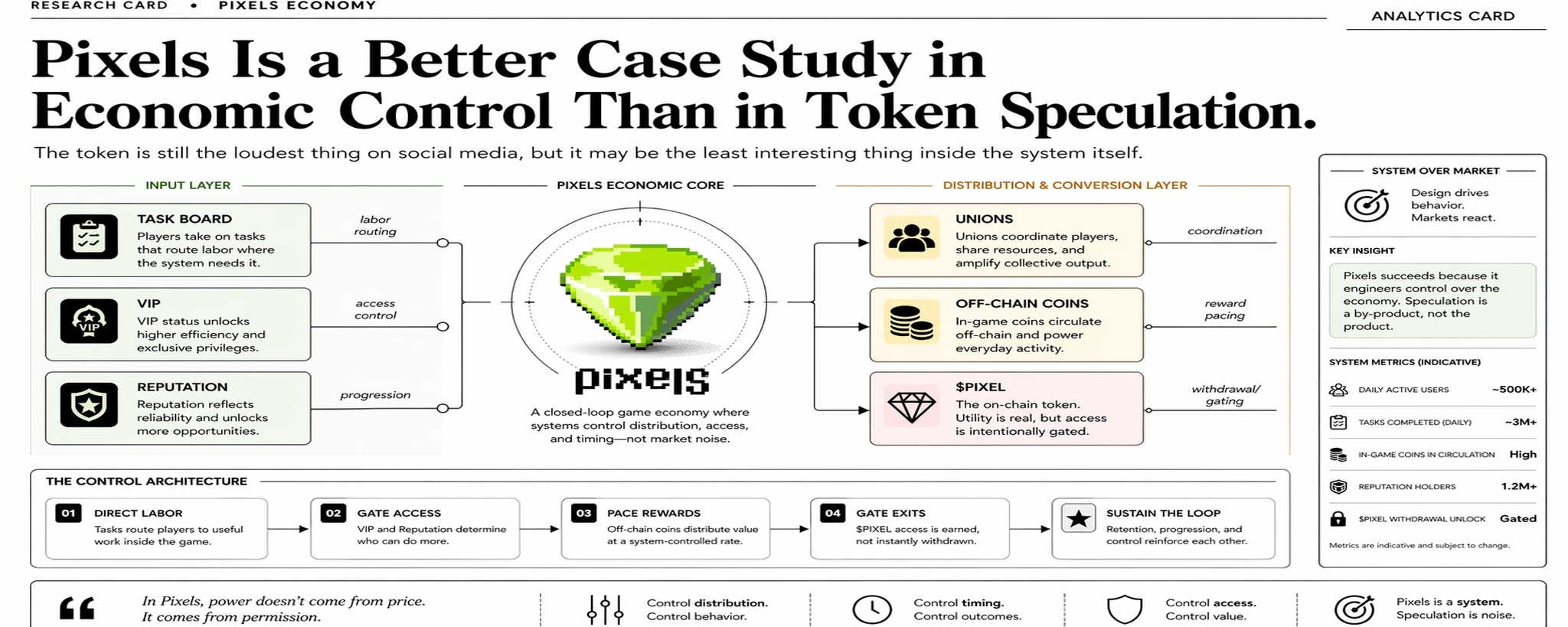
@Pixels I used to think the fastest way to understand a Web3 game was to watch the token first. Not because that was intellectually serious, just because it was easy. Price moves. People react. Social feeds do the rest. After a while, though, that starts to feel like looking at smoke and calling it the machine.
Pixels is what changed that for me a bit. The token is still the loudest thing around the project, maybe louder than ever on social media, but inside the game the more revealing story is lower down. It sits in timing, access, thresholds, little frictions, who gets routed where. The older read is that Pixels is mainly a speculative game economy with a token attached. I do not think that gets to the center of it anymore. What is more interesting is the way the game keeps tightening its grip on flows of labor, progression, and payout without always making that grip look dramatic.
The shift away from BERRY made that hard to miss. Pixels said outright that BERRY was running at roughly 2% daily inflation and that managing a soft currency on-chain was becoming a problem, especially in a live economy where farming pressure and sell pressure could compound into something ugly. So the game moved toward off-chain Coins, pushed harder on $PIXEL as the main token, and framed the change as a way to reduce market leakage and simplify the economy. That does not read to me like a token story in the narrow sense. It reads like a system trying to get its hands back on circulation. Not all at once. But enough. 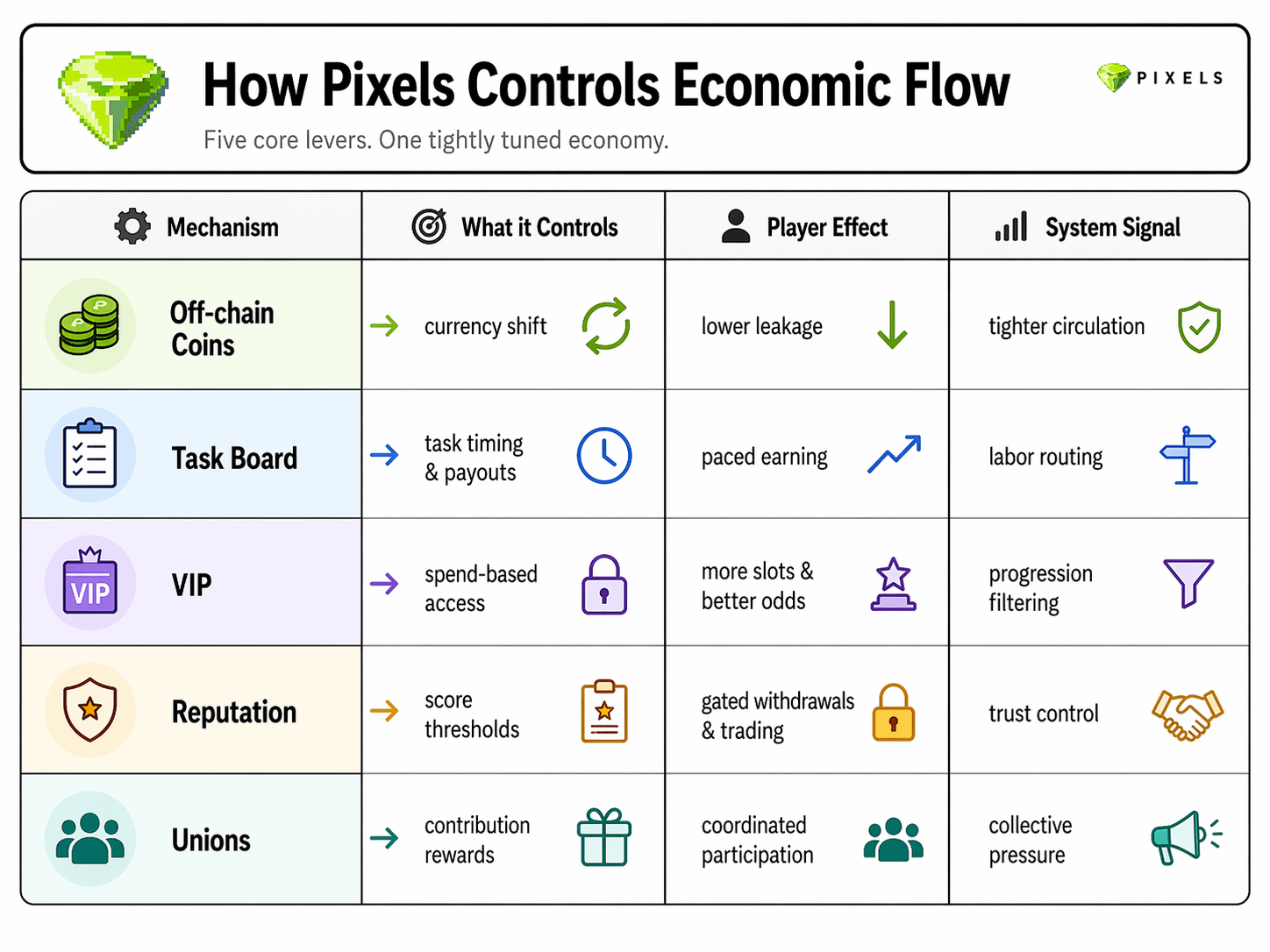
Then there is the Task Board, which at first glance looks ordinary enough. Daily tasks, refreshes, rewards. Fine. But the details matter more than the surface here. It resets at 00:00 UTC. Completed tasks refill after five minutes. It is the primary in-game method for earning both Coins and PIXEL, and the only in-game route for earning $PIXEL at all. Even that is not evenly distributed; VIP and land ownership can improve the chance of getting PIXEL tasks. So the board is not just paying players for activity. It is pacing them, sorting them, and making token access feel conditional in a very operational way. You can feel the hand of the system in it, even if the interface looks friendly.
VIP pushes the same logic a little further, just less quietly. It costs about $10 a month in PIXEL, gives three extra task slots, VIP-only tasks, marketplace advantages, and it plugs directly into a spend-based tiering system. Reputation does something similar from the trust side: marketplace use, withdrawals, and trading limits are all gated by score thresholds, and Pixels describes that system as a way to distinguish good users from bad actors. That is where the project gets more interesting to me. The economy is not only rewarding participation. It is grading users, filtering exits, and deciding whose activity counts as acceptable circulation. 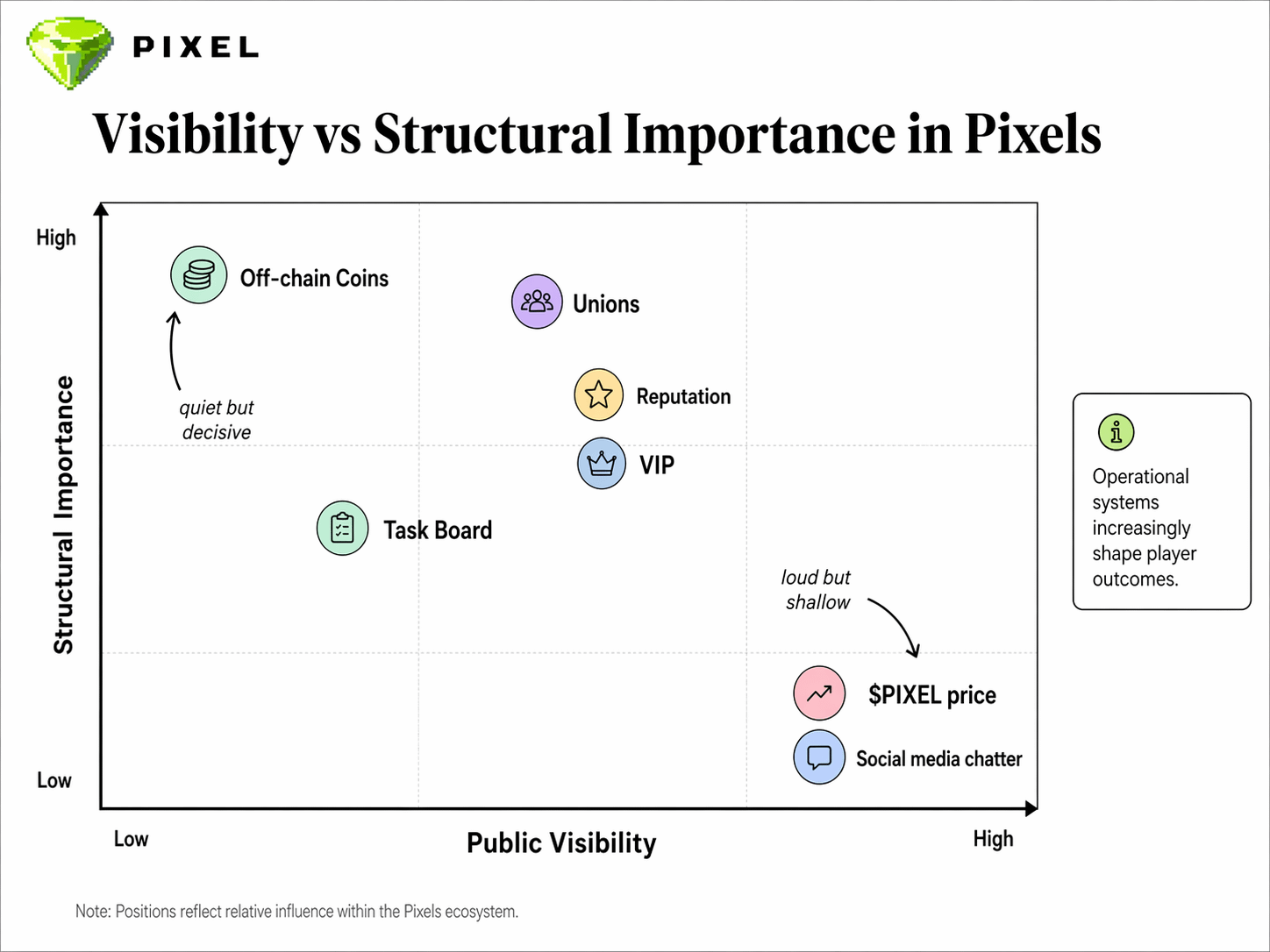
Chapter 3 made the pattern even clearer. Union rewards are not just social incentives sitting on top of the game. They are coordinated pressure. The season ends when one Union reaches 100% Hearth Health, the first-place Union takes 70% of the pool, second takes 30%, and internal rewards depend on contribution. No contribution, nothing.
That is not really a market narrative. It is a control narrative dressed up as play, which maybe sounds harsher than I mean it to, but I do not think it is wrong. Pixels keeps looking less like a token you evaluate and more like a live economy asking who can move, who can earn, who can withdraw, who gets seen as trustworthy enough to matter. Price still flashes, obviously. It is just not where the real pressure seems to live.#PIXEL #pixel