
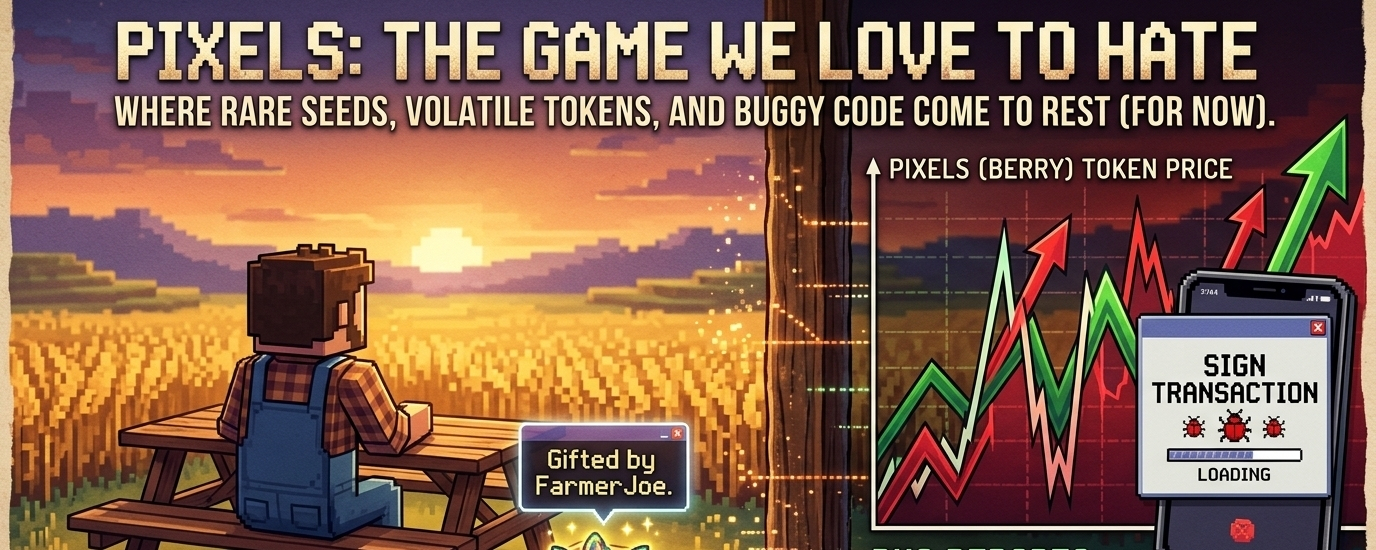
Pixels looks simple at first. That is probably why it works on so many people. You see the farming, the open world, the social stuff, the soft art style, and it feels easy to read. Just plant things, explore, craft a little, talk to people, log off. Nothing too serious. But after a while, it stops feeling that simple.
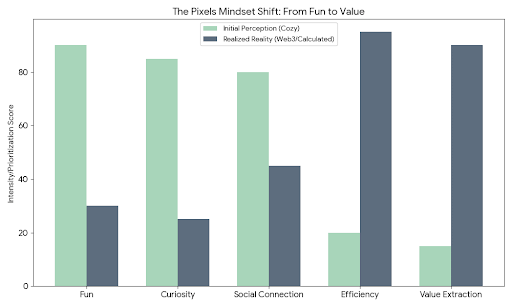
The problem is not that Pixels is broken. The problem is that it slowly pushes you into thinking about everything in terms of time and value. Not fun. Not curiosity. Value.
That is where the Web3 part really kicks in.
Once a token sits in the middle of the game, even quietly, players start asking different questions. Not “what do I feel like doing?” but “what is actually worth doing right now?” That changes the mood fast. Farming is no longer just farming. Waiting is no longer just part of the loop. Progress starts feeling like something you measure minute by minute. You notice delays more. You notice which activities give more back. You notice where the game feels slow on purpose.
And that is when the cozy vibe starts to crack.
To be fair, Pixels handles this better than most crypto games. It does not hit you in the face with token nonsense every second. It actually feels like a real game first, which already puts it ahead of a lot of Web3 projects. The world is easy to get into. The routine makes sense. The social side helps. It feels alive enough that you want to stay for a bit.
But that only makes the tension more obvious.
Because players always optimize. Always. The second people figure out the best loops, the world starts shrinking. What looked like freedom turns into routes. What felt relaxed starts feeling calculated. Exploration becomes efficiency. Farming becomes output. Even social play starts turning into comparison. Who is ahead. Who figured it out faster. Who is wasting less time.
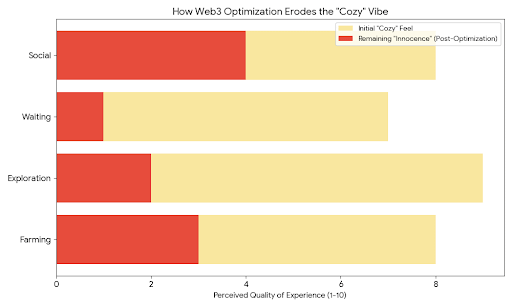
That is the part people do not say out loud enough.
Pixels is selling a soft, friendly world, but underneath that, it is still shaping how players think about their time. And once time stops feeling neutral, the whole game changes. You are not just playing anymore. You are managing pace. Managing friction. Managing return.
That does not make Pixels bad. But it does make it less innocent than it looks.
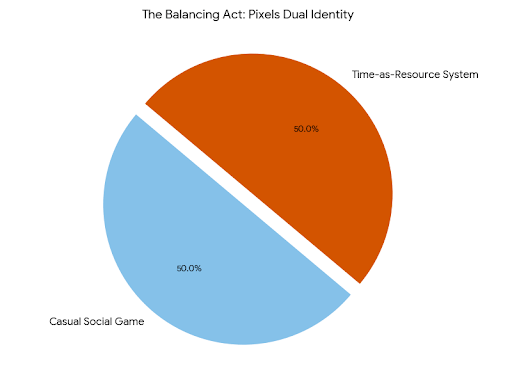
Honestly, that is why it is interesting. It is trying to be two things at once. A casual social game and a system where your time has a kind of price attached to it. Sometimes that balance works. Sometimes it feels awkward. But that tension is the real story.
So yeah, Pixels looks cozy. It looks simple. It looks like just another farming game with a token attached.
It is not.
It is a game that quietly teaches you to ask one question over and over again: is this really worth my time?