
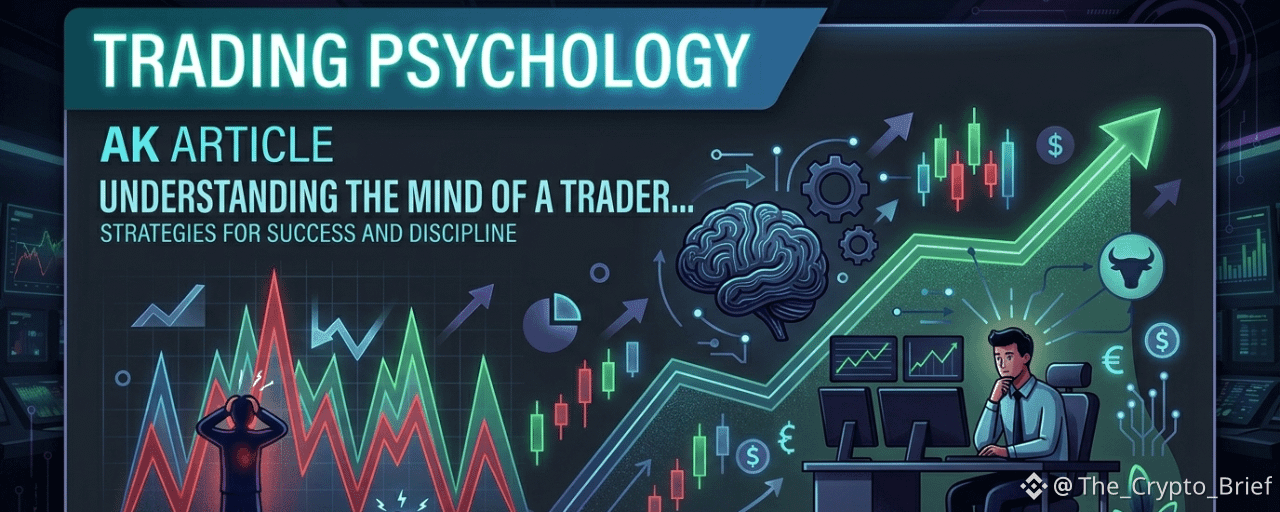
In trading, technical knowledge is important — but psychology is what truly defines long-term success.
Market conditions will always change, but your ability to manage emotions determines whether you survive or fail.
📊 1. Start Every Trade With a Plan
Before entering any position, define your entry, exit, stop-loss, and target.
A clear plan removes uncertainty and helps you stay disciplined when the market becomes volatile.
Without a plan, every decision becomes emotional.
⚖️ 2. Manage Risk to Control Emotions
Risk management is not just about protecting capital — it directly affects your mindset.
When you risk too much on a single trade, fear increases.
When fear increases, decision-making becomes unstable.
Keeping risk small allows you to think clearly and act rationally.
📉 3. Accept Losses as Part of the Process
Losses are not failures — they are part of trading.
Even experienced traders take losses regularly.
What separates professionals from beginners is how they respond to them.
✍️ 4. Review Your Emotions
After each trade, take a moment to reflect:
Why did you enter?
Did you follow your plan?
Were you influenced by fear or greed?
Self-awareness is the foundation of improvement.
⏸️ 8. Take Breaks When Needed
Trading under stress, anger, or fatigue leads to poor decisions.
Sometimes, the best trade is no trade at all.
Stepping away helps you return with clarity and control.
⚡ 9. Build Discipline, Not Just Profit
Profit is a result of consistent behavior.
Discipline means following your plan even when emotions push you to act differently.
Over time, discipline creates stability — and stability leads to growth.
🔑 Key Rule to Remember
If a trade makes you feel uncomfortable or anxious,
it usually means your risk is too high.
Are you working on your strategy… or your psychology? 👇
Disclaimer:
This content is for educational purposes only. Always do your own research ⚠️