
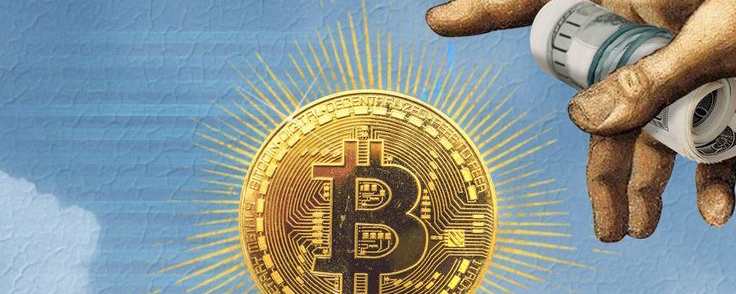
The Hard Truth Nobody Wants to Hear
Every week, a new cryptocurrency launches with a bold promise: “This one is different. We’re faster than Bitcoin. Cheaper than Ethereum. Smarter than Solana.”
And every week, people with investment dreams buy in.
But here’s what nobody tells you: The market already decided. Bitcoin, Ethereum, and Solana aren’t winning because of luck or first-mover advantage alone. They’re winning because, at this point, there’s literally nothing genuinely new left to build.
This article explains why almost every new crypto project is fundamentally a marketing exercise—and why the ones people keep promoting are proof of it.
Part 1: What Actually Differentiates a Cryptocurrency?
Before we talk about why new coins fail, let’s understand what actually matters in crypto:
1. Security
Your coins need to be mathematically safe. The network needs to be nearly impossible to attack. This requires significant computing power and decentralization.
Who won: Bitcoin and Ethereum. Both have massive mining/validator networks. Attacking them would cost billions and still might fail.
2. Speed and Cost
How fast can you send transactions? How much does it cost?
Who won: Solana (400+ transactions per second, pennies per transaction). Bitcoin is slow (10 min blocks, expensive). Ethereum improved with upgrades but still lags Solana.
3. Developer Ecosystem
Can developers actually build on it? Are there working tools, libraries, and examples?
Who won: Ethereum has the most mature ecosystem. Thousands of apps (Uniswap, Aave, OpenSea, etc.). Solana is catching up fast. Bitcoin is limited by design.
4. Actual Adoption
Do real people use it? Is there real transaction volume?
Who won: Bitcoin (store of value), Ethereum (DeFi, NFTs, smart contracts), Solana (gaming, DeFi, volume).
5. Network Effects
Does anyone care if you own it? Can you actually use it somewhere?
Who won: The big three. Your friend will accept Bitcoin. Exchanges list Ethereum. You can actually use Solana on something.
Part 2: What New Coins Actually Offer
Let’s be honest. What do new crypto projects claim to offer?
The Standard Pitches (And Why They’re Fake)
“We’re faster than Bitcoin and Ethereum”
• Reality: Solana already did this. Speed without decentralization is just a database. You want speed and security—but there’s a tradeoff. Solana found a good balance. The next coin claiming the same thing is just a worse copy.
“We have better smart contracts”
• Reality: Ethereum’s smart contracts work fine. The problem isn’t the tech—it’s that developers don’t need “better.” They need what’s already proven. It’s like saying your new social network is “better than Facebook because the code is cleaner.” Doesn’t matter. Facebook already has all the users.
“We’re more decentralized”
• Reality: Decentralization is a marketing word that means different things to different people. Bitcoin is decentralized. Ethereum is decentralized. Most new projects are decentralized in the same way. And most don’t prove it matters in practice.
“We solve the energy problem”
• Reality: Ethereum already solved this with Proof of Stake (using 99% less energy than Bitcoin). Bitcoin’s energy use is… not a technical problem. It’s a choice. If a new coin uses less energy, that’s not a feature—it’s just how they designed it. Nothing innovative.
“We have better governance”
• Reality: This is code for “Our team gets to make more decisions.” Better governance is subjective. Bitcoin’s governance (extremely difficult to change anything) might seem bad, but it’s actually a feature. It prevents the network from being destroyed by bad decisions.
“We’re the next Ethereum”
• Reality: Ethereum spent 5+ years building. It has tens of billions in TVL (total value locked), thousands of developers, and massive institutional adoption. You’re not replacing that with a whitepaper and a Discord server.
The Pattern You Should Notice
Every new coin makes the same claims. Why? Because there’s nothing else to claim. The tech problems in crypto were mostly solved 5 years ago. At this point, innovation is marginal—smaller and smaller improvements that most users will never notice.
Part 3: Why Marketing Became the Real Game
If technology isn’t actually different, how do new coins get funding and adoption?
Answer: Pure marketing.
The Marketing Machine
Here’s how it works:
1. Influencers get paid
• A new project allocates 5-10% of tokens to “early investors” and marketing. They quietly give a bunch to crypto influencers (sometimes not even disclosed).
2. The influencers pump it
• “I’m not invested, but I’m excited about Project X! Check it out 👀”
• (They’re usually heavily invested)
3. Retail buyers FOMO in
• “If influencer X is excited, it must be good!”
4. Price goes up 100x
• Early investors and the project team sell to the retail buyers who just got in
5. The project dies
• It never actually had a use case. No developers build on it. It has no adoption. It becomes worthless.
The goal was never to build something that lasts. The goal was extraction—getting money from people who believe the marketing.
Real Examples
• Luna/Terra (2022): Massive marketing push, celebrity endorsements, promised revolutionary features. Collapsed entirely. Billions lost.
• FTX Token (2022): Endorsed by celebrities, claimed to be next big exchange. Turned out to be a Ponzi scheme.
• Dogecoin (2021-2023): Zero technology improvements over Bitcoin. Pure meme marketing. Still has less utility than Bitcoin.
New coins fail all the time. The ones that survive either:
1. Have real adoption/use (rare)
2. Are exit scams (common)
3. Are marketing-driven gambling tokens (very common)
Part 4: Why Bitcoin, Ethereum, and Solana Actually Won
If everything else is marketing, why are these three different?
Bitcoin: Digital Gold
• First mover in the space → Cultural significance
• Hardest to attack → Billions in mining equipment secures it
• Simplest design → Less to go wrong
• Store of value narrative → People actually treat it like gold
• Network effect → It’s what people think of when they think “cryptocurrency”
Verdict: Bitcoin won because it was first AND because its simplicity is a feature, not a bug.
Ethereum: The Platform
• Smart contracts → Actually enabled DeFi and NFTs to exist (not on other coins, on Ethereum)
• Real developer adoption → Thousands of projects, millions of lines of code
• Actual use cases → Uniswap, Aave, OpenSea are real companies with real users
• First-mover advantage in smart contracts → Competitors built the exact same thing but arrived late
• Continuous improvement → Actually upgraded itself (Proof of Stake, scaling solutions)
Verdict: Ethereum won by being the first platform where smart contracts actually worked at scale AND by having the developer mindshare.
Solana: Speed and Cost (With a Trade-off)
• Actually fast → 400+ transactions per second (not just marketing)
• Actually cheap → Transactions cost cents, not dollars
• Real developers building → Phantom wallet, Magic Eden, Marinade are actual products
• Accepts the trade-off → Doesn’t claim to be as decentralized as Bitcoin. It’s faster because it made different choices.
• Surviving major failures → Network went down a few times, but the community rebuilt it rather than moving to a competitor
Verdict: Solana won by being genuinely faster and cheaper, and by honestly admitting the trade-offs rather than claiming to be a perfect replacement for everything.
What They All Share
1. They actually work. You can use them. Real transactions happen.
2. They have real adoption. Millions of people, billions of dollars locked in.
3. They have staying power. Survived multiple bear markets, multiple attacks, multiple competitors.
4. They don’t make false promises. Bitcoin is slow but secure. Ethereum is expensive but flexible. Solana is fast but more centralized.
Part 5: Why You Keep Seeing New Coins (Even Though They’re Pointless)
If everyone knows new coins are mostly marketing, why do they keep launching?
Reason 1: Money Is Still Being Made
Not everyone loses. The project team, early investors, and influencers make a lot. They don’t care if 99 out of 100 retail investors lose money.
Reason 2: Regulatory Gray Area
If you launch a token on Solana or Ethereum, it’s hard to regulate. By the time regulators notice, the money is gone.
Reason 3: The Hype Cycle Never Stops
Even though people rationally know most new coins fail, emotional FOMO is stronger than rationality. Someone always thinks this one will be different.
Reason 4: Layer 2s and Sidechains Lower the Barrier
You used to need to create an entire new blockchain (hard). Now you can just create a token on Ethereum or Solana (easy). So the barrier to entry for scams is lower than ever.
Part 5: Why You Keep Seeing New Coins (Even Though They’re Pointless)
If everyone knows new coins are mostly marketing, why do they keep launching?
Reason 1: Money Is Still Being Made
Not everyone loses. The project team, early investors, and influencers make a lot. They don’t care if 99 out of 100 retail investors lose money.
Reason 2: Regulatory Gray Area
If you launch a token on Solana or Ethereum, it’s hard to regulate. By the time regulators notice, the money is gone.
Reason 3: The Hype Cycle Never Stops
Even though people rationally know most new coins fail, emotional FOMO is stronger than rationality. Someone always thinks this one will be different.
Reason 4: Layer 2s and Sidechains Lower the Barrier
You used to need to create an entire new blockchain (hard). Now you can just create a token on Ethereum or Solana (easy). So the barrier to entry for scams is lower than ever.
Part 7: The Honest Conversation About New Crypto
Here’s what needs to be said:
The Market Has Chosen
Bitcoin, Ethereum, and Solana don’t have “moats” (competitive advantages) that are technical. They have moats that are social.
• Bitcoin is “digital gold” because we collectively decided it is
• Ethereum is “the platform” because the most developers build on it
• Solana is “fast and cheap” because it actually is, and people actually use it
These aren’t permanent. A genuinely better technology could in theory replace them. But “better” has to mean:
• Better and people actually use it
• Better and it has real adoption
• Better and developers keep building on it
• Not just “better on paper” or “faster in benchmarks”
The Innovation Well Has Run Dry
The big innovations in crypto already happened:
1. Bitcoin: Decentralized digital currency (2009)
2. Ethereum: Programmable blockchain/smart contracts (2015)
3. Solana: Practical proof-of-history consensus (2020)
Everything after that is variation on these themes. Faster? Sure. But how much faster do you actually need? Cheaper? Sure. But how much cheaper?
Most new “innovations” are either:
• Already solved problems (Polkadot, Cardano, Cosmos all do multi-chain—Ethereum is doing it now too)
• Non-problems (We don’t need 1 million transactions per second; nobody uses that)
• Marketing around existing tech (Calling something “AI-powered blockchain” when it’s just a neural network that processes transactions)
The Real Opportunity Cost
If you’re thinking about buying a new crypto, consider this:
If you believe in crypto at all, you believe in Bitcoin or Ethereum (or both). They’re the only ones with genuine network effects that can’t easily be replicated.
Buying a new coin instead is betting that:
1. It will overcome a massive adoption disadvantage
2. It will attract developers to build on it
3. It will somehow compete with networks that already have billions locked in
That’s not investment. That’s gambling.
Conclusion: The Uncomfortable Truth
The cryptocurrency space has matured. The winners are decided. The innovation phase is over.
What’s left is:
1. Legitimate projects that build on Bitcoin, Ethereum, or Solana (Layer 2s, DeFi apps, etc.)
2. Incremental improvements to existing blockchains (speed bumps, cost reductions)
3. Marketing-driven gambling tokens that prey on newcomers’ FOMO
When you see a new coin being promoted, ask yourself:
“Is this actually new? Or is this just the same technology with better marketing?”
99% of the time, it’s the latter.
The uncomfortable truth is that the age of “Get rich quick with a new cryptocurrency” is over. The remaining opportunity is in:
• Building actual applications on Bitcoin/Ethereum/Solana
• Adopting and using these networks for real purposes
• Long-term accumulation of the networks that actually matter
Not in chasing the next pump-and-dump token with a cute logo and a marketing budget.
The market has spoken. The winners are known. Everything else is noise.
What do you think? Are there new crypto projects doing something genuinely different? Share in the comments—but be honest about whether it’s innovation or just marketing.