
As DeFi continues to grow, risk management is becoming a major concern for users and institutions alike. In 2026, smart contract insurance is emerging as a key solution, offering protection against hacks, exploits, and unexpected failures.
This shift is making decentralized finance more secure and reliable.
🛡️ What’s Changing in DeFi Risk Protection
Earlier, DeFi users had to rely mostly on audits and trust, with limited protection if something went wrong. Now, insurance protocols are introducing structured coverage models.
Key developments include:
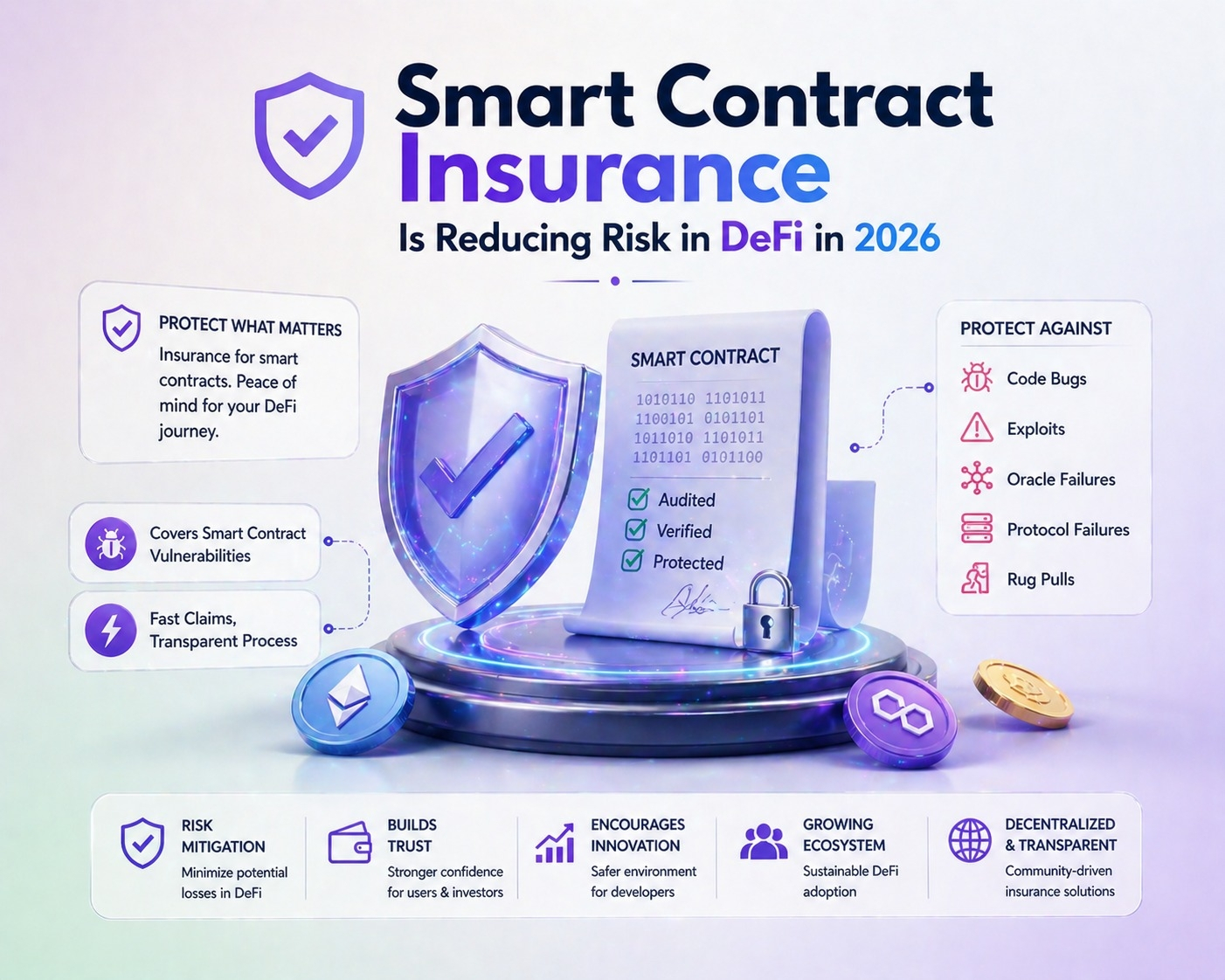
• Coverage for smart contract vulnerabilities and exploits
• Decentralized insurance pools funded by users
• Automated claim processing through smart contracts
• Risk assessment models based on on-chain data
The focus is shifting from reactive loss to proactive protection.
🚀 Why This Trend Is Growing
As more capital flows into DeFi, users want safety alongside returns. Without proper risk management, long-term adoption becomes difficult.
Main growth drivers:
• Increasing number of DeFi users and protocols
• Past incidents of hacks and security breaches
• Demand for safer investment environments
• Institutional participation requiring risk coverage
This makes insurance a critical layer in the DeFi ecosystem.
📊 Market Impact
Smart contract insurance could boost confidence across the crypto space. Projects offering reliable coverage may see strong adoption as users prioritize security.
It also helps reduce the fear of losses, encouraging more participation in decentralized finance.
🔮 Final Outlook
Insurance is becoming an essential component of DeFi, not just an optional add-on.
If adoption continues, users may interact with DeFi platforms with greater confidence and reduced risk exposure.
The future of decentralized finance may depend not only on innovation, but also on how well it manages risk.
#DeFi #CryptoTrends #Insurance #Blockchain #Web3 #BinanceSquare #Write2Earn