
Look, I understand why projects like OpenLedger are getting attention right now. Artificial intelligence is swallowing capital markets whole. Every investor wants exposure. Every crypto founder wants to attach themselves to the AI story before the music stops. So suddenly we get a flood of projects promising “decentralized AI infrastructure,” “data ownership,” and “machine economies.”
It sounds tidy. On paper, at least.
But I’ve seen this movie before.
Twenty years covering technology bubbles teaches you something important: when an industry starts combining every fashionable idea into one sentence, somebody is usually trying to outrun a weak business model. During the dot-com era, every company became an internet company. During the blockchain boom, every startup suddenly needed a token. Then came NFTs, metaverse land sales, decentralized social networks, play-to-earn gaming. Same script. Different costumes.
Now the costume is AI plus crypto.
And OpenLedger sits right in the middle of that collision.
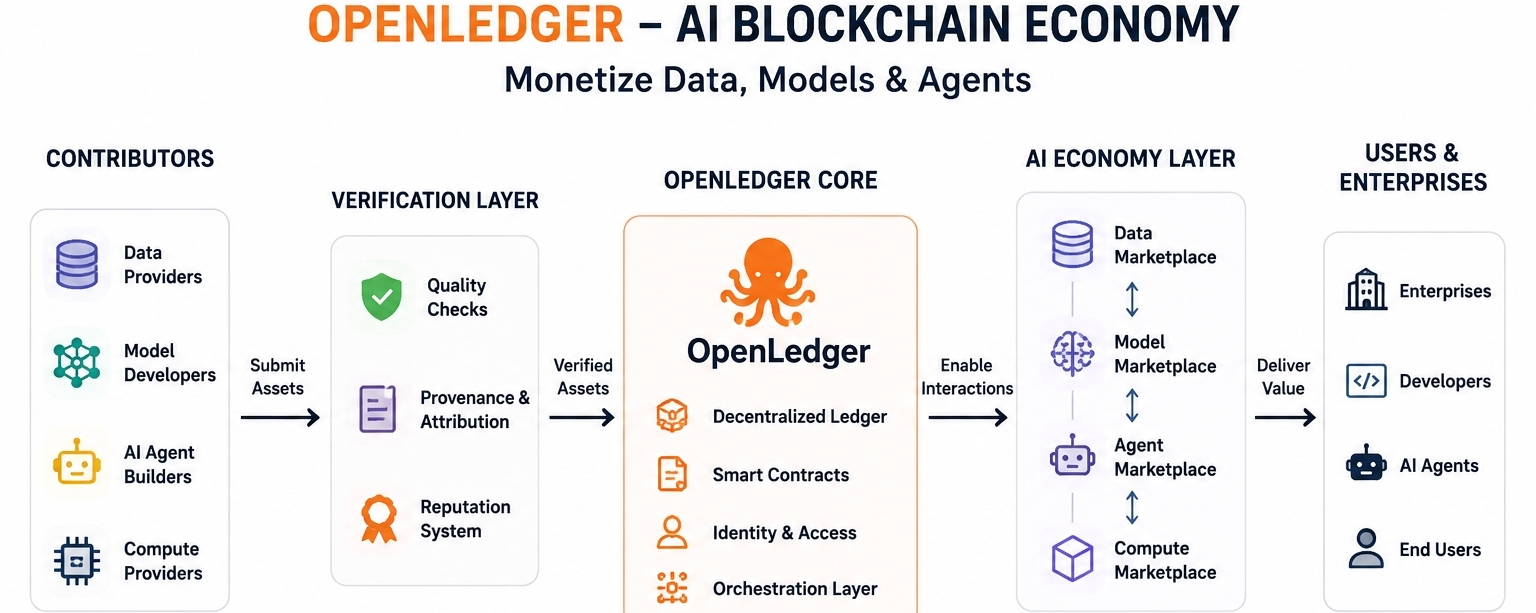
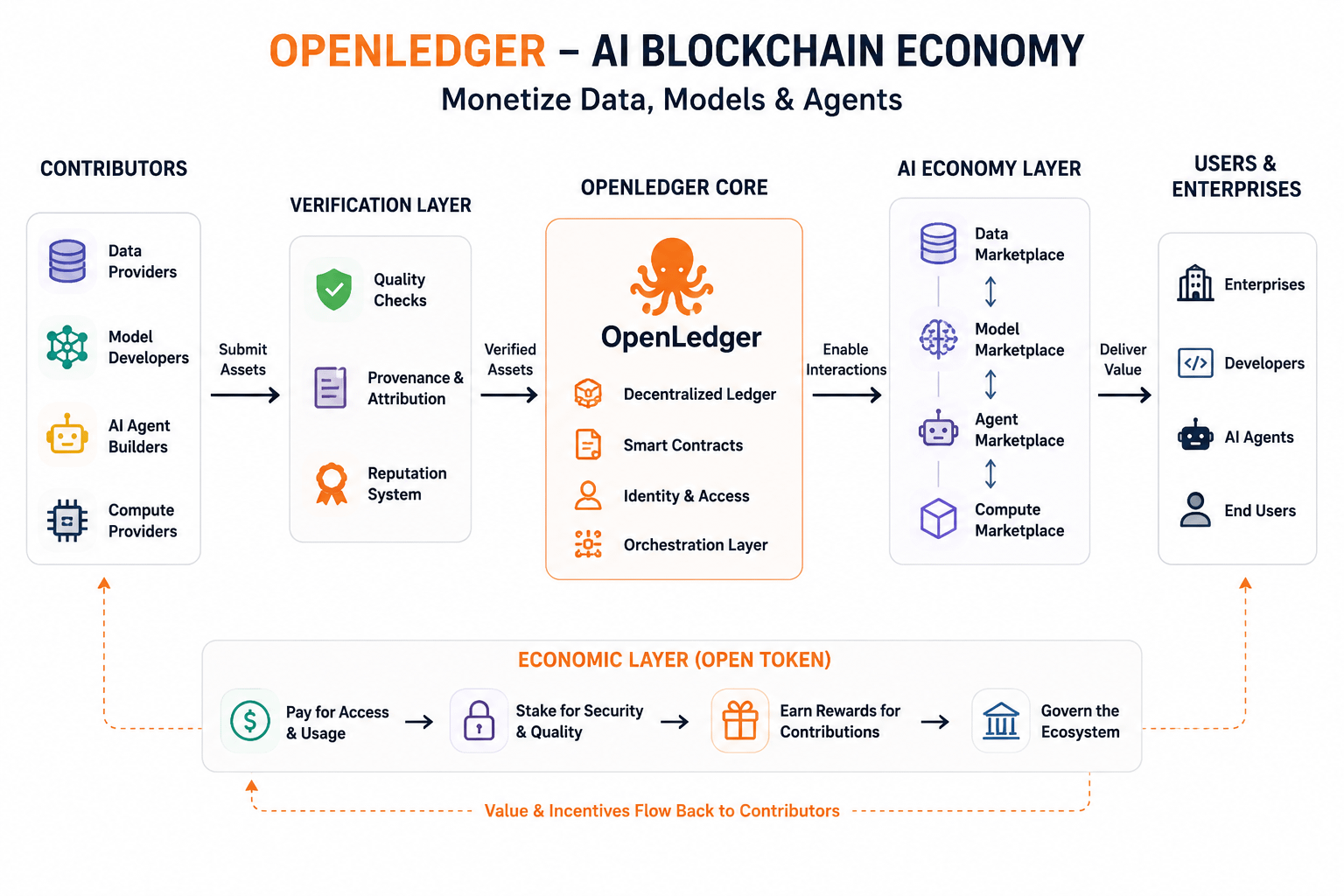
The pitch goes something like this: artificial intelligence depends on data, computation, models, and agents. Big technology companies currently control too much of that infrastructure. OpenLedger wants to create a decentralized system where contributors can monetize datasets, AI developers can share models, and autonomous agents can interact economically on-chain.
Sounds reasonable.
Until you start asking basic questions.
The first question is simple: what problem are they actually solving that existing systems cannot?
Because here’s the thing nobody in crypto likes admitting. AI companies already buy data. They already rent compute. They already license APIs. They already compensate contractors and infrastructure providers using boring old contracts, cloud systems, invoices, and databases.
None of that requires a blockchain.
That matters because every additional layer in a system creates friction. More latency. More coordination problems. More attack surfaces. More governance headaches. More compliance risk. OpenLedger is effectively taking an already complicated industry and inserting token mechanics into the middle of it.
Let’s be honest. Complexity is not innovation by default.
The core argument behind OpenLedger is that contributors to AI systems deserve clearer attribution and compensation. Fair point. Right now, massive AI models absorb data from all over the internet while the original creators often receive nothing. Independent developers struggle to compete with giant firms sitting on oceans of proprietary data and expensive infrastructure.
Those are real problems.
But the proposed solution starts wobbling once you move beyond the marketing diagrams.
Because now you need to verify who contributed what. You need to verify whether the data is legitimate. You need to determine ownership rights across different countries and legal systems. You need to stop poisoned datasets from entering the network. You need to resolve disputes when multiple parties claim the same information. You need systems for reputation, arbitration, fraud prevention, compliance, and quality control.
At that point, you start rebuilding the same centralized structures crypto originally claimed to eliminate.
I’ve watched this happen repeatedly.
Projects begin with grand talk about decentralization. Then reality arrives. Somebody has to moderate disputes. Somebody has to maintain infrastructure. Somebody has to approve upgrades. Somebody has to decide what counts as valid participation. Eventually, power concentrates because distributed governance is slow, messy, and inefficient when real money is involved.
The dirty secret of crypto is that many “decentralized” systems quietly depend on highly centralized actors behind the curtain. Core developers. Venture capital firms. Validator cartels. Foundation boards. Exchange operators.
OpenLedger may talk about distributed AI coordination, but the real question is who controls the choke points once the system becomes commercially valuable.
Because somebody always does.
Then there’s the token itself.
This is where my skepticism meter starts screaming.
Crypto projects love presenting tokens as “utility infrastructure,” but very often the token is the actual product. Not the network. Not the technology. The speculation.
OpenLedger says the token coordinates incentives across the ecosystem. Fine. But incentives for whom?
If contributors are paid in a volatile asset, they inherit market risk immediately. If enterprises must acquire tokens to access infrastructure, they inherit balance sheet volatility. If validators stake tokens to secure the system, early insiders with large allocations gain disproportionate influence over governance and economics.
That’s before we even discuss liquidity games.
Because here’s what tends to happen. Venture investors enter early at low valuations. Tokens launch later into public markets with restricted supply. Retail traders chase narratives. Prices spike. Social media fills with promises about “the future of AI infrastructure.” Meanwhile, the actual product adoption curve remains tiny compared to the speculative valuation attached to it.
Again. Seen this before.
The marketing also avoids a deeper economic problem: most data is not valuable.
That sounds harsh, but it’s true.
The AI industry does not need infinite random datasets floating around decentralized networks. It needs highly curated, domain-specific, reliable information. Medical datasets. Industrial telemetry. Specialized robotics environments. Legal archives. High-quality multilingual training material.
Those datasets require trust and verification. Serious organizations are unlikely to throw sensitive information into loosely governed token ecosystems without extremely strong guarantees around compliance, liability, and operational control.
And that leads directly into regulation.
This is the part crypto founders often treat like background noise until regulators start sending subpoenas.
OpenLedger operates at the intersection of two industries already attracting enormous legal scrutiny: artificial intelligence and digital assets. AI regulators are increasingly focused on data provenance, copyright, privacy, and accountability. Crypto regulators are focused on securities law, financial compliance, and market manipulation.
Now combine both.
Who becomes liable if copyrighted material enters the network? What happens if AI agents operating through the system make harmful decisions? What jurisdiction governs disputes between contributors across borders? Is the token a security? Who enforces sanctions compliance? Who handles anti-money laundering obligations if autonomous agents begin transacting inside the ecosystem?
The marketing brochures rarely linger on these questions for long.
Because the answers are ugly.
And then there’s the infrastructure reality nobody wants to discuss openly.
AI systems are becoming more centralized, not less.
Training serious models requires staggering amounts of energy, chips, bandwidth, and capital expenditure. The largest players are pulling further ahead precisely because scale matters. The economics favor concentration. Even open-source AI increasingly depends on hyperscale cloud providers underneath.
OpenLedger is effectively trying to build a decentralized coordination layer inside an industry moving aggressively toward centralization.
That tension is enormous.
You also have the human problem. The boring one. The one technology investors routinely underestimate.
People want reliability.
When systems fail, companies do not want governance proposals and token-holder debates. They want customer support. They want accountability. They want contracts. They want someone to blame.
Decentralized systems sound elegant until an enterprise client loses access to critical infrastructure at 3 a.m. Then ideology disappears very quickly.
I’m not saying OpenLedger cannot build useful technology. It may find niche applications. Certain AI coordination problems genuinely exist, particularly around attribution and machine-to-machine economic interactions. There are smart engineers working in this space.
But the gap between an interesting idea and a functioning industrial platform is enormous.
And crypto history is littered with projects that confused speculative enthusiasm with real adoption.
That’s the catch the marketing team rarely emphasizes. The technology itself may not be the hardest part. The hardest part is convincing actual businesses to trust a tokenized coordination system with valuable data, production AI workflows, and operational infrastructure when simpler centralized alternatives already exist.
Because eventually the market stops rewarding narratives.
Then the uncomfortable questions arrive.
Who is using it?
Who is paying for it?
Who controls it?
And what happens when the incentives keeping the whole thing together start drying up?
