Most of my trading ideas never become real.
Not because they are bad. Honestly some of them felt pretty smart at 2AM when I wrote them down half asleep. The problem is always the same. I can think about setups, flows, market reactions, and weird patterns. But building the actual thing feels like standing outside a locked door.
I am a trader.
Not a developer.
That gap used to bother me more than losing trades sometimes.
A few weeks ago I started reading about @OpenLedger and this thing people are calling vibecoding. At first I ignored it because crypto loves inventing shiny names for old ideas. But the more I looked into it, the more it felt different.
Not because of the AI hype.
Because it touched a real problem people like me actually have.
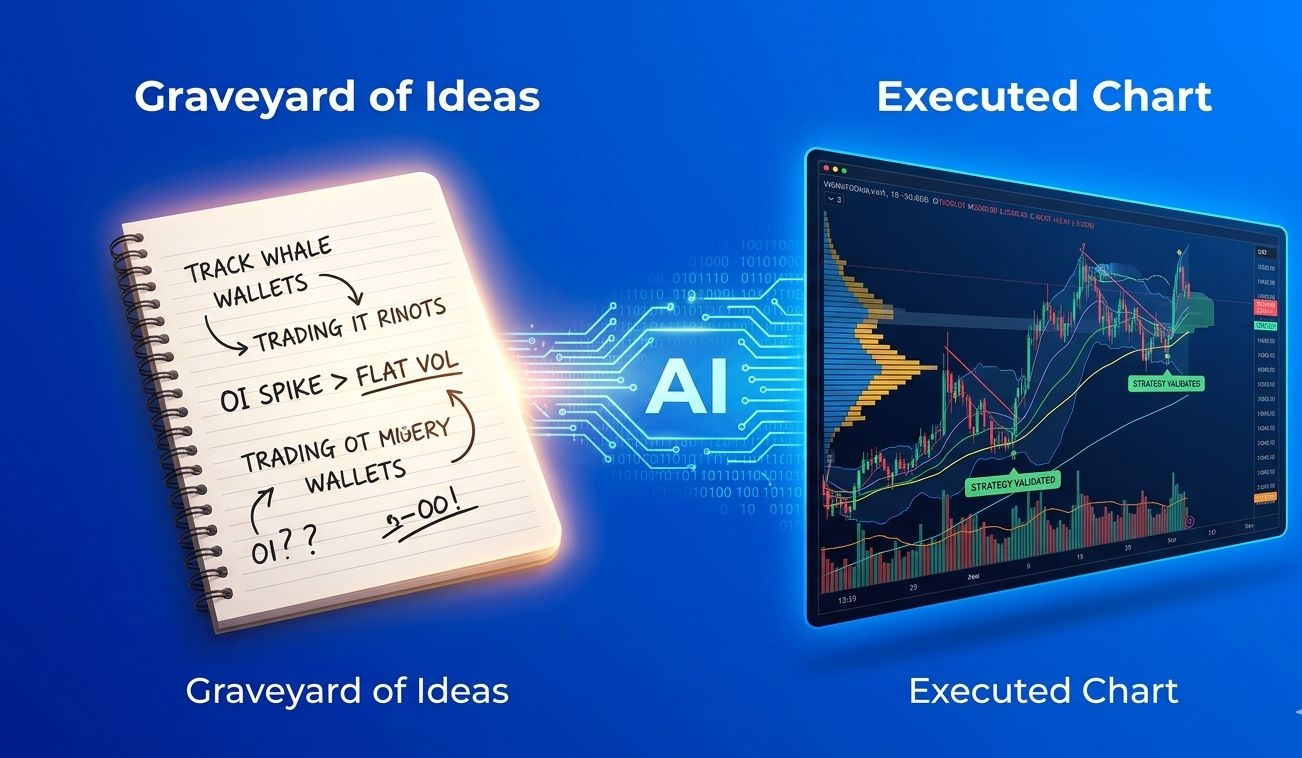
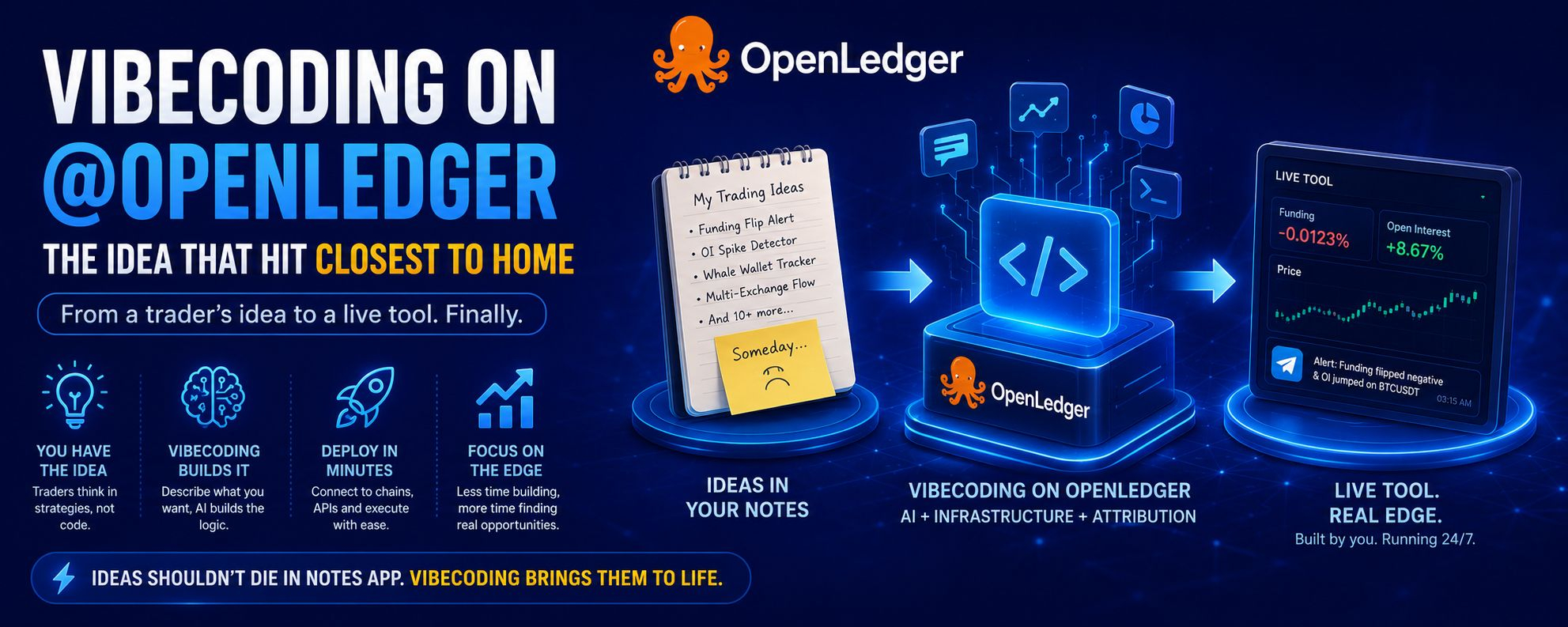
The Graveyard Inside My Notes App
I think every trader has this secret graveyard full of unfinished ideas.
Mine is embarrassing.
One note says: “Track whale wallet activity before funding flips.”
Another says: “Alert when OI spikes while volume stays flat.”
Another just says: “Watch stablecoin flow before news hits.”
The ideas are there. The logic is there. Sometimes I can explain the whole strategy clearly to another trader in two minutes.
But turning it into a working tool is another story completely.
Suddenly you need APIs.
Servers.
Hosting.
Wallet connections.
Rate limits.
Debugging.
And then some random issue breaks the whole thing at 4 in the morning while you sleep.
That part kills the excitement fast.
So most ideas die before they even get tested.
Vibecoding Feels Different
What caught my attention with vibecoding is the possibility that people may finally be able to describe what they want instead of learning ten different technical skills first.
That sounds small, but honestly it changes everything.
Imagine saying:
“Build me an alert that tracks negative funding across two exchanges and sends a Telegram message when open interest jumps more than 8%.”
And instead of getting broken code snippets and confusion, you actually get something usable.
Not perfect maybe.
But working.
That possibility feels huge for people who think in strategies instead of programming languages.
Why This Timing Matters
The funny thing is this idea probably would not work properly two years ago.
AI models were messy.
Half the code they generated looked confident but failed immediately.
Blockchain tooling across chains was fragmented too. Every ecosystem felt disconnected from the others.
Nothing talked nicely together.
Now things feel more mature.
The models are smarter.
Infrastructure is cleaner.
Standards are better.
It finally feels like both sides of the bridge reached each other at the same time.
That is why vibecoding feels believable now instead of sounding like science fiction.
But I’m Still Careful
I think this part matters alot.
Easy building does not mean safe building.
If AI helps me create a strategy execution tool and quietly misunderstands something important, the market will punish me instantly. Markets do not care whose fault it was.
The losses are still mine.
That means anything built this way still needs testing.
Small size first.
Dry runs.
Checking the logic manually.
I would never trust a system with real capital just because it “looks smart.”
And honestly, that caution is probably healthy.
The Real Shift Nobody Talks About
This is the part I keep thinking about late at night.
When building becomes easier, the advantage changes.
Before, part of the edge belonged to the people who could actually code their ideas faster than others.
Now the edge may slowly move toward the people who think better.
The traders with original ideas.
The ones who understand market behavior deeply.
The ones who test carefully instead of blindly copying signals from social media.
If everybody can build faster, then shallow ideas die faster too.
That means creativity matters more.
Discipline matters more.
Understanding risk matters more.
In a weird way, easier building might actually make thinking the most valuable skill again.
What OpenLedger Needs To Prove
For OPEN to matter long term, this cannot just become another cool narrative.
Crypto has enough of those already.
People need to build things they actually keep using.
Not flashy demos.
Not tools that survive one week and disappear.
Real systems that traders, builders, and communities rely on daily.
If vibecoding on OpenLedger becomes the place where people launch useful AI powered tools without needing huge teams, then the use case becomes very real.
But if it stays as marketing language without real adoption, eventually the market will expose that too.
Charts always tell the truth in the end.
Maybe not immediately.
But eventually.
A Bigger Change Is Happening
I think this is bigger than one token honestly.
The tools people use shape the entire market environment.
If the barrier to building drops this much, then strategies spread faster. Competition increases faster too. Small inefficiencies disappear quicker because more people can attack them.
That changes trading itself.
The next generation of traders may not need to become developers anymore.
They may just need strong ideas and the ability to test them properly.
That shift feels important even if someone never buys a single OPEN token.
Final Thoughts
I still have dozens of unfinished ideas sitting in my notes app.
Maybe some are terrible.
Maybe one of them is actually valuable.
Until now, most were trapped behind the wall between imagination and execution.
That wall might finally be getting smaller.
And honestly, that possibility is more interesting to me than most crypto narratives I have seen this year.