
I'm noticing how everyone keeps talking about AI like it came from nowhere.
Like one day the models just appeared, clean and powerful and ready to change the world.
But that is not how anything works.
There is always someone behind it. Someone’s data. Someone’s behavior. Someone’s years of trial and error. A business that kept records. A team that built a workflow. A developer who trained something small but useful. A community that created patterns without ever calling them “assets.”
And then, somehow, the value moves upward.
That part is hard to ignore.
AI keeps asking for more. More data. More context. More specialized knowledge. More real-world signals. But the people and businesses holding those signals are rarely treated like owners. They are treated like sources. Inputs. Raw material.
That is the contradiction sitting in the middle of the whole system.
Everyone wants better AI, but nobody wants to talk honestly about who gets paid when AI becomes better.
This is why OpenLedger caught my attention.
Not because it uses the right words. Everyone uses the right words now. AI, blockchain, agents, liquidity. The market is drowning in those words.
But underneath the noise, there is a real problem here.
A company may have years of customer data that could make models smarter. A logistics team may understand delivery patterns better than any generic AI tool. A small builder may create an agent that solves one painful task better than a giant platform ever will. A niche community may hold knowledge that is extremely valuable, but only inside the right context.
Right now, most of that value is stuck.
It is either locked away, ignored, or taken without much return.
OpenLedger seems to be pointing at that exact gap. The space between useful intelligence and fair ownership. The space where data, models, and agents stop being invisible assets and start becoming things people can actually monetize.
That matters more than hype.
Because real adoption does not happen just because something sounds futuristic. It happens when people see a reason to participate. When a business can unlock value from what it already has. When a builder can earn from what they actually built. When intelligence is not just extracted, but accounted for.
I am not interested in pretending every new project is the future. Most are not.
And I am not saying OpenLedger solves everything overnight. Nothing serious works like that.
But I do think it is touching a real nerve.
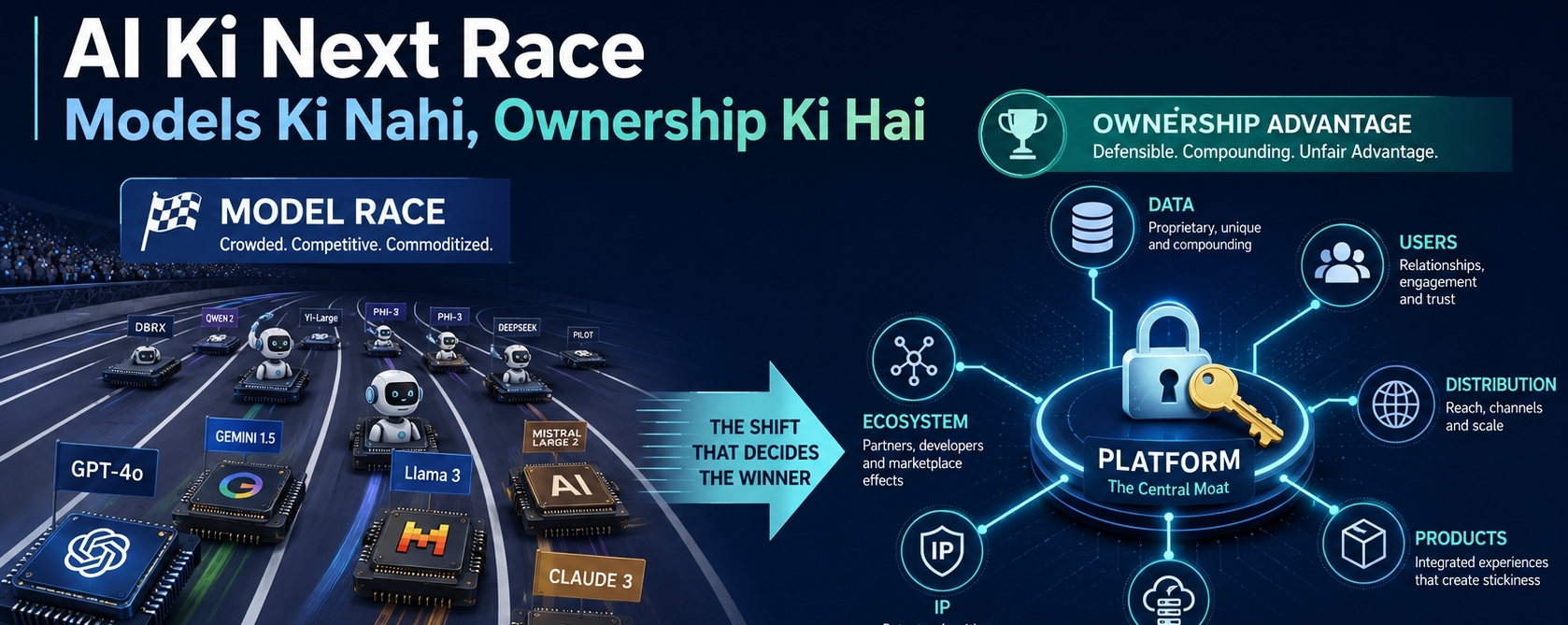
The next phase of AI will not only be about who has the biggest model or the loudest launch. It will be about who owns the intelligence underneath it. Who controls access. Who shares upside. Who turns hidden value into usable value.
That is the part I keep coming back to.
OpenLedger is not interesting because it sounds big.
It is interesting because the problem it is facing is already here.
