
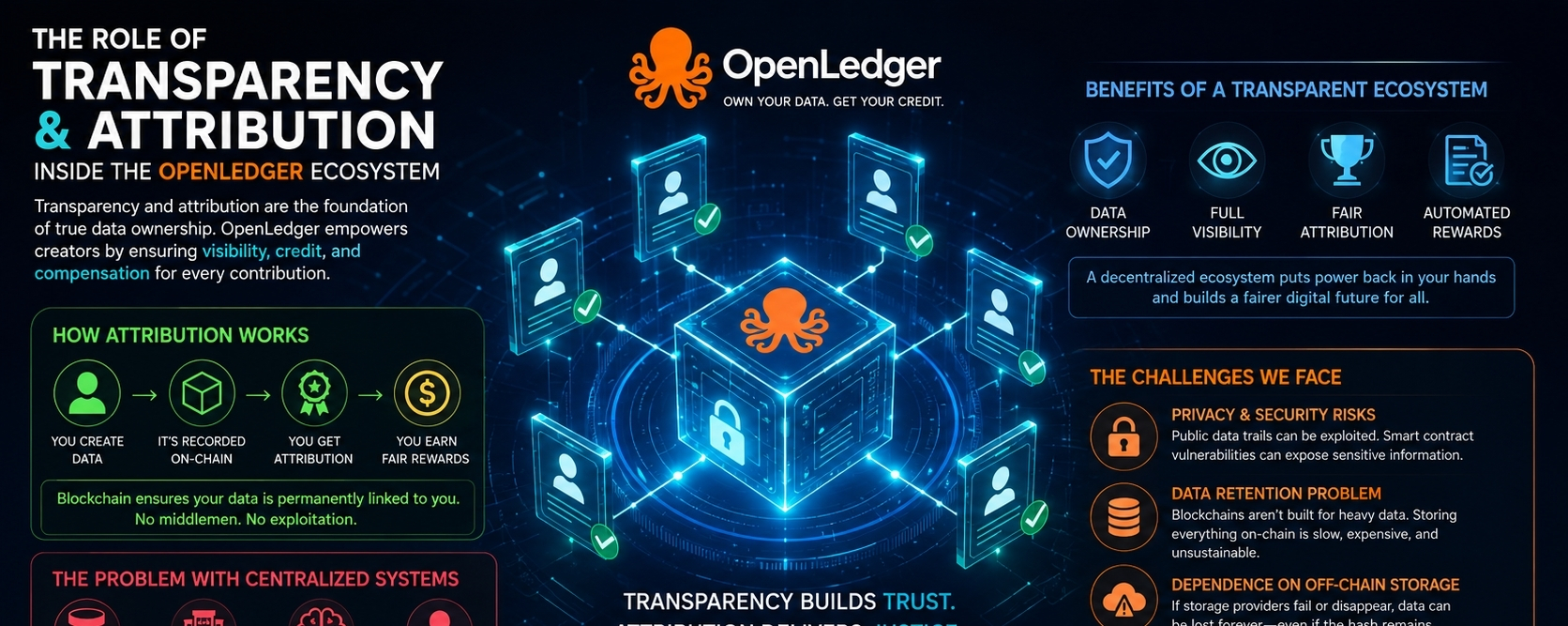
In my Honest opinion, true data ownership is completely impossible without absolute transparency and clear attribution... For too long, big tech companies have hidden what they do with our information behind complicated privacy policies, but a decentralized network changes everything by letting us see exactly how our data moves and who is using it... When we can track our digital assets and get proper credit for what we create, we finally take back the power that belongs to us.
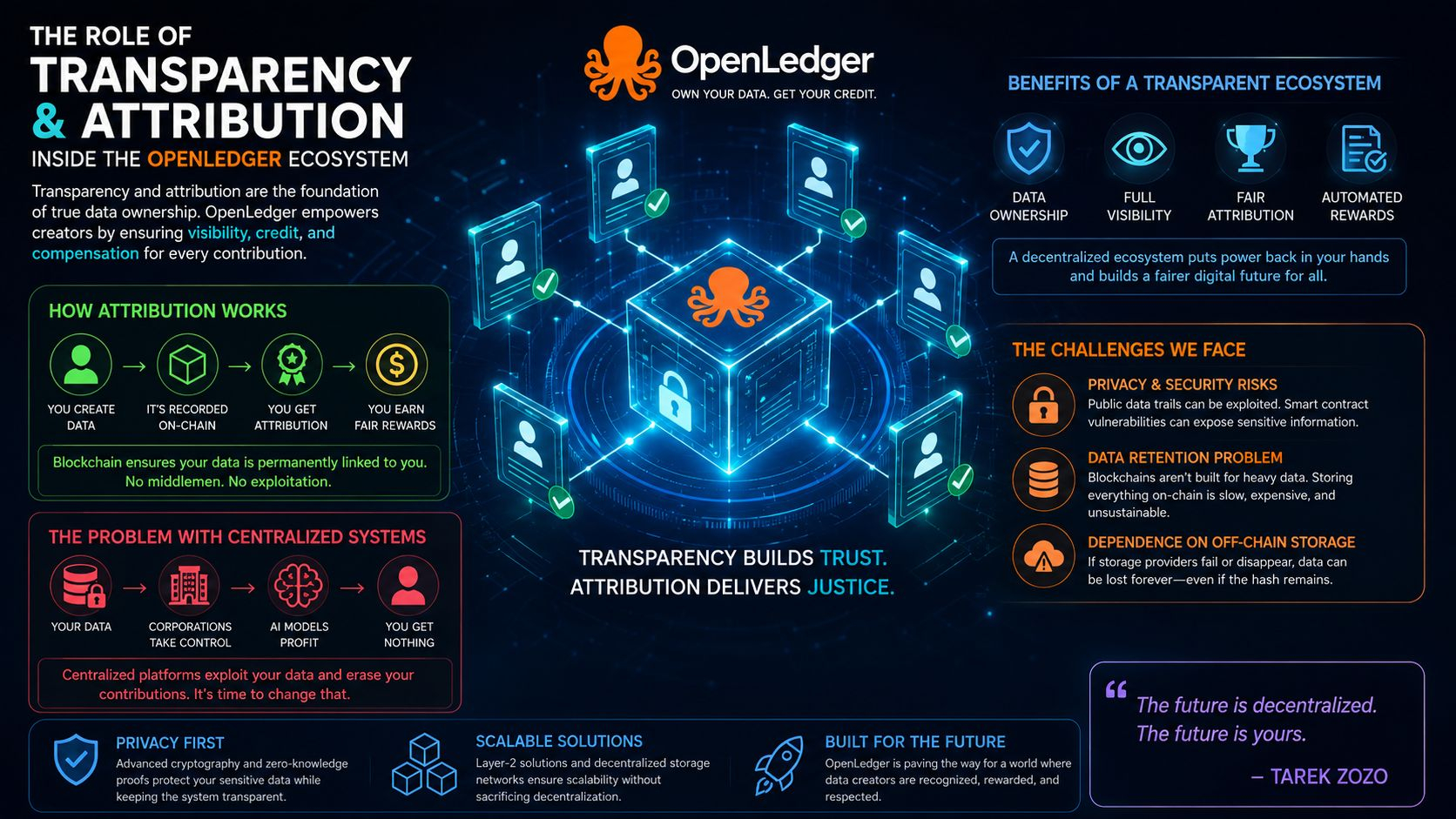
To understand why this matters, we have to look at how data attribution functions in the real world. Imagine a data scientist who trains a new artificial intelligence model using a massive dataset containing public contributions.... In the current corporate system, that scientist takes all the credit and profit, while the thousands of people who actually supplied the information get absolutely nothing. Inside a decentralized ecosystem, blockchain technology acts as a public ledger that permanently stamps your digital signature onto your data. This means if a company wants to use your information to train their systems or build a product, they cannot just steal it without anyone noticing.... The system automatically attributes the work to you, ensuring that creators maintain full visibility and can even be compensated fairly through automated smart contracts.
However, pushing for total transparency also introduces severe security and privacy risks that we cannot afford to ignore.... For instance, if a decentralized platform records every single transaction, medical update, or financial record on a completely public blockchain, it creates a massive target for malicious actors. Bad actors can analyze these public data trails to deanonymize users, tracking their personal habits and targeting them for financial scams or identity theft. Even though smart contracts are designed to automate operations safely, a tiny bug or vulnerability in the code can expose private databases to the entire world instantly.... It is incredibly difficult to balance the desire for open transparency with the absolute necessity of keeping private, sensitive human data safe from exploitation.
Beyond these security threats, the ecosystem faces a massive technical hurdle known as the data retention problem. Blockchains are exceptionally good at keeping permanent records, but they are incredibly inefficient when it comes to storing massive amounts of heavy data like videos, high-resolution images, or complex databases.... If every single piece of user data is saved directly on the main network forever, the entire system quickly becomes congested, slow, and astronomically expensive to run.... Decentralized networks have to rely on secondary storage solutions to hold the actual files while keeping just the verification hashes on the main chain. The real danger here is that if these secondary storage providers stop hosting the files or face technical failures, the data could disappear entirely, leaving users with a permanent receipt for information that no longer exists.
Ultimately, creating a transparent and well-attributed network is a massive leap toward breaking the monopoly of centralized tech giants, but the platform must overcome its critical storage limits and privacy vulnerabilities first... If the community can solve these data retention dilemmas and secure user privacy, this ecosystem will successfully redefine how humanity values and protects digital contributions.
— TAREK ZOZO
