Artificial intelligence is growing faster than most people can properly follow. Every week, new tools appear, new agents are launched, and new models become part of daily work. But behind this progress, there is a quieter issue that does not always get enough attention. AI depends on data, models, and human contribution, yet many of the people and sources behind that value remain almost invisible. OpenLedger enters this space with a clear idea: AI should not only be powerful; it should also be traceable, usable, and connected to real value. OpenLedger officially describes itself as an AI Blockchain built to unlock liquidity and monetize data, models, and agents.
That idea matters because AI is no longer just about building bigger systems. The real question now is ownership. Who provided the data? Who improved the model? Who created the agent that performs useful work? In many traditional AI systems, these answers are difficult to see. Everything happens behind closed doors, and the final product often hides the chain of contribution. OpenLedger tries to bring that chain into view. It does not treat data as something passive. It treats data as an asset that can carry value when it is used properly.
This is why the project feels relevant right now. The world is moving toward AI agents, specialized models, and automated digital work. These systems will need trusted infrastructure. People will not only ask whether an AI result is useful; they will also ask where it came from, how it was built, and whether the contributors were recognized. That is where blockchain becomes more than a buzzword. In this case, it can act like a record of contribution, usage, and ownership.
OpenLedger’s approach is interesting because it focuses on AI-specific needs rather than acting like a general blockchain trying to fit every possible use case. Its official materials discuss tools such as Datanets, Model Factory, AI Studio, and Proof of Attribution, all connected to the broader goal of making AI more transparent and monetizable. In simple words, the idea is to help people contribute data, build models, and create AI applications in a way where their input can be tracked.
For, a normal user, this may sound technical at first. But the human side is easy to understand. Imagine, spending time building a dataset, improving a model, or training an AI system, for a specific field, only to see that work disappear into a larger product without credit. That feeling is common in the digital world. OpenLedger is trying to address that gap by connecting contribution with attribution. It gives the conversation a more practical shape.
The “liquidity” part is also important. In traditional markets, liquidity means an asset can move, be used, exchanged, or valued more easily. OpenLedger applies that thinking to AI assets. Data, models, and agents should not stay locked inside closed systems. If they create value, there should be a way for that value to circulate. This does not mean every piece of data suddenly becomes profitable overnight. It means the infrastructure is being designed so that contribution has a clearer path toward recognition and possible reward.
What makes this trend feel current is the rise of smaller, specialized AI models and agents. Big general models are useful, but many industries need focused intelligence. A healthcare tool, a finance assistant, a legal research model, or a customer support agent may all need different data and different performance standards. OpenLedger’s direction fits that shift because it looks at AI as an ecosystem, not just a single product.
Still, the real progress will depend on execution. Good ideas in blockchain and AI are not enough by themselves. Users need, simple tools, builders need reliable systems, and contributors need trust. If OpenLedgImagine, make this process practical, it could become part of a larger movement toward more open and accountable AI.
At its core, OpenLedger is speaking to a simple truth: AI should not grow by hiding the people and data that make it useful. The future of AI may not only belong to those who build the biggest models. It may also belong to the people who can make contribution visible, valuable, and fair.

Artigo
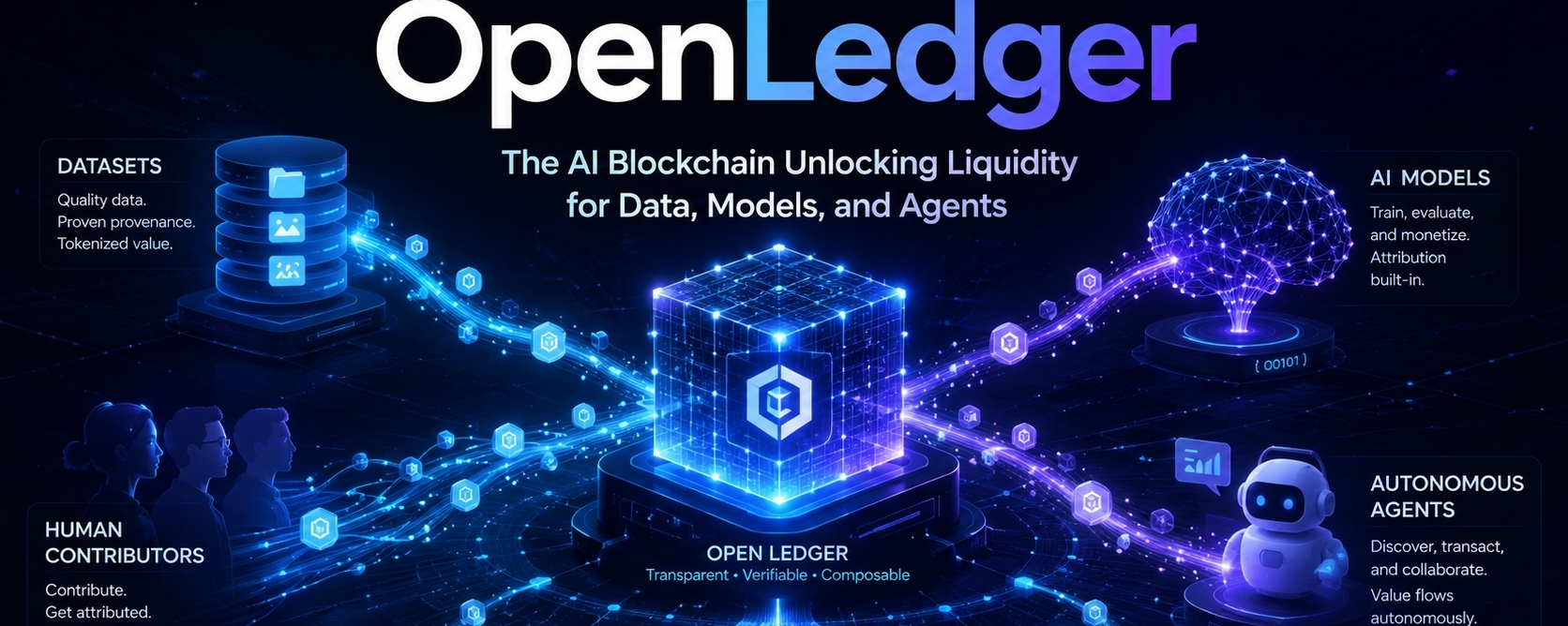
OpenLedger: The AI Blockchain Unlocking Liquidity for Data, Models, and Agents
Aviso Legal: inclui opiniões de terceiros. Não se trata de aconselhamento financeiro. Poderá incluir conteúdos patrocinados. Consulta os Termos e Condições.