
What Keeps Bothering Me About OpenLedger Isn’t the AI Layer.
Not even ModalFactory...
It's the Bridge
Which is stupid, a little. You come to a project like this for Datanets, Proof of Attribution, ModelFactory, OpenLoRA, agent execution, all the expensive-looking intelligence nouns. Not for the bit where you move OPEN across rails and pray the wallet flow stays boring enough not to break the mood.
But that’s exactly the part that kept catching on me.
Because the bridge is supposed to look like setup. Just setup. Funds here, funds there, wallet connected, gas sorted, move on. Fine. Get me to the actual system.
Only it is the actual system. Or no, worse. It’s the point where the AI-native system has to admit it still needs ordinary EVM liquidity to become more than a diagram.
That changes the smell of the whole thing.
I keep picturing the same very normal path. Wallet already funded on Ethereum. User wants to do something on OpenLedger that sounds more interesting than “bridge assets.” Maybe they want to fund an agent. Maybe spin up a model flow through ModelFactory. Maybe actually use one of these AI surfaces without cosplaying as a protocol researcher for forty minutes. So they bridge in. Bring liquidity over. Get OPEN lined up for gas. Land on the chain. Then the OpenLedger part can begin.
Can begin.
That wording is doing a lot of work.
Because if the AI workflow only starts after the wallet, the bridge, the gas, the EVM handoff, then the so-called AI-native experience is already leaning on older rails before it says a word. Before the OpenLedger's Datanet matters. Before the model path matters. Before an agent touches anything. The liquidity comes from somewhere duller and more trusted first.
That bothers me more than it should.
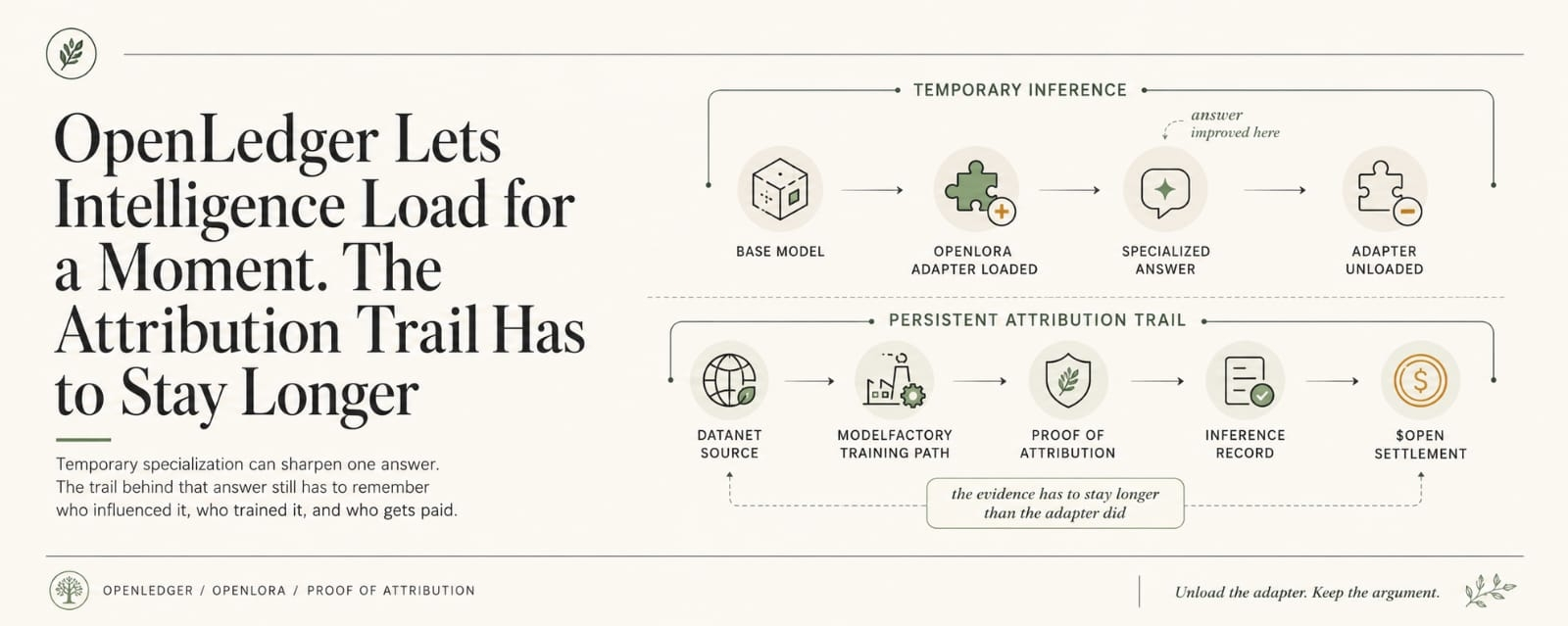
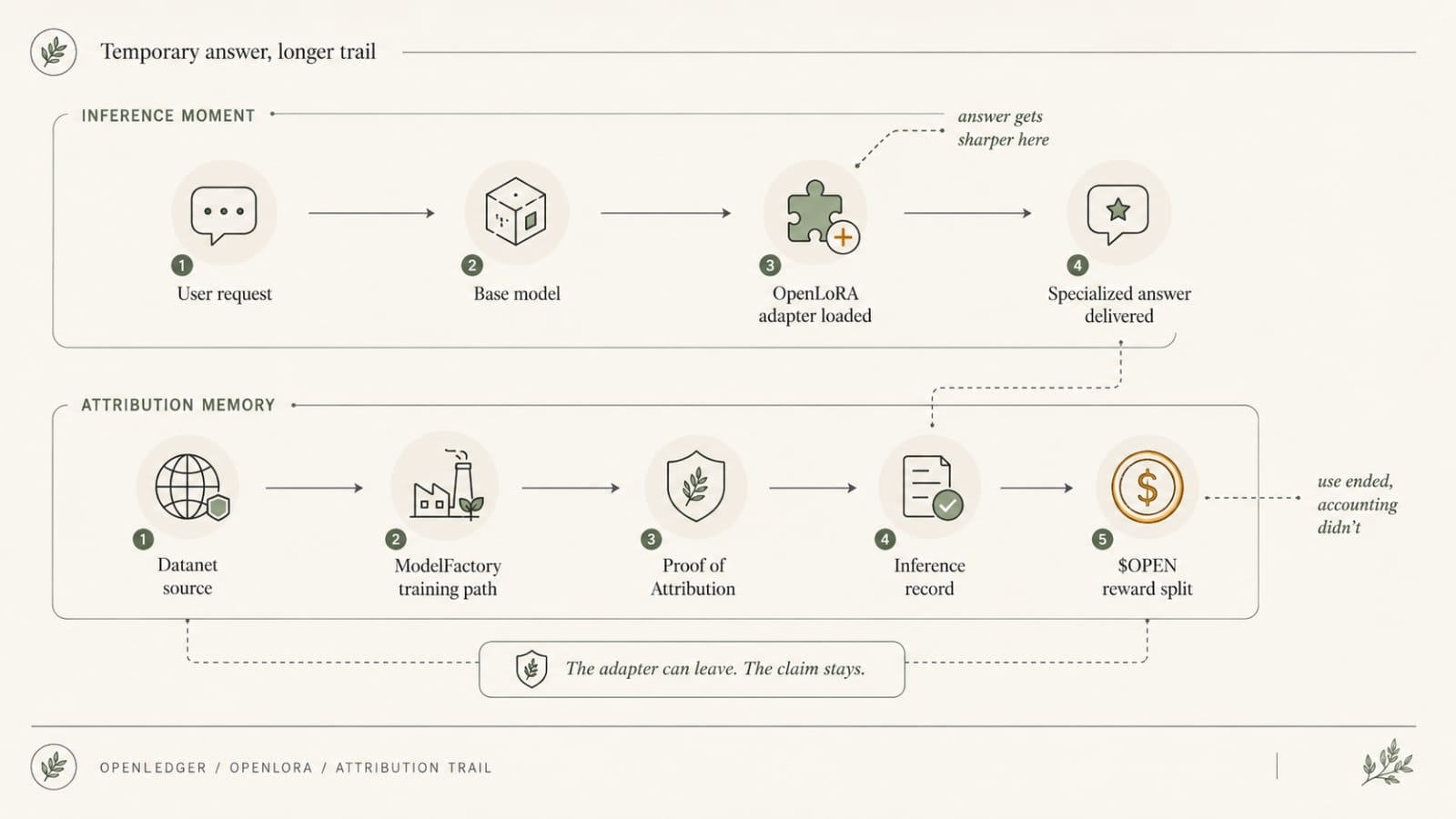
Maybe because the bridge UI always acts innocent. Same little ritual every time. Deposit. Wait. Confirm. Switch network. Check balance. Lovely. Human civilization reduced to watching progress bars while pretending this counts as seamless. And on OpenLedger that flow is even more revealing, because the project is built around specialized AI infrastructure, not generic token movement. Datanets for domain data. ModelFactory for tuning. OpenLoRA for deployment. Agent surfaces. Attribution. Payable inference. Serious machinery.
Still needs the bridge.
Still needs the boring money side to arrive from somewhere else.
And once that clicks, the bridge stops looking like access and starts looking like dependence with better posture.
That’s probably the real contradiction here. OpenLedger can make AI workflows more traceable, more payable, more operationally legible. Good. Useful. But the system doesn’t get economically serious just because the AI layer is well designed. It gets serious when capital can reach it without everybody feeling like they just took a detour through plumbing.
I’ve had that exact moment. You’re staring at the chain setup thinking you’re about to evaluate the model layer or the agent layer or some specialized AI path. Instead you’re still dealing with the oldest question in crypto: where is the liquidity actually sitting right now, and how annoying is it to move.
That’s not a side quest. That’s the admission.
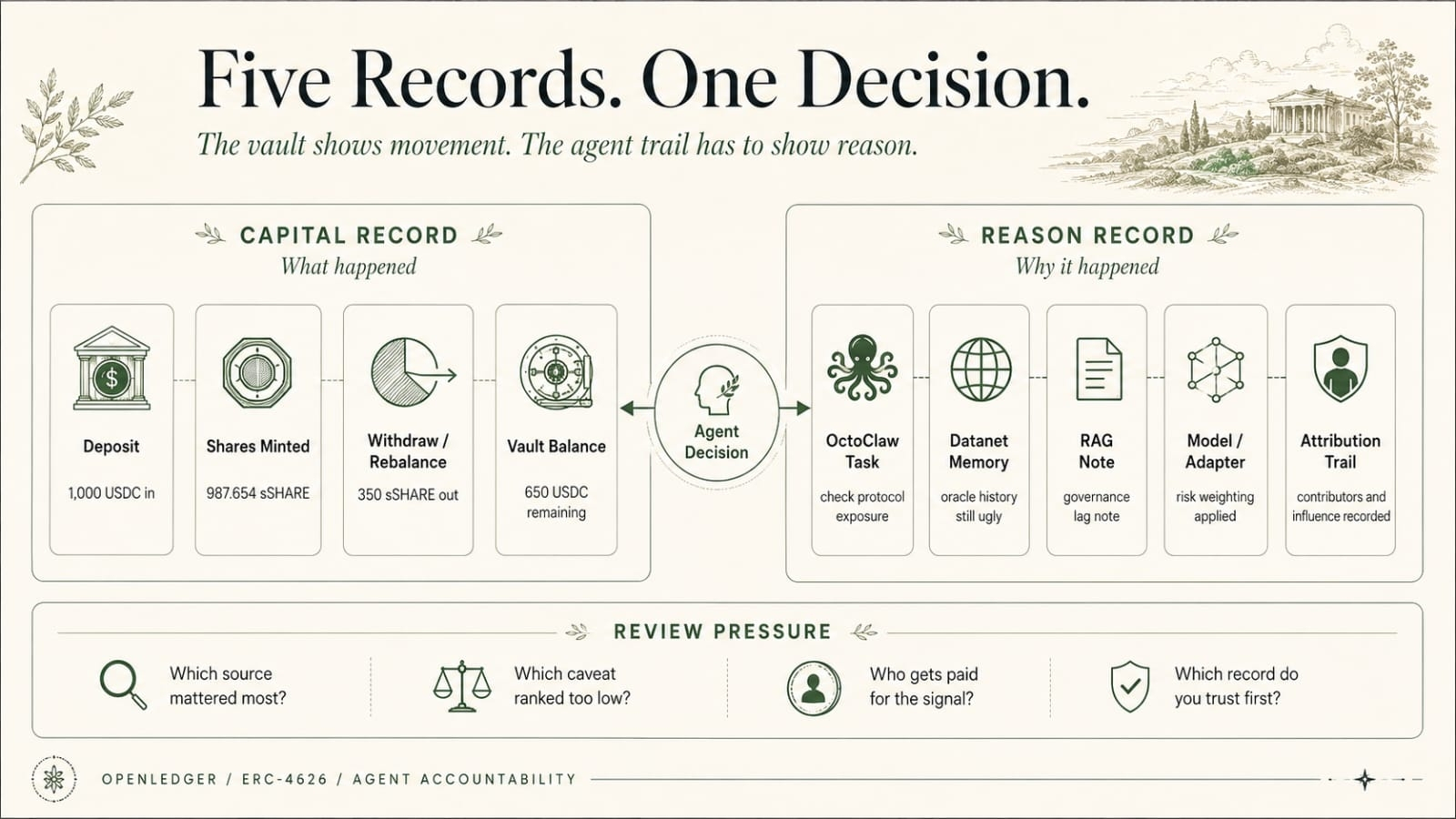
Because once the workflow involves real money, the OpenLedger stack doesn’t live alone anymore. The Datanet story is one thing when it’s just contribution and curation. The ModelFactory story is one thing when it’s just builder tooling. But once the user wants to fund action, pay inference, route through EVM contracts, maybe connect to an agent path that might later touch ERC-4626 logic or another standard surface, the bridge becomes the handoff between “interesting AI infrastructure” and “capital that still trusts familiar rails more than your new architecture.”
Makes sense. Also ruins the clean fantasy a little.
And I think that’s why the bridge theme works better than it first looks. It exposes where OpenLedger stops being a concept and starts asking for actual coordination with the rest of the chain world. EVM compatibility sounds nice in a product note. In practice it means the AI chain is not being judged in isolation. It’s being judged on whether the wallet flow is normal enough, whether the gas step is understandable enough, whether the capital handoff is smooth enough, whether the user can get from Ethereum-side money to OpenLedger-side action without the infrastructure announcing itself every thirty seconds.
If it can, great. The bridge fades into the background.
If it can’t, then the whole AI-native story starts with friction from the least glamorous part of the stack.
And that is a nasty place to be judged from, because nobody cares how elegant your attribution layer is while they’re still wondering why their liquidity feels one network away from the thing they actually came to use.
That’s the part I keep coming back to.
The bridge looks like a tunnel for $OPEN .
It’s really the moment OpenLedger has to borrow trust, wallets, and capital gravity from the older EVM world just to let its own workflow become real.
Not fake. Not broken. Just not as self-contained as the nice architecture diagram wants to look at 2am. @OpenLedger #OpenLedger