
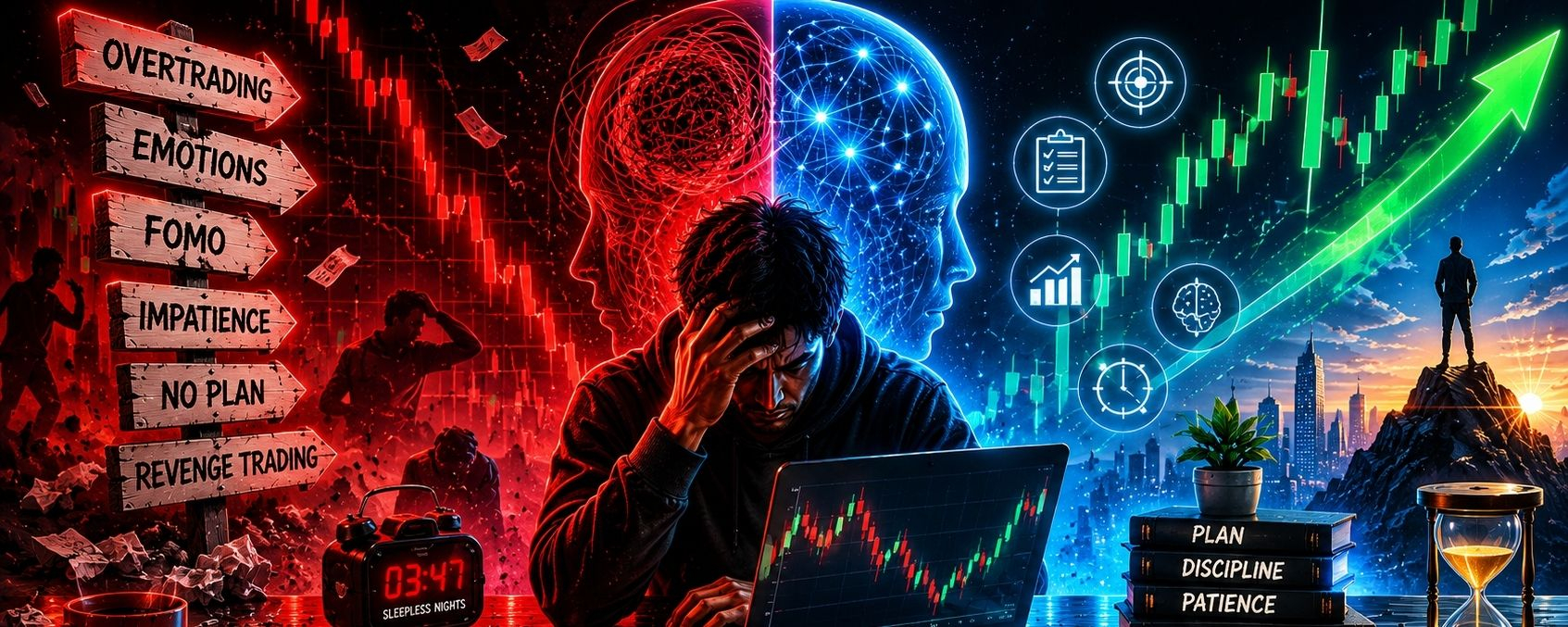


Most traders enter the market believing success depends on finding the perfect indicator, secret strategy, or viral signal. But after some time, many realize that trading losses usually come from repeating the same psychological and risk-management mistakes again and again. In today’s fast-moving markets, especially in crypto and leveraged trading, avoiding these mistakes is often more important than finding the “perfect trade.”
One of the biggest mistakes traders should ignore is emotional trading. Fear and greed remain the two strongest forces destroying trading accounts. Recent trading psychology reports show that traders frequently abandon their strategy after a few wins or losses because emotions begin controlling decisions instead of logic. Fear causes traders to close profitable positions too early, while greed pushes them to overtrade or hold positions far longer than planned.
Another dangerous mistake is revenge trading. After taking a loss, many traders immediately jump back into the market trying to recover money quickly. This often leads to impulsive entries, oversized positions, and even larger losses. Trading psychology studies published in 2025 and 2026 continue to identify revenge trading as one of the fastest ways to destroy consistency because emotional reactions replace structured analysis.
Ignoring risk management is another major reason traders struggle. Many beginners focus only on profits while completely underestimating downside risk. Professional traders understand that survival matters more than being right on every trade. Broker studies and trading reports consistently show that traders without stop losses, proper position sizing, or risk limits eventually blow up their accounts regardless of strategy quality.
Overconfidence is equally dangerous. After a winning streak, traders often believe they have “mastered” the market. This usually leads to increasing leverage, ignoring setups, or taking low-quality trades. Several behavioral finance reports highlight that overconfidence causes traders to underestimate risk and overestimate their skill level, especially during volatile market conditions.
Another mistake traders should avoid is following social media hype blindly. In 2026, social media has become one of the biggest influences on retail trading behavior. Many traders buy coins, stocks, or narratives simply because they are trending online. Studies from recent investor reports show that a large percentage of new traders regret financial decisions made purely from influencer content or viral market sentiment. Chasing hype without understanding market structure often turns trading into gambling rather than investing.
Overtrading is another silent account killer. Many traders feel they must constantly be in a trade to make money. In reality, forcing trades usually lowers performance. Experienced traders often wait patiently for high-probability setups instead of reacting to every market move. Trading experts continue emphasizing that discipline and patience consistently outperform emotional activity in volatile markets.
Lack of a proper trading plan also causes repeated failures. Many traders enter positions without clear entry rules, stop-loss levels, or exit targets. When the market moves unexpectedly, they panic because there was never a structured plan in the first place. Modern trading psychology research repeatedly shows that traders who follow a repeatable system perform more consistently than those trading randomly based on emotions or headlines.
Excessive leverage is another common mistake in crypto trading. High leverage creates the illusion of faster wealth, but it also magnifies emotional pressure and small market fluctuations. Many traders underestimate how quickly leverage can wipe out an account during volatile moves. Recent broker and trading psychology reports continue warning that unrealistic risk exposure remains one of the most dangerous habits among retail traders.
Perhaps the most important mistake to avoid is believing trading is easy money. Social media often shows only profits, luxury lifestyles, and winning trades. What traders rarely see are the years of discipline, losses, psychological pressure, and risk management required to survive long term. Markets reward consistency, patience, and emotional control—not excitement.
The reality is simple: most traders already know basic strategies. The real difference between profitable and losing traders usually comes down to psychology, discipline, and risk management. The traders who survive are not always the smartest or most accurate. They are the ones who learn how to control emotions, protect capital, and avoid repeating the same costly mistakes.
In trading, success is less about predicting the market perfectly and more about avoiding the mistakes that quietly destroy most people over time.