

Over the past year, I’ve noticed something intresting hapening across the crypto market. The convrsation around AI has shifted from simple spculation to infastructure. A lot of projects initially focused on flashy demos, AI-genrated content, Nisha pomi or vague promies about autonomous systems replacing tradtional software. But once the hype cycle cooled down, the market started asking harder questions. Where does the data come from? Who owns the models? Who captures the value genrated by AI systems? And more importantly, why are the largest AI economies still controled by a handful of centralized corporations despite crypto supposedly being built for open participation?
That’s exactly why OpenLedger caught my attention.
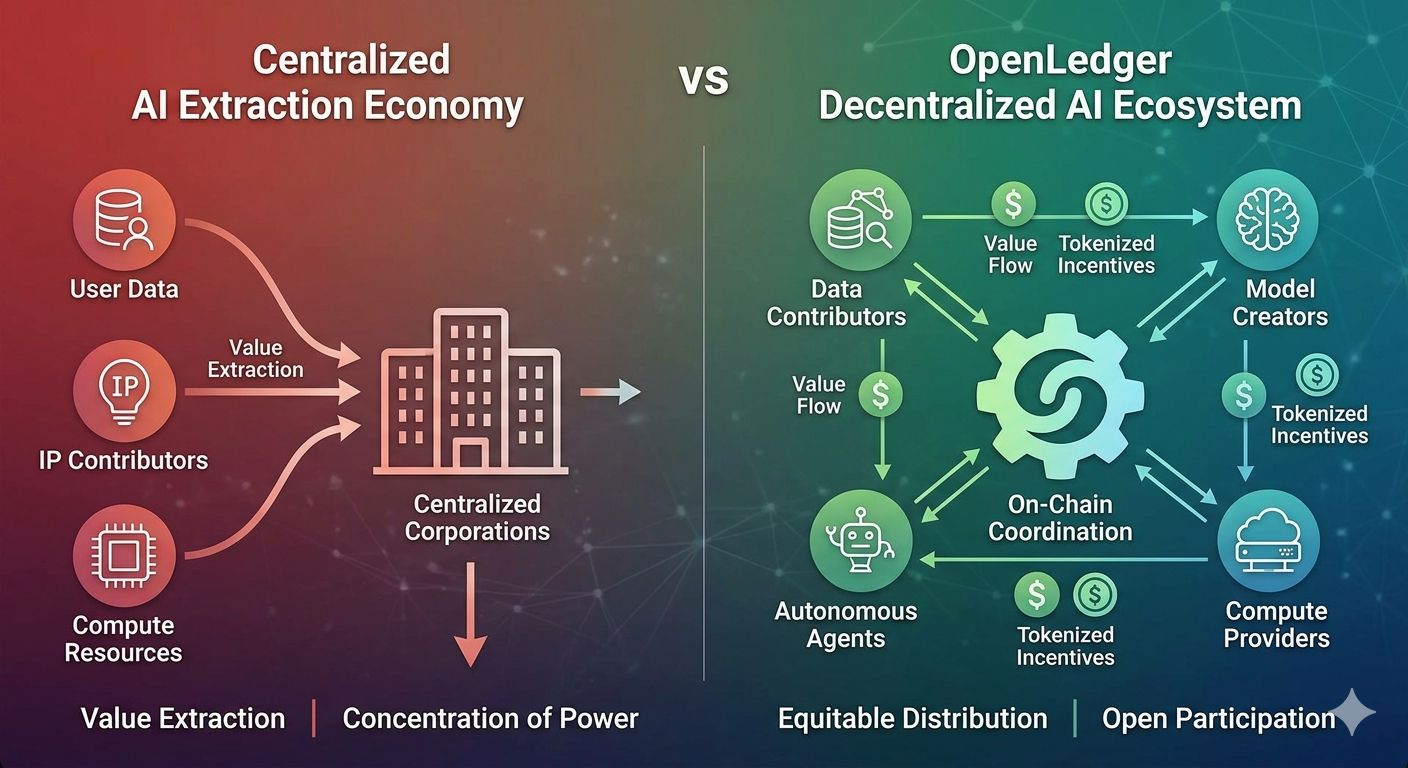
What immediately stood out to me wasn’t the branding around “AI blockchain” because honestly, that phrase alone has become almost meaningless after the flood of AI narratives entering crypto. What interested me was the way OpenLedger frames the economic layer behind AI itself. After spending time analyzing the ecosystem, Nisha pomi the core thesis feels much deeper than simply putting AI on-chain. OpenLedger is essentially trying to create a financial system where data contributors, model creators, and autonomous agents can all participate in a transparent economy without relying on centralized intermediaries that currently dominate the AI stack.
In my view, this is one of the more important problems emerging in crypto right now because AI is quickly becoming an extraction economy. Most users generate data for free, developers contribute intellectual property, and platforms absorb nearly all monetization power. The current system resembles digital feudalism more than open innovation. A few companies own the infrastructure, own the training pipelines, own the compute, own the deployment layer, and increasingly own the distribution channels. Crypto has spent years talking about decentralization in finance, but AI may become the largest concentration of power the internet has ever seen if these incentives remain unchanged.
That’s where OpenLedger’s design starts becoming genuinely interesting.
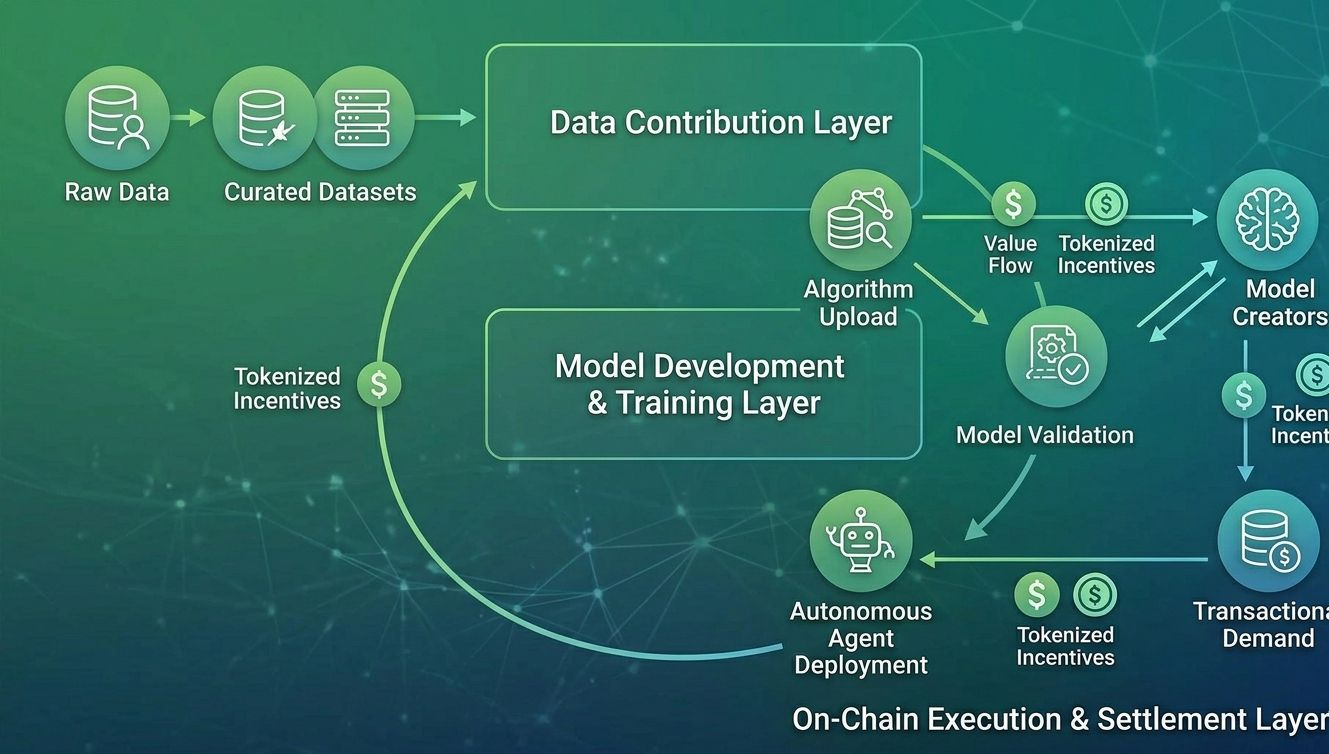
The project approaches AI infrastructure almost like Ethereum approached programmable finance years ago. Instead of treating AI as a separate application layer, OpenLedger integrates the full lifecycle directly into blockchain architecture. Data monetization, model execution, agent coordination, and settlement are all designed to happen on-chain. At first glance, that sounds extremely ambitious, and I was initially skeptical because many projects underestimate how computationally heavy AI systems Nisha pomi actually are. But the more I looked into the architecture, the more I realized OpenLedger isn’t trying to compete with centralized hyperscalers purely on raw compute efficiency. The real focus appears to be ownership, interoperability, attribution, and economic coordination.
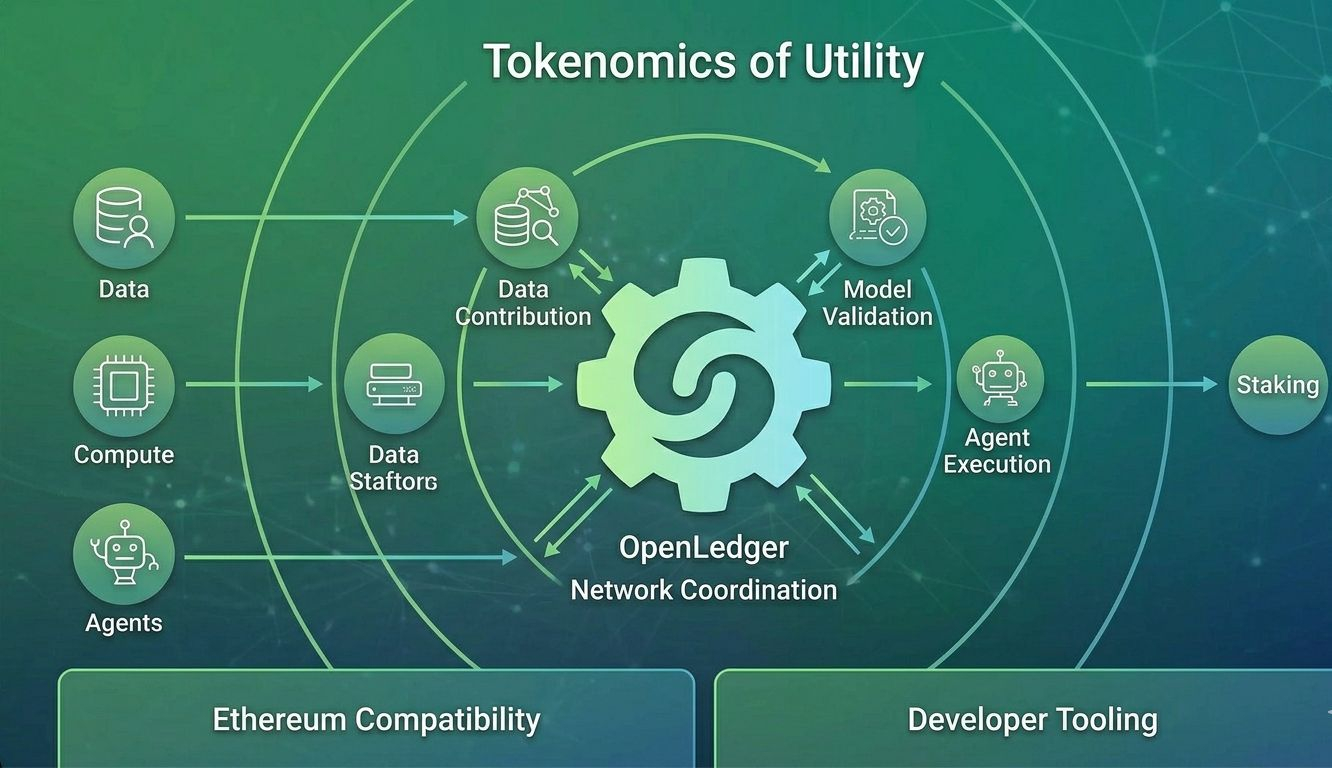
One thing I noticed is how heavily OpenLedger leans into Ethereum compatibility. I think this is a smarter strategic decision than many people realize. Crypto users already live inside Ethereum standards whether they admit it or not. Wallet infrastructure, smart contracts, liquidity systems, L2 integrations, and developer tooling are deeply embedded into the Ethereum ecosystem. By reducing friction instead of forcing users into isolated environments, OpenLedger significantly lowers the adoption barrier. In crypto, technical superiority alone rarely wins. Liquidity and accessibility matter more than idealism.
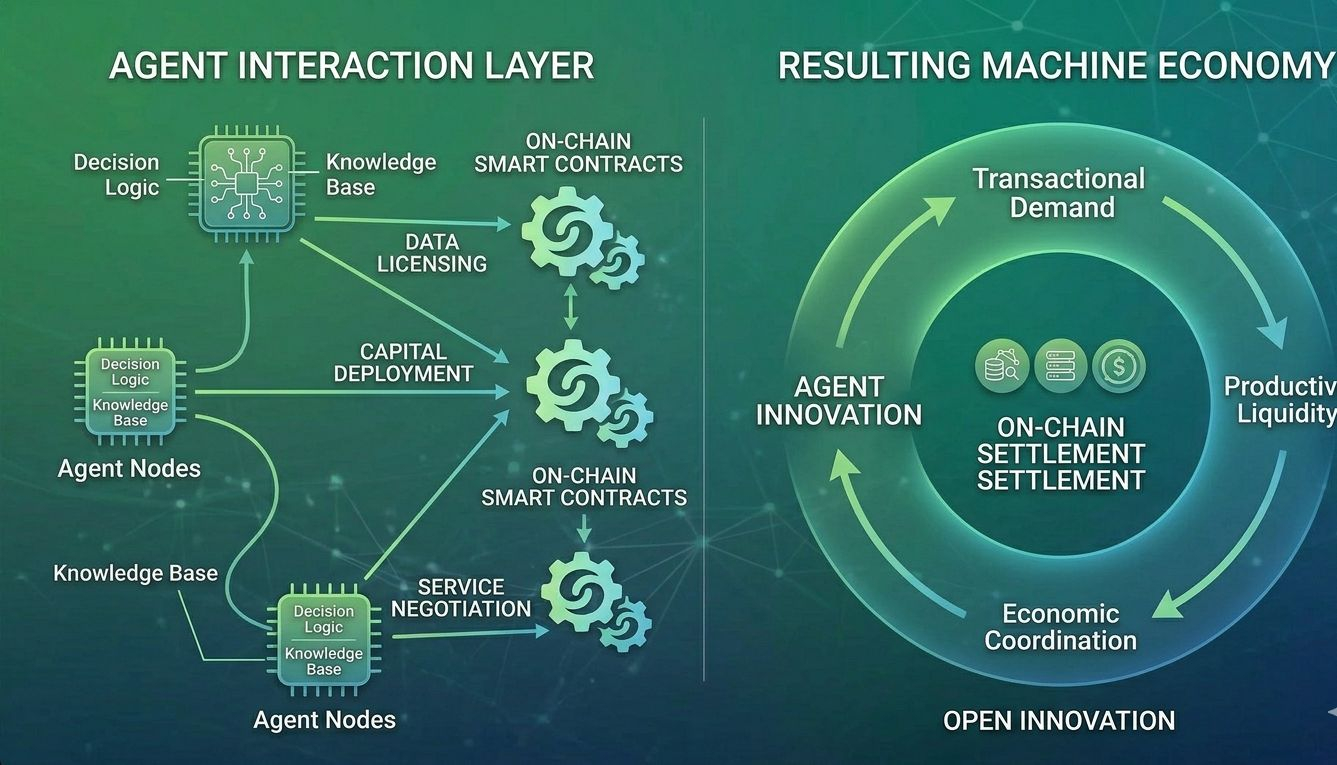
The concept of AI agents operating natively on-chain also deserves more attention than the market is currently giving it. I’ve been watching the rise of autonomous agents very closely because I think they represent one of the next major shifts in crypto infrastructure. Most people still think of AI agents as chatbots or trading assistants, but the bigger picture is programmable economic actors. Imagine autonomous systems capable of deploying capital, negotiating services, licensing data, interacting with DeFi protocols, or coordinating across ecosystems without centralized oversight. The current internet infrastructure isn’t really designed for that type of machine-native economy. Blockchain infrastructure is.
@OpenLedger seems to understand this dynamic well. Instead of treating agents as experimental tools, the network appears structured around enabling agents to participate economically from the ground up. That distinction matters because many AI projects today still feel like traditional SaaS platforms with a token awkwardly attached on top. OpenLedger feels more like an attempt to build native financial rails for machine intelligence itself.
Of course, this is where the discussion becomes more complicated because ambitious infrastructure projects often face the hardest execution challenges. Building an AI-integrated blockchain is not the same as launching another DeFi application or meme-driven ecosystem. The operational complexity here is enormous. Data verification, decentralized compute coordination, latency optimization, storage scalability, and model integrity all become serious engineering problems. In crypto, narratives can move faster than actual infrastructure maturity, and I think investors should remain careful about separating vision from current execution reality.
Still, I can’t ignore how relevant the timing feels.
The market is entering a phase where AI narratives are no longer enough on their own. Capital is slowly rotating toward projects attempting to create sustainable infrastructure layers beneath the hype. We already saw early versions of this transition in DePIN ecosystems where networks began monetizing physical infrastructure like storage, bandwidth, and compute. @OpenLedger feels adjacent to that evolution, except the resource being monetized is intelligence itself. Data becomes an asset class. Models become productive infrastructure. Agents become economic participants.
That idea sounds abstract initially, but once you think about it from a market structure perspective, it starts making sense. AI systems need enormous amounts of proprietary data to remain competitive. Centralized corporations currently hoard that value internally. OpenLedger is effectively attempting to tokenize participation across that entire production chain. If successful, this creates a radically different economic model where contributors can actually capture value proportional to what they provide.
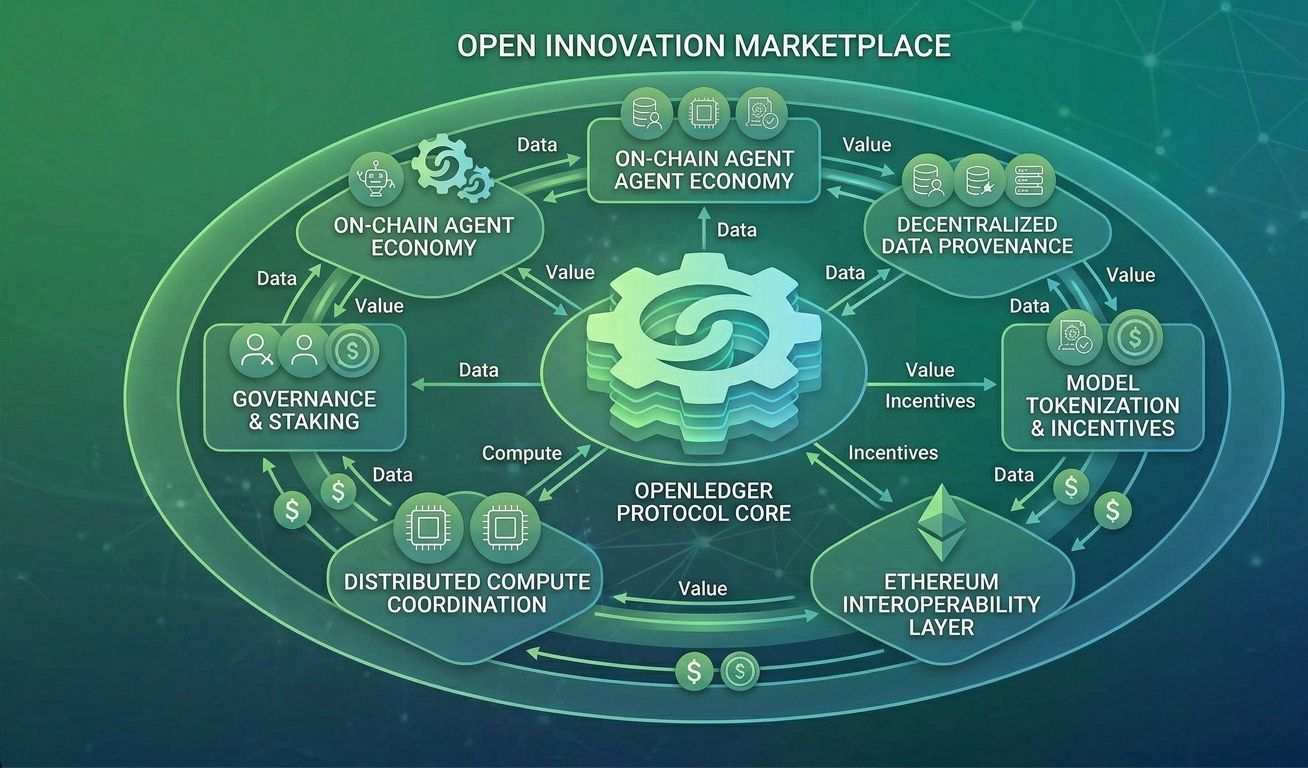
The tokenomics side is where I spent the most time trying to determine whether the ecosystem structure actually aligns with the narrative. A lot of AI projects collapse once you examine the token utility because the token often exists purely for fundraising rather than network necessity. What I found more compelling with OpenLedger is that the token appears deeply integrated into network coordination itself. Incentives tied to data contribution, validation, execution, staking, and agent participation create stronger utility foundations than the superficial governance-only structures we often see elsewhere.
That said, tokenomics sustainability will ultimately depend on real economic demand rather than emissions-driven activity. I’ve seen too many ecosystems create temporary growth through unsustainable incentives only to collapse once token inflation overwhelms organic usage. If OpenLedger wants long-term durability, the network must generate actual transactional demand from developers, agents, and applications using the infrastructure because emissions alone cannot sustain valuation indefinitely.
One thing I’m watching closely is how liquidity evolves around the ecosystem over time. AI narratives attract speculative capital very quickly, but speculative liquidity behaves differently from productive liquidity. Traders can inflate valuations aggressively during narrative expansions, but infrastructure projects survive only if they create sticky participation. In OpenLedger’s case, that means developers building on top of the network, agents interacting economically, and enterprises finding practical value in decentralized AI coordination.
I also think competition is going to become far more intense than many people expect. Nearly every major blockchain ecosystem is now racing toward AI integration in some form. Some are focusing on decentralized compute, others on data marketplaces, and others on agent coordination frameworks. OpenLedger’s challenge will be differentiating itself beyond branding. Infrastructure moats in crypto are notoriously difficult to maintain because open-source environments evolve rapidly. Execution speed and ecosystem growth may matter more than pure technological innovation.
Another concern I have relates to regulatory complexity. AI and blockchain are individually attracting increasing regulatory scrutiny already. Combining both creates entirely new legal questions around data ownership, liability, model accountability, and automated economic activity. Governments are still struggling to regulate centralized AI providers, so decentralized AI economies could introduce even greater uncertainty. I don’t think this risk is fully priced into most AI-related crypto narratives yet.
Despite these concerns, I keep coming back to the same conclusion after analyzing OpenLedger more deeply: the project is at least attempting to solve a real structural problem rather than manufacturing artificial demand through marketing cycles. That alone already separates it from a large portion of the market. Whether the team can fully execute the vision remains uncertain, but the direction itself feels aligned with where crypto and AI are naturally converging.
What impressed me most was the recognition that AI is ultimately becoming an economic coordination problem as much as a technological one. The future battle may not simply be about who builds the smartest models. It may be about who owns the networks connecting data, intelligence, liquidity, and autonomous systems together. OpenLedger appears positioned around that exact intersection.
I’ve been in crypto long enough to know that strong narratives alone are never enough. Markets eventually demand utility, resilience, and sustainable economic design. But I also know that the most important infrastructure projects often look overly ambitious before they become obvious. Ethereum itself sounded unrealistic to many people in its early years because programmable blockchains were difficult to conceptualize before applications emerged around them.
I’m not saying OpenLedger is destined to become the dominant AI blockchain because the sector is still extremely early and competition will be brutal. But I do think the project represents a more intellectually serious attempt at decentralized AI infrastructure than much of what the market currently discusses. It’s approaching AI not as a temporary attention cycle, but as an emerging digital economy that requires ownership layers, incentive coordination, and transparent participation models.
In a market increasingly flooded with shallow AI narratives, that distinction matters more than ever.
