
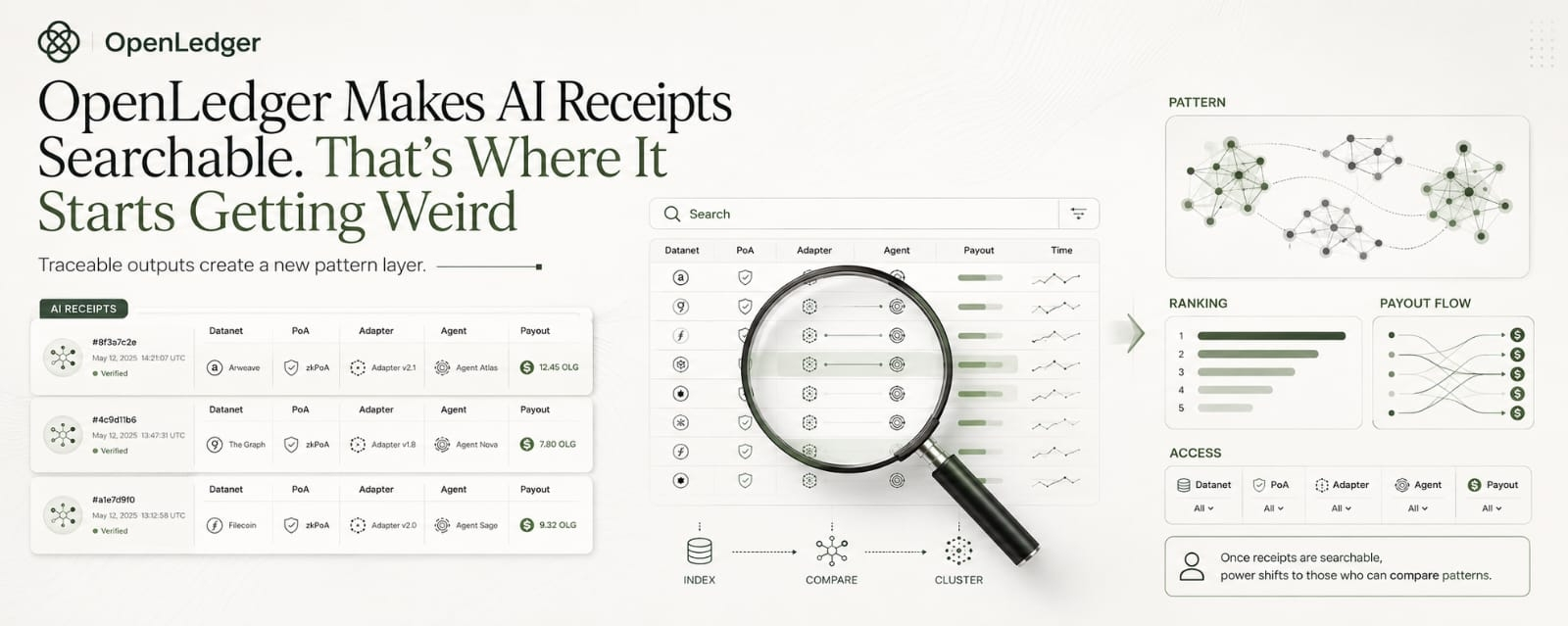
What bothered me first about @OpenLedger wasn't Proof of Attribution.
That part is easy to like.
Datanet. Output. Contribution trail. Nice clean receipt for who shaped what. Finally something in AI that doesn’t just shrug at the input layer and call that innovation.
Fine. Good even.
What kept dragging me back was the thing that comes after enough clean outputs already exist.
The search.
Not training. Not deployment. Search.
Because the minute an AI system stops being a black box and starts leaving usable receipts, the power stops living only in who built the model or who queried it first. It starts drifting toward whoever can pull those receipts back up later, line up the same contributors, the same Datanet overlaps, the same adapter paths, and decide what that pattern means.
That sounds boring. It also sounds like admin work. Usually thats where the real shift is.
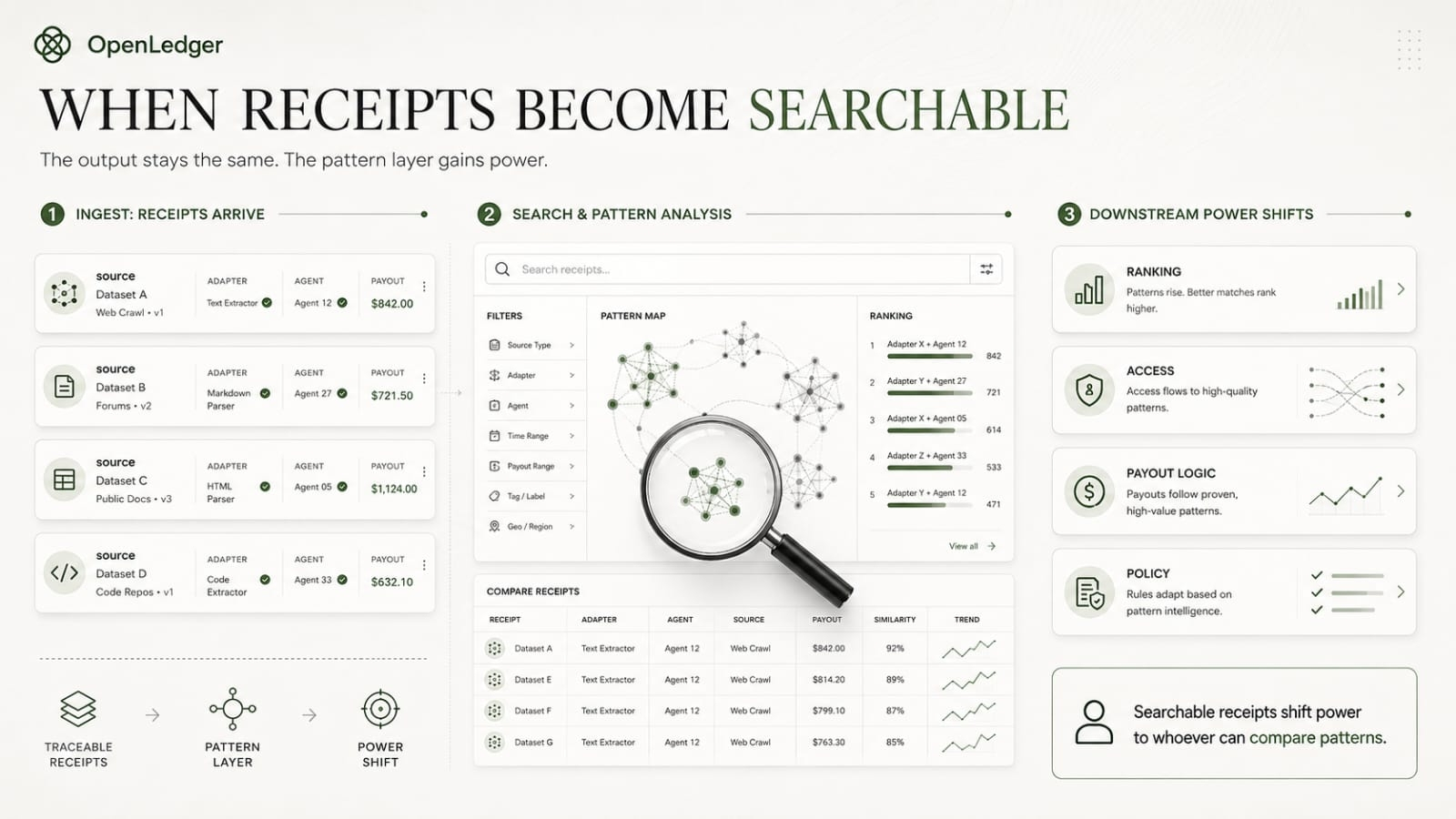
OpenLedger makes those trails legible on purpose. Datanets make the source layer more structured. PoA makes contribution harder to hand-wave away. OpenLoRA makes specialized paths cheap enough to run without pretending every niche model needs its own cathedral. ModelFactory turns that into something people can actually ship. OctoClaw means the thing can do more than sit there looking attributable.
Good.
Still not the part that should make people comfortable.
Because messy systems limit power in one ugly way. They are slow to search. Slow to connect. Slow to operationalize at scale. A bad AI stack is still a bad AI stack, but at least some of its incompetence is friction. Once the outputs get clean, attributable, and easy to compare, the friction starts moving somewhere else.
And on OpenLedger, that move is the story.
I keep picturing the polite version first. A desk runs specialized agents on top of a narrow Datanet. Fine. A marketplace leans on ModelFactory-built outputs. Fine. OctoClaw leaves action receipts. Fine. Then later somebody starts clustering the same contributor trails, payout paths, and source overlaps harder than the original workflow ever did.
Not just "did this output have provenance?"
More like... which Datanet contributors keep showing up right before the routes that make money? Which source families cluster before certain kinds of actions? Which adapter path keeps appearing when borderline outputs still get pushed through? Which agents keep leaning on the same contributor reputations? Which fallback routes keep waking up around the same source pattern? Which outputs keep earning and for whom?
The output layer didn't change.
The power around it did.
That contradiction keeps bothering me.
Everybody talks like searchable AI receipts are just admin cleanup. Faster attribution. Cleaner payout logic. Fine. But the second those receipts can be stacked, compared, and filtered, someone starts governing from the pattern.
Not who produced the output.
Who works the pattern layer.
And on OpenLedger, that matters more than people want to admit. Datanet discipline makes the source cleaner. PoA makes the trail legible. OpenLoRA and ModelFactory make specialized outputs easier to ship. OctoClaw makes the action trail harder to deny afterward. Once those pieces line up, the hard part is no longer “can this be found?” It is “who gets to decide what this cluster of outputs, actions, contributors, and payouts means?”
Different job.
Different power, really.
I'm not even worried about the output being wrong first.
I’m worried about the search being too good for the wrong people.
A bad AI stack loses context. A better one can do something worse. It finds patterns too easily and starts making ranking, trust, payout, or access decisions from them before anybody agrees on what the pattern actually means.
And OpenLedger is exactly the kind of stack that can make that possible. Datanet contribution history. PoA trails. Model usage. Adapter usage. Agent receipts. Reward paths that stop pretending the answer appeared out of nowhere. It is obviously better than the old mess. Of course it is.
That does not make the new power neutral.
I think people still underprice that.
Because the clean OpenLedger pitch is about attribution and monetization. Fair. But once the outputs are queryable and the contribution graph is legible, the fight stops being “can this be traced?” and starts becoming “who is allowed to ask better pattern questions than everyone else?”
Thats where it gets political in a way people keep smoothing over.
Maybe an output is valid. Fine. Then some downstream desk or marketplace starts building filters around contributor reputation, payout frequency, Datanet overlap, exception clusters, repeated source paths, recurring adapter usage, whatever they think looks suspicious or valuable this month. Suddenly the question is no longer just whether the original output holds. Now the question is who got to build the lens through which all these clean receipts get interpreted.
Thats not just traceability anymore.
That’s ranking power with better indexing.
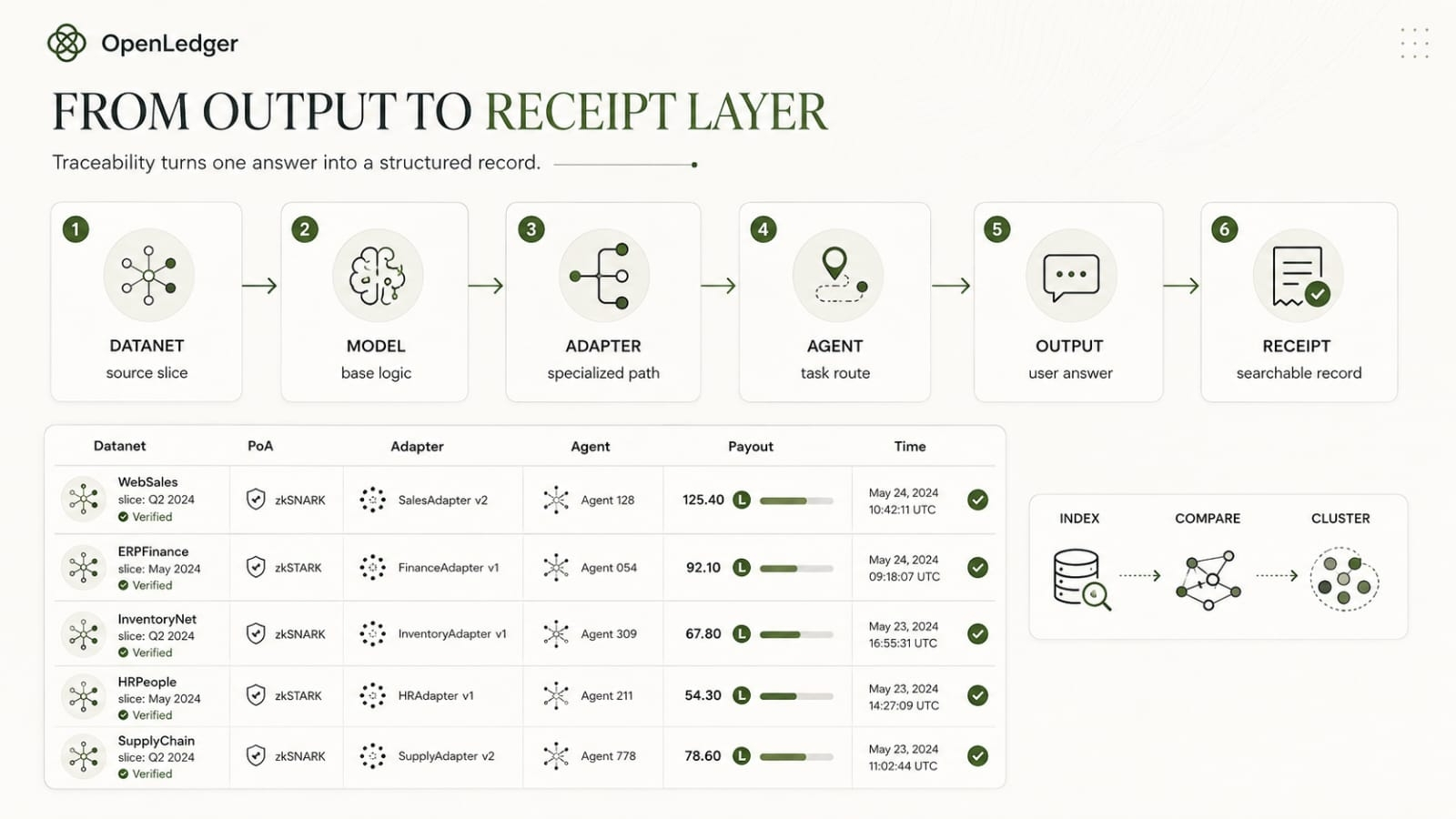
And on OpenLedger, I don't think that line stays clean for long. The protocol can make the output legible. It can make the trail portable. It can make attribution good enough that people stop pretending they are working in the dark.
Good.
But the moment AI receipts become easy to search, access policy stops being some dull backend setting and starts looking a lot more like economic power with better UX.
Thats the part of OpenLedger I can't shake.
Not whether the output is clean.
Who gets to search it well enough to matter.