The deeper I explore the AI industry the more obvious one reality becomes:
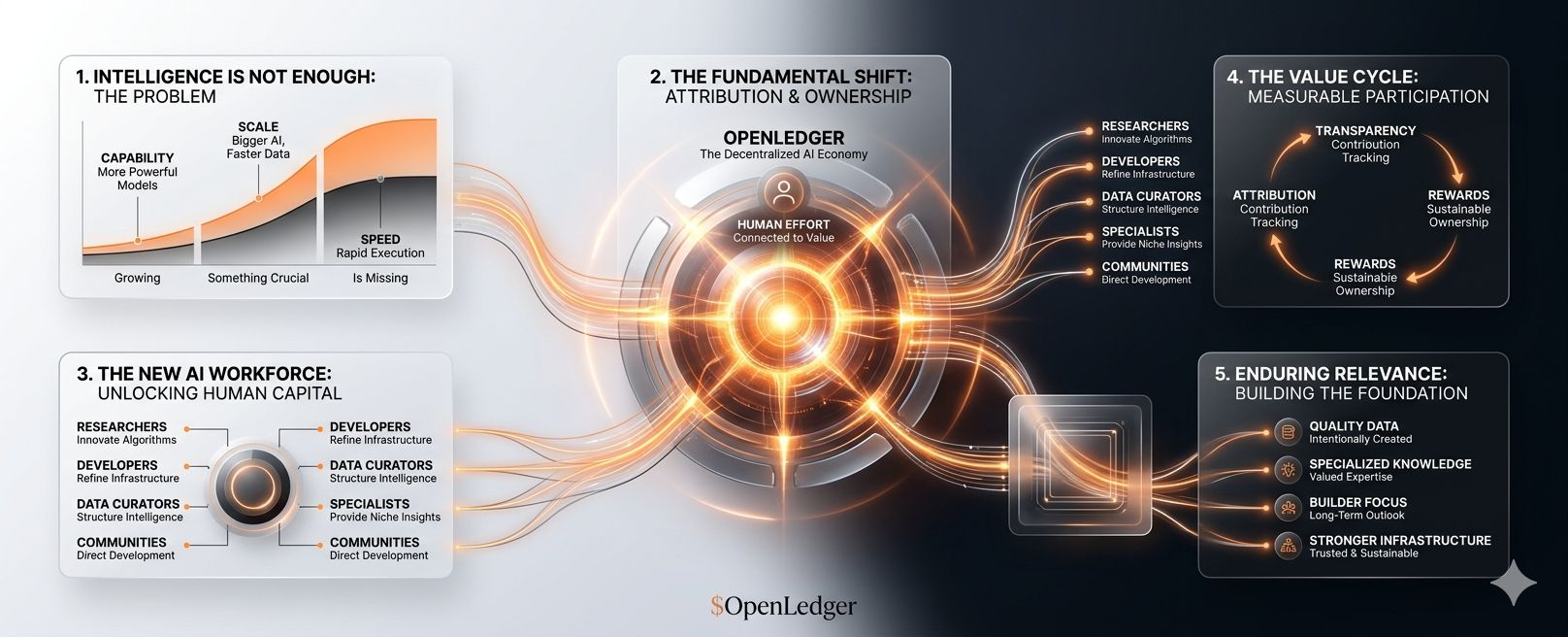
We are entering a stage where intelligence alone is no longer enough.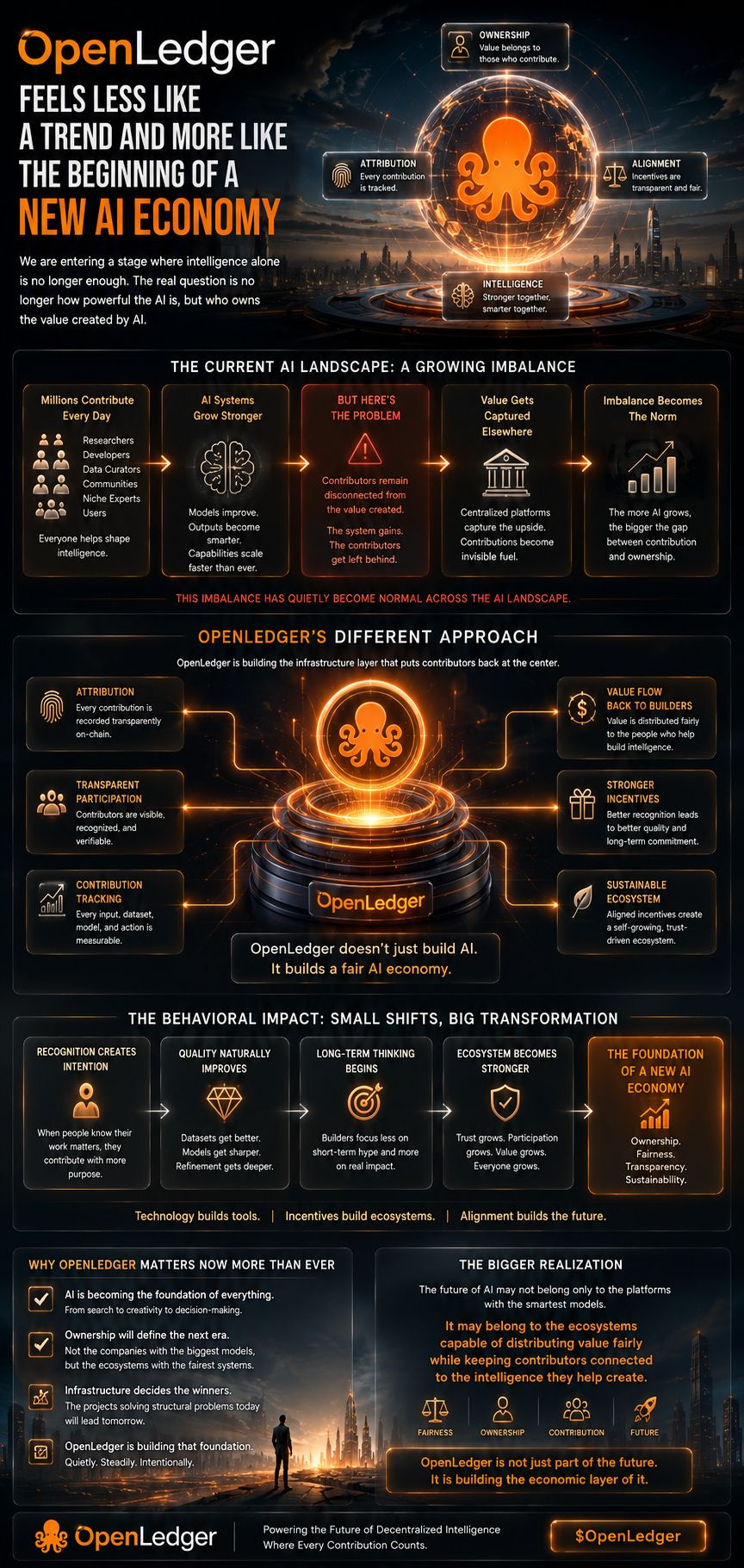
For years, the conversation around AI has been dominated by speed, scale, and capability. Bigger models became the goal. Faster outputs became the standard. Every new launch tried to prove it could outperform the last one. But beneath all of that momentum, a more important question quietly kept growing in the background:
Who actually owns the value created by AI?
That question is exactly why OpenLedger feels increasingly important to me lately.
Not because it pushes the loudest marketing.
Not because it depends on exaggerated promises.
But because the entire ecosystem appears focused on solving a structural problem most projects still overlook.
And honestly, that makes it stand out naturally.
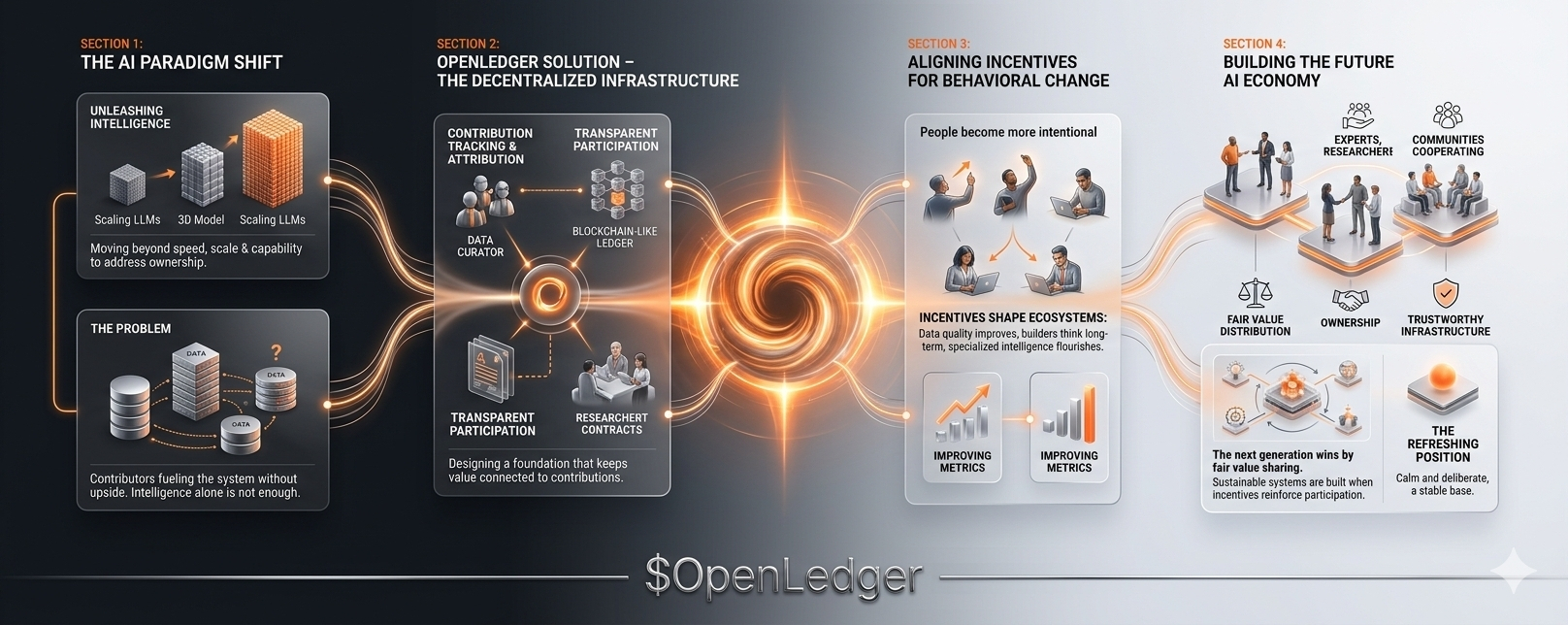
What caught my attention first wasn’t hype — it was the logic behind the infrastructure itself. OpenLedger seems designed around the idea that intelligence should remain connected to the people contributing to it. Researchers, developers, data curators, communities, and niche experts continuously help shape AI systems every single day, yet most platforms still treat those contributions like invisible fuel.
The system grows stronger.
The contributors remain disconnected from the upside.
That imbalance has quietly become normal across the AI landscape.
OpenLedger approaches the situation differently by focusing on attribution, transparent participation, and contribution tracking. At first glance, those ideas might sound technical, but the deeper implication is actually human behavior.
Because incentives shape ecosystems.
When people know their contributions are recognized and measurable they naturally become more intentional with what they create. Data quality improves. Specialized intelligence becomes more valuable. Builders think long term instead of chasing temporary attention Over time, those small improvements compound into stronger and more trustworthy infrastructure.
That’s the part many people underestimate.
Technology by itself rarely creates lasting ecosystems. Sustainable systems are usually built when incentives, ownership, and participation begin reinforcing each other in a healthy way. And from my perspective, OpenLedger seems far more focused on building that foundation than simply competing for visibility inside the current AI cycle.
What also stands out to me is the project’s overall energy.
It feels calm.
Structured.
Deliberate.
In a market overloaded with noise, that kind of positioning actually feels refreshing. While many ecosystems compete aggressively for attention, OpenLedger appears focused on creating long-term relevance quietly beneath the surface. Historically, infrastructure projects built around real utility tend to outlast projects built only around momentum.
And maybe that’s the bigger realization here.
The next generation of AI winners may not simply be the platforms with the smartest models. They may be the ecosystems capable of distributing value fairly while keeping contributors connected to the intelligence they help create.
That’s why OpenLedger increasingly feels less like a temporary narrative and more like the foundation of a future AI economy where ownership finally matters.
Not performative.
Not artificial.
Just quietly important in a way that keeps becoming harder to ignore.