
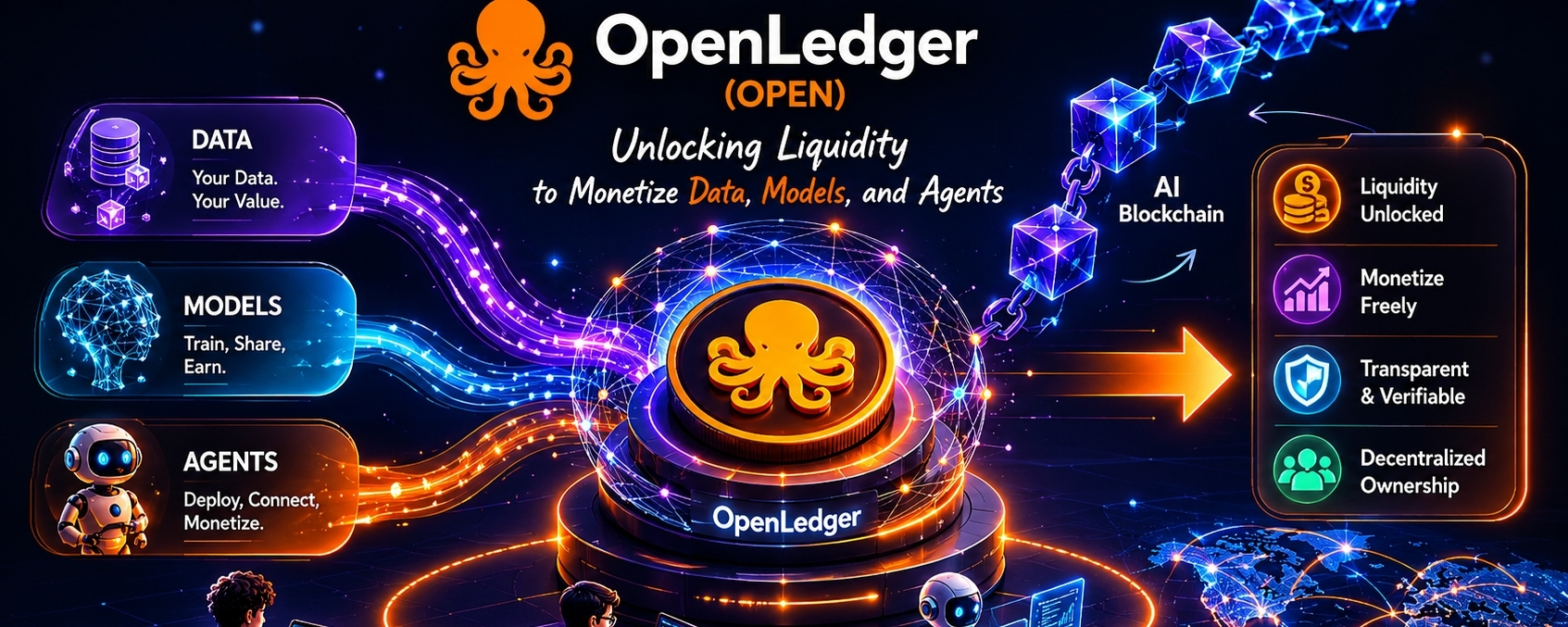
I keep watching OpenLedger in a way that feels different from how I used to watch projects years ago. Back then, I was quicker to believe. A new narrative would appear, people would rush toward it, timelines would suddenly feel alive, and somewhere in the noise I’d convince myself momentum meant something deeper was happening. Maybe sometimes it did. Most times, though, the market just moved on before anyone had the chance to ask harder questions.
I think spending years in crypto changes the way you look at things. You stop reacting to excitement the same way. You become slower, quieter, maybe even a little suspicious of anything that feels too certain too early. After enough cycles, hype starts sounding familiar. Different words, same rhythm.
That’s partly why OpenLedger caught my attention, though probably not for the reasons people expect.
I’m not really interested in loud promises anymore. Crypto has never been short on ambition. Every cycle seems to arrive carrying a new story that claims to reshape everything. Sometimes the language changes, sometimes the branding becomes smarter, but underneath it all there’s often the same urgency — believe now, ask questions later.
I don’t move like that anymore.
What keeps me looking at OpenLedger is something quieter. Maybe it’s because the idea sits in a space that feels difficult to ignore right now. AI keeps growing faster than most people can process, and somewhere underneath all the excitement, there’s this lingering question about ownership that nobody seems fully comfortable answering.
Who actually benefits from intelligence becoming more valuable?
That question stays with me.
For years, people gave platforms their behavior without really thinking twice about it. Search habits, preferences, conversations, clicks, interests — all of it slowly became valuable while most people barely noticed. Data turned into something enormous, but ownership always felt strangely distant, like ordinary people existed around the system rather than inside it.
Watching OpenLedger, I keep wondering whether that imbalance is exactly what projects like this are trying to confront, or if crypto is simply wrapping another complicated idea inside a narrative people want to believe in.
And honestly, I don’t fully know yet.
That uncertainty feels important.
I’ve learned to trust uncertainty more than confidence in this market.
The idea behind OpenLedger feels interesting because it touches something bigger than speculation. Data, AI models, agents — these things don’t feel temporary. They feel like parts of a future already slowly forming around us whether people are ready or not. But interesting ideas and sustainable ecosystems are not the same thing. Crypto taught me that lesson repeatedly.
The market loves concepts.
Reality usually asks harder questions.
Will people stay after curiosity fades? Will builders continue showing up when attention moves elsewhere? Can something still matter when the rewards feel smaller and nobody is forcing excitement into the conversation anymore?
I think about those things more than token charts now.
Because survivability feels different from popularity.
Popularity arrives fast.
Survival moves quietly.
I’ve seen projects dominate timelines for months and disappear the moment incentives weakened. I’ve also watched smaller ecosystems slowly build something real while almost nobody paid attention at first. Usually, what lasts looks underwhelming before it looks important.
That’s why I keep observing behavior around OpenLedger instead of trying to predict outcomes too quickly.
I pay attention to how people talk when nobody is selling. I notice whether discussions feel thoughtful or repetitive. Whether there’s genuine curiosity underneath the surface or just another cycle of people repeating the same optimistic language back to each other.
You start noticing patterns after enough time here.
Communities often reveal more truth than announcements ever do.
And maybe what makes me keep returning to OpenLedger is that I still can’t place it comfortably into either category. I’m not convinced. But I’m not dismissive either. It feels too early for certainty, and maybe certainty is overrated anyway.
There are moments where I think something meaningful could quietly emerge from this intersection between AI and ownership. Not because people are loudly predicting it, but because the problem itself feels real enough to deserve attention.
Then there are other moments where I wonder whether crypto is simply doing what crypto always does — rushing toward the future emotionally before infrastructure has had time to catch up.
That tension stays with me.
Curiosity mixed with hesitation.
Interest balanced against experience.
I think people who stay in crypto long enough eventually become quieter thinkers. Less interested in predictions. More interested in patience. You stop trying to declare winners too early because markets have a way of humbling certainty.
So for now, I just keep watching OpenLedger without trying to force an opinion before time earns one.
Maybe it becomes something important.
Maybe it becomes another ambitious idea the market eventually forgets.
I honestly don’t know.
But I’ve learned there’s value in paying attention before conclusions arrive. Sometimes what survives isn’t what shouted the loudest. Sometimes it’s the thing that quietly kept building while everyone else moved on to the next story.