
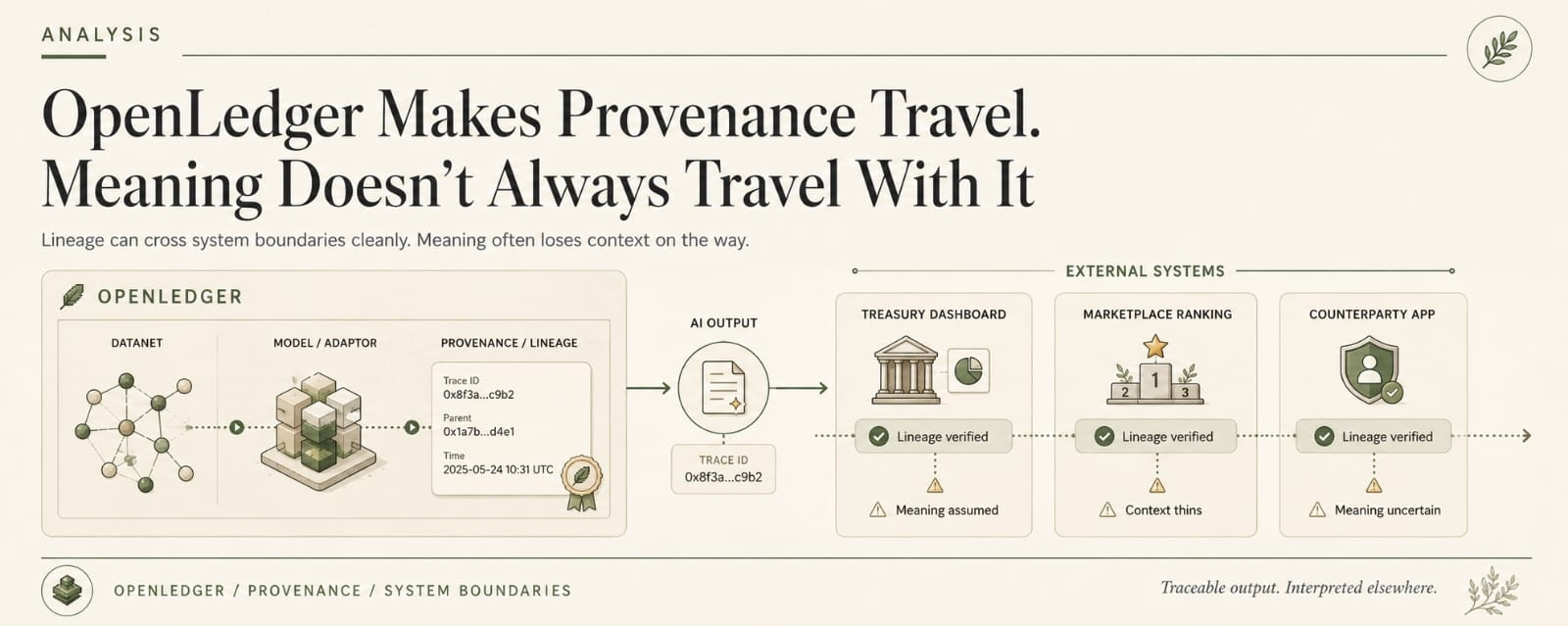
What bothered me first about OpenLedger wasn't the signal update.
That part is easy to like.
Datanet changes. Wrapper tightens. Source branch cools off. Fine. Good even. Finally something in AI infra that can admit state changed without hiding behind vibes and a dashboard.
What kept dragging me back was the thing downstream still carrying the older greenlight forward.
Not because the update failed.
Worse.
It landed.
It just did not become real in the place that was still about to move something expensive.
So one layer had the changed state.
Another had the old one.
And the @OpenLedger route kept moving through the cleaner version because, of course, the cleaner version is the one people trust when they are in a hurry.
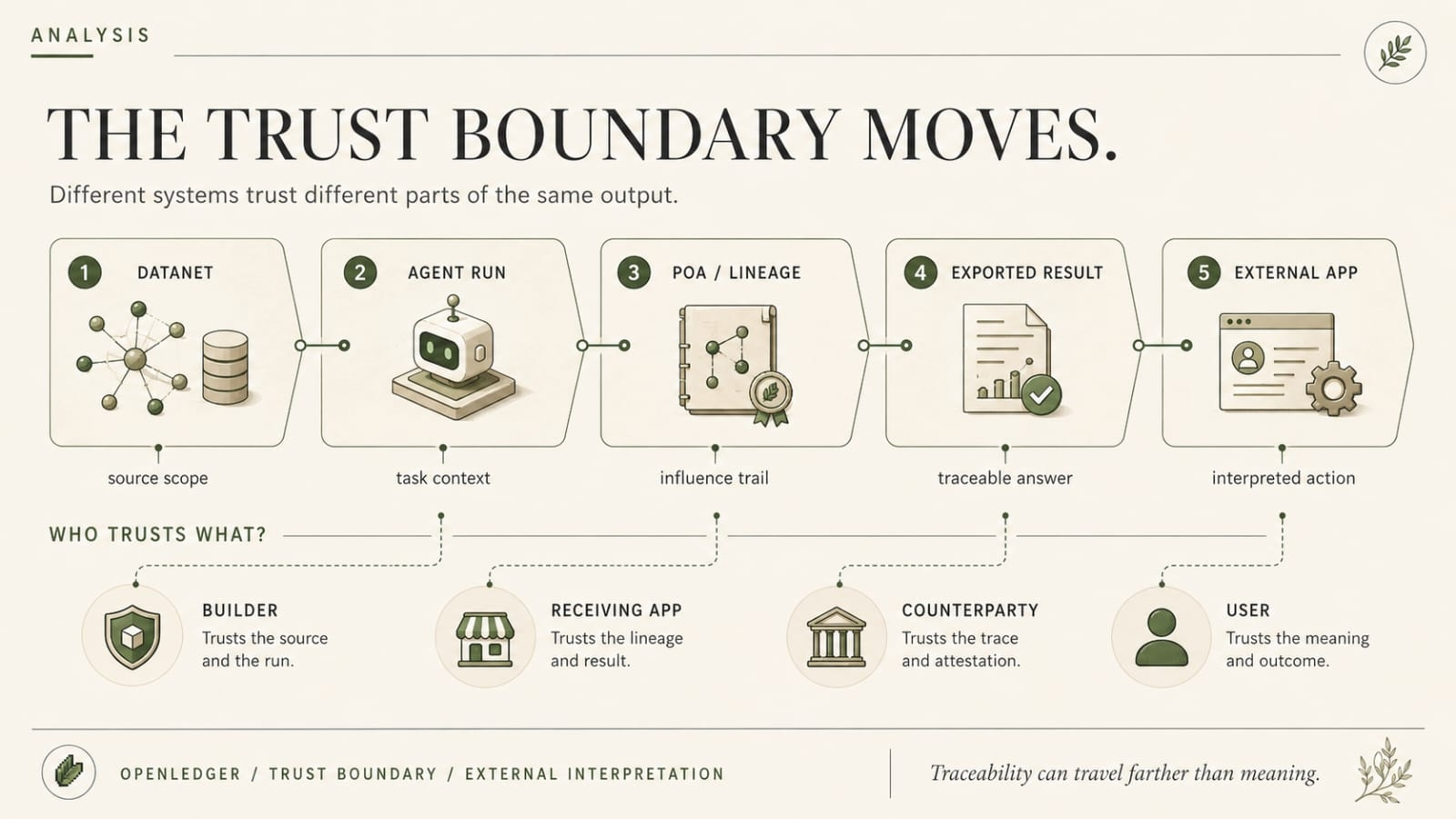
I keep circling this because people like talking about updates inside systems like OpenLedger as if they are one event. One switch. One neat state transition. Signal changed, wrapper changed, everybody go home. Nice story.
Too neat. That is the problem.
The actual workflow is uglier. A ModelFactory agent goes live. Fine. It leans on a narrow Datanet branch. OpenLoRA keeps the specialized path cheap enough to run constantly. PoA keeps the receipt clean enough that the output still looks adult. OctoClaw sits downstream waiting to turn that output into a route. Maybe treasury. Maybe a ranking path. Maybe some agent-managed capital flow over EVM rails. Whatever the surface is, the shape is the same. The system already decided this output is actionable enough.
Then the state changes. Good. Necessary. Formal signal changed.
And the action layer still looks alive.
That gap is where it starts going bad.
Not always dramatic damage. Sometimes just enough. A route queue still sees green. A fallback path stays asleep. A wrapper decision still reflects the earlier branch. A vault step still gets hit because the route was prepared off the older state and nobody felt like rebuilding it over one changed signal twenty minutes before execution. Same old thing. Real update. Unreal operational timing.
The question is not “did the signal change.”
The question is when the change became real for the layer that was still about to do something expensive.
Different clocks. Same bad decision.
The Datanet branch still looked usable. The OpenLoRA path was still serving the earlier specialization. PoA still made the output look clean enough to trust. OctoClaw still had enough to move. Then the branch cooled off. Good even. But if the action queue is still carrying the earlier greenlight, what exactly does “updated” even mean there.
Not much, apparently.
The route logic only cares about one version of reality, and it is usually the one nobody checked carefully enough.
I’ve seen that hour. Nobody rebuilds the route over one cooled-off branch unless something is already on fire.
Anyways...
I've seen this shape before too. Not always onchain, not always here, but the smell is the same. Somebody says the signal cooled at 10:41. Great. Another route job only refreshes every hour. Great. Or the wrapper passed at 10:30 and the downstream action layer keeps trusting that earlier pass because the OpenLedger system was built by someone who heard “attributable output” and translated that into “stable enough.”
Great again.
Then the signal is dead in one place and effectively alive in another.
Still routeable.
Still visible.
Still... good enough for one more bad move.
And the really annoying part is that nothing looks broken in the theatrical way people like. No hacked wallet. No fake branch. No forged output. No comic-book nonsense. Just state lag. Queue lag. Trust lag. The signal is dead in the source and socially alive in the layer still about to act on it.
And by then it isn't just the OpenLedger Datanet. The OpenLoRA path, the PoA receipt, the OctoClaw queue... all of them are helping carry the older greenlight forward.
That should bother more people than it does.
It bothers me, obviously. The branch is dead in one place and still operationally alive in the place about to move capital, ranking, or access. That is not a small gap.
Maybe the Datanet context updated and the wrapper had not rerun yet. Maybe the wrapper reran and the OctoClaw queue still held the older state. Maybe the OpenLoRA path was still serving the earlier specialization while the Datanet branch had already cooled off. Maybe the queue was right and the prebuilt action batch was already generated off the earlier signal. Maybe the vault leg was already prepared and nobody was tearing it apart over one changed branch.
The route was already cut by then. Nobody was rebuilding it over one cooled-off branch unless something was already on fire.
Same result.
Someone somewhere gets to say, truthfully, that the signal changed.
Someone else gets to say, truthfully, that the system still saw it as good enough when it acted.
Wonderful setup.
Everybody correct inside their own timestamp.
Money still moved.
And this is where the whole thing starts sounding less like “an update” and more like the ugly workflow refusing to line up with the nicer state model people wanted. Because changed on paper is not the same thing as dead in practice. Not until the layers actually reading and acting on it have caught up too. Wrapper. Queue. Fallback. Prebuilt route. Vault step. One of those was always going to lag. The question was whether anyone built the downstream path like that lag mattered.
Usually not enough.
If they had, freshness would have been a control. Not a convenience.
They would have asked what state source gets checked at execution. They would have asked whether the PoA trail was authoritative enough for action or merely useful enough for reporting. They would have asked whether a cooled-off branch could still look operationally alive long enough to matter.
That question goes rotten fast.
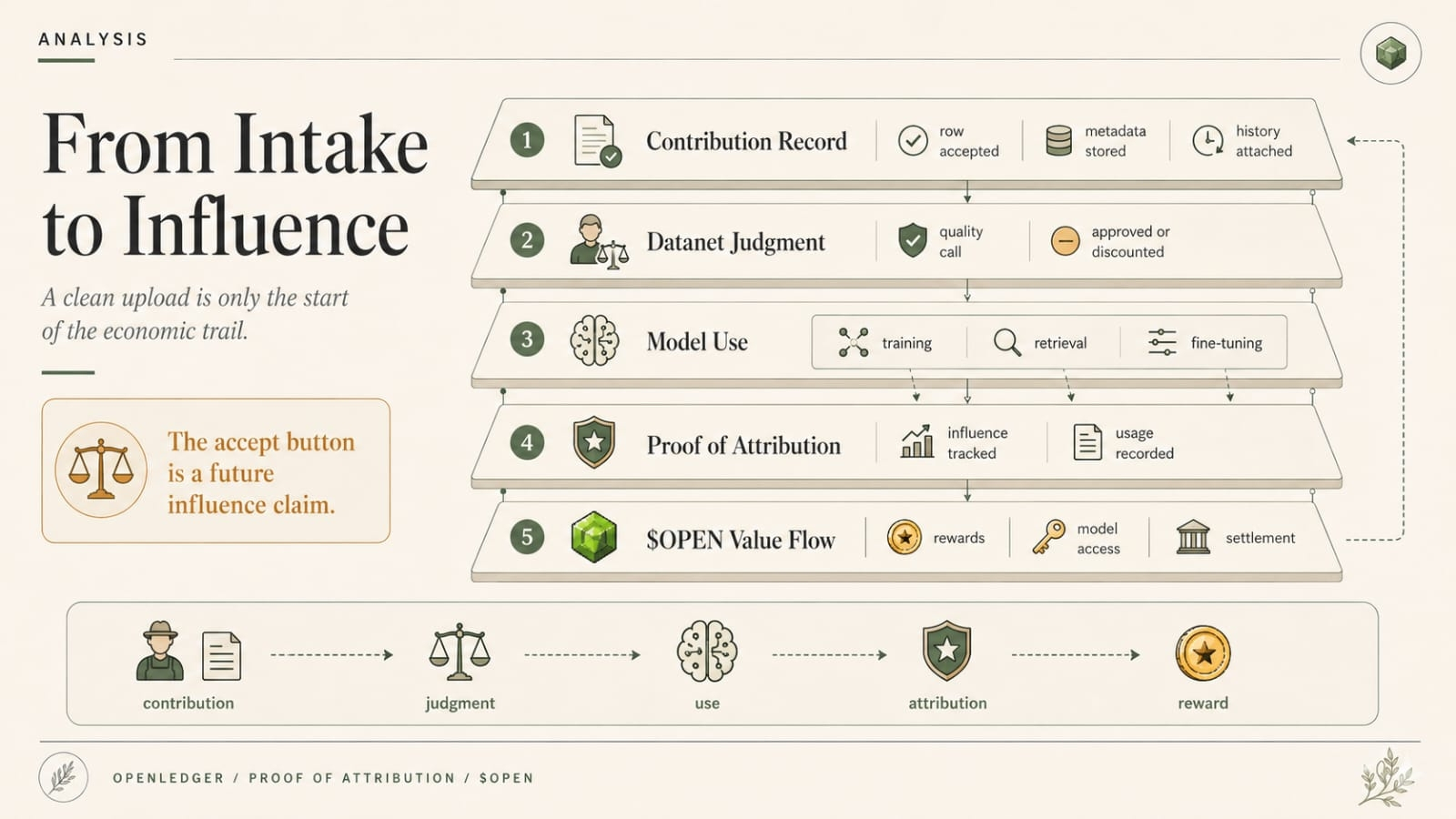
OpenLedger's OctoClaw is the obvious uncomfortable object here because it gives the stack a hand. People trust hands. A calm route says more than it should. Same with a wrapper pass. Same with a prepared queue. Once a route looks alive on the surface somebody operationalizes that surface. Of course they do. Nobody wants to thread live source-of-truth checks through every downstream action unless they absolutely have to. So the pretty action layer quietly becomes part of the permission model whether anyone admits that or not.
And PoA gives that hand a receipt.
Useful. Also exactly why people relax too early.
Then the signal changes.
Then the queue still looks alive.
Then some route fires anyway, or some vault step lands, or some ranking path still clears because it only knew about the older shape of the truth and nobody forced it to distrust that shape aggressively enough.
And afterward the answers get very clean very quickly.
Yes, the branch updated.
Yes, the wrapper tightened later.
Yes, the queue was stale.
Yes, the route looked valid when the action layer moved.
Fine.
Useful answers if the question is which component gets blamed.
The uglier question is when the route actually stopped being alive for the layer that mattered. And if nobody can answer that without naming three clocks and two downstream checks, then the update on OpenLedger existed in the formal sense a lot earlier than it existed in the only sense treasury, access control, ranking, or capital routing was ever going to care about.
That is the part that stays annoying.
Not dead.
Not alive.
Just alive long enough to still clear.