
I’ve been watching the AI space very closely lately, and honestly, one thing keeps standing out more than ever:
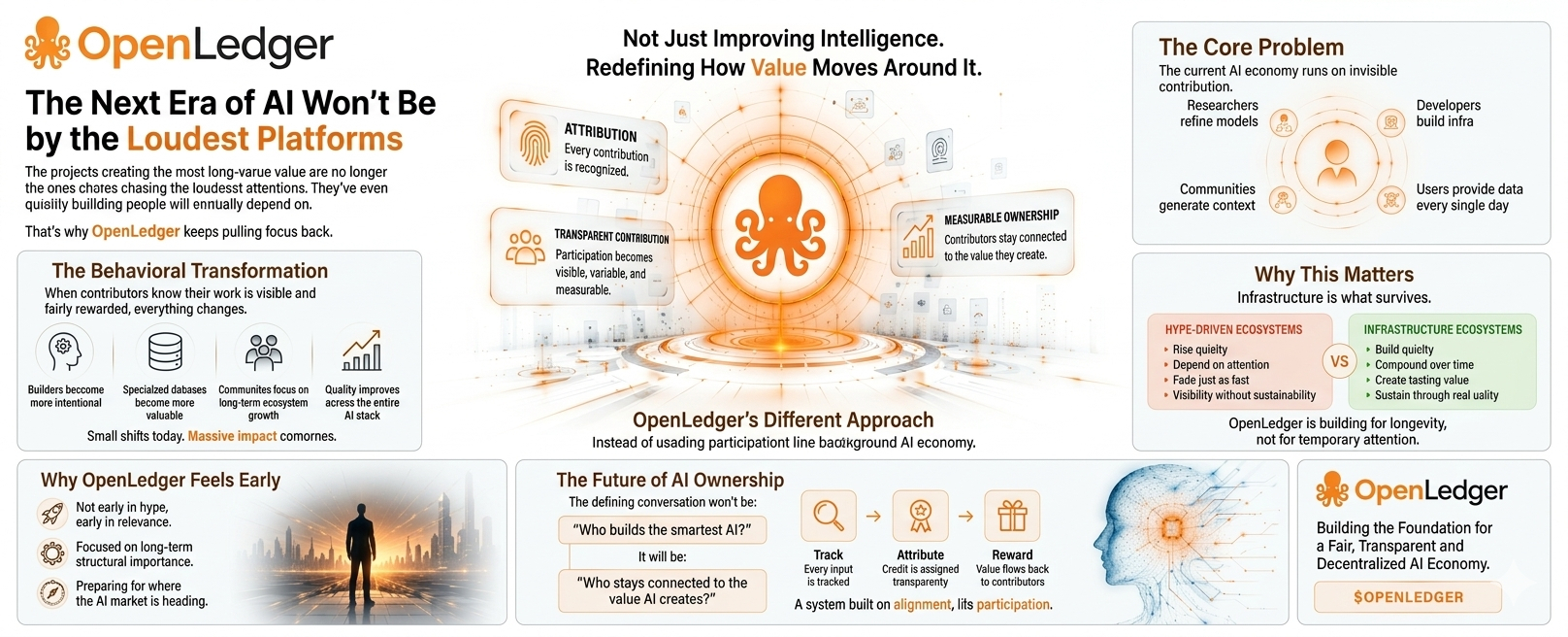
The projects creating the most long-term value are no longer the ones chasing the loudest attention.
They’re the ones quietly building systems people will eventually depend on.
That’s exactly why OpenLedger keeps pulling my focus back.
At first glance, many people may see another AI ecosystem entering a crowded market. But the deeper you explore the architecture, the clearer it becomes that OpenLedger is approaching AI from a fundamentally different direction. It isn’t only trying to improve intelligence — it’s trying to redefine how value moves around intelligence itself.
And that difference feels extremely important right now.
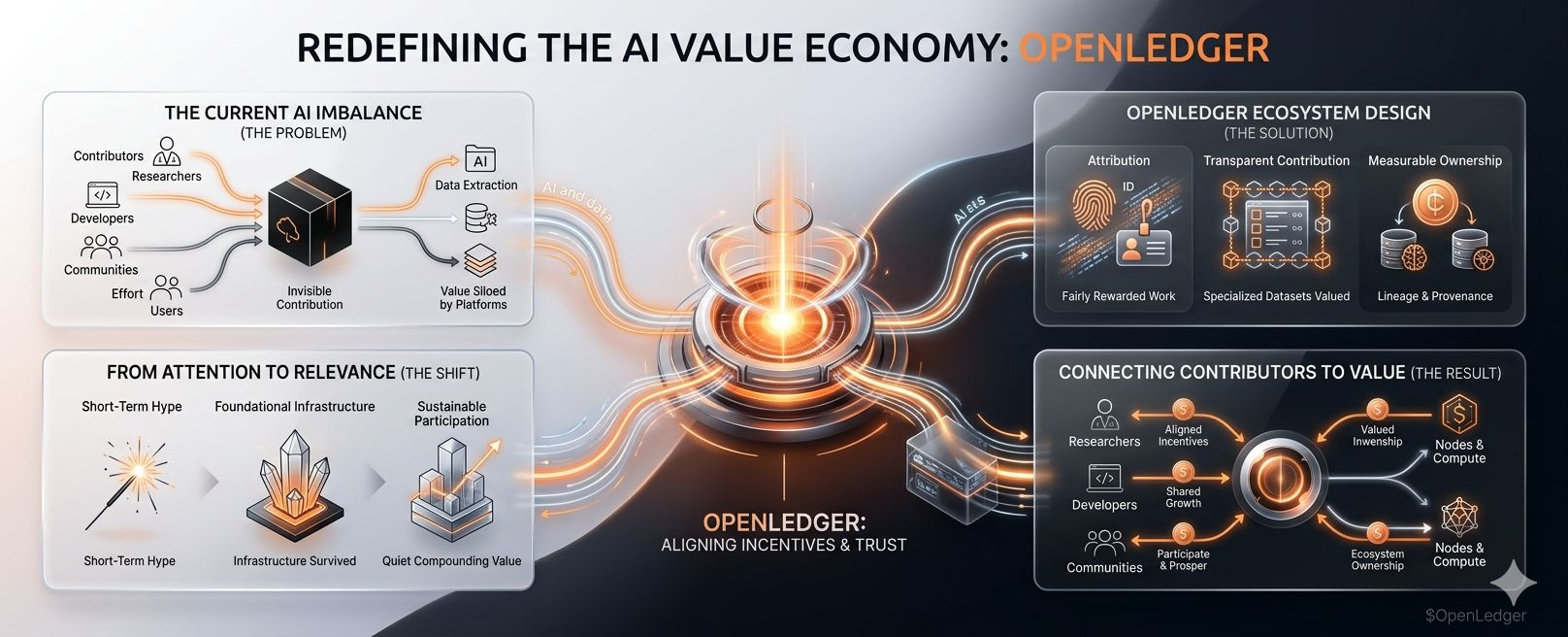
The current AI economy runs on invisible contribution. Researchers refine models. Developers build infrastructure. Communities generate context. Users continuously produce behavioral and informational data that strengthens intelligent systems every single day. Yet despite powering the ecosystem, most contributors remain disconnected from the value eventually created.
That imbalance has quietly become normalized.
OpenLedger seems to recognize the problem earlier than most.
Instead of treating participation like background activity, the ecosystem appears designed around attribution, transparent contribution, and measurable ownership. Every dataset, refinement layer, and inference process becomes part of a structure where contribution can actually be acknowledged instead of disappearing behind centralized systems.
What makes this powerful isn’t just the technology itself.
It’s the behavioral transformation that follows.
When contributors know their work is visible and fairly rewarded, the entire quality of participation changes naturally. Builders become more intentional. Specialized datasets become more valuable. Communities focus more on long-term ecosystem growth instead of temporary hype cycles. Over time, those subtle shifts create stronger infrastructure than attention alone ever could.
That’s the reason OpenLedger increasingly feels less like a short-term narrative and more like foundational infrastructure for the next stage of decentralized AI.
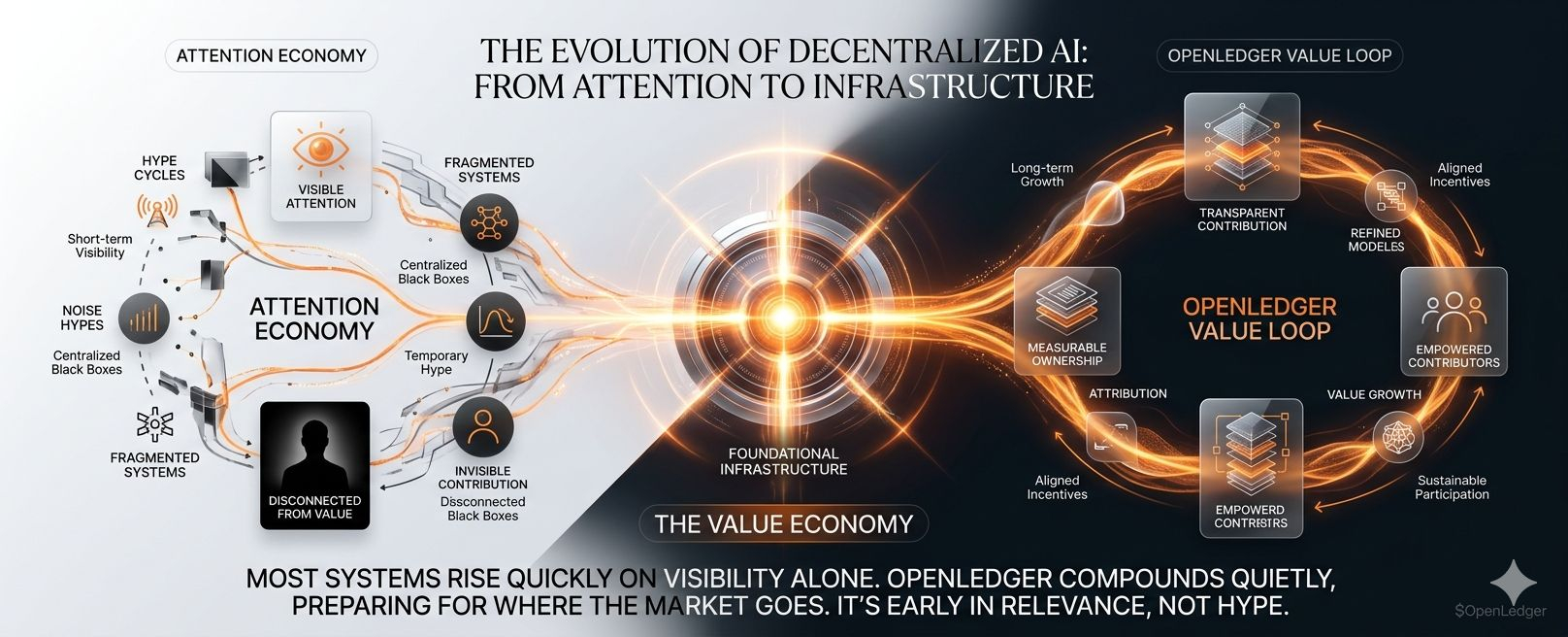
And historically, infrastructure is what survives.
Most hype-driven ecosystems rise quickly and fade just as fast because visibility alone cannot sustain long-term value. But systems built around aligned incentives, trust, and sustainable participation usually compound quietly over time until the market finally realizes how important they became underneath the surface.
That’s the energy OpenLedger gives me lately.
Calm.
Strategic.
Structurally important.
It doesn’t feel focused on entertaining the market.
It feels focused on preparing for where the market eventually goes.
And if AI continues expanding into every digital layer of society, ownership may become one of the defining conversations of the entire industry.
Not just who builds intelligence.
But who stays connected to the value intelligence creates.
That’s why OpenLedger still feels early to me — not early in hype, but early in relevance.
And sometimes, those are the projects that matter the most later.
