
What keeps bothering me on OpenLedger isn't the payout failing.
Would almost be easier if it failed.
No. Worse than that.
Its when the payout clears cleanly.
That's the version that sticks.
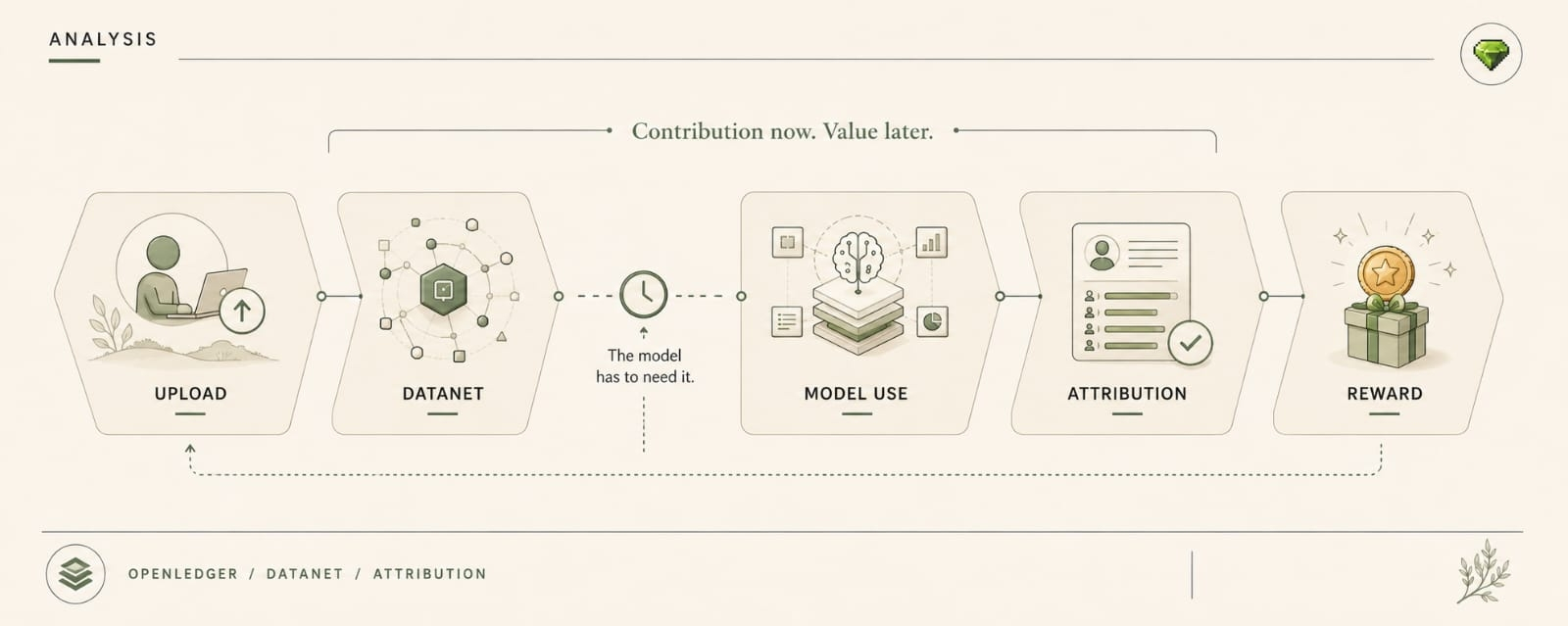
Because on @OpenLedger the clean split is supposed to calm everybody down. Model gets used. Proof of Attribution traces contribution. $OPEN moves. Contributors get paid. Nice. Fairer AI. Everyone gets to feel slightly less robbed by the internet for one afternoon.
Good.
Then you open the payout rows.
That’s where it starts smelling off.
Say a builder fine-tunes a model off a Datanet that looks respectable enough. Contributor history there. validation there. retrieval behavior seems fine on the surface. model ships. traffic comes in. inference starts stacking up. later PoA backtracks what shaped the output and the reward split settles like it’s supposed to. Nothing broken. No obvious hole in the machine. Just a payout table that looks a little too neat for the messy thing it’s claiming to explain.
I keep coming back to that.
Because the payout clearing doesn’t magically make the OpenLedger's contribution story underneath it feel believable. Thats the more annoying version. The machine can settle around what it can see clearly. Doesn’t mean the model really got shaped the way those neat little rows now pretend it did.
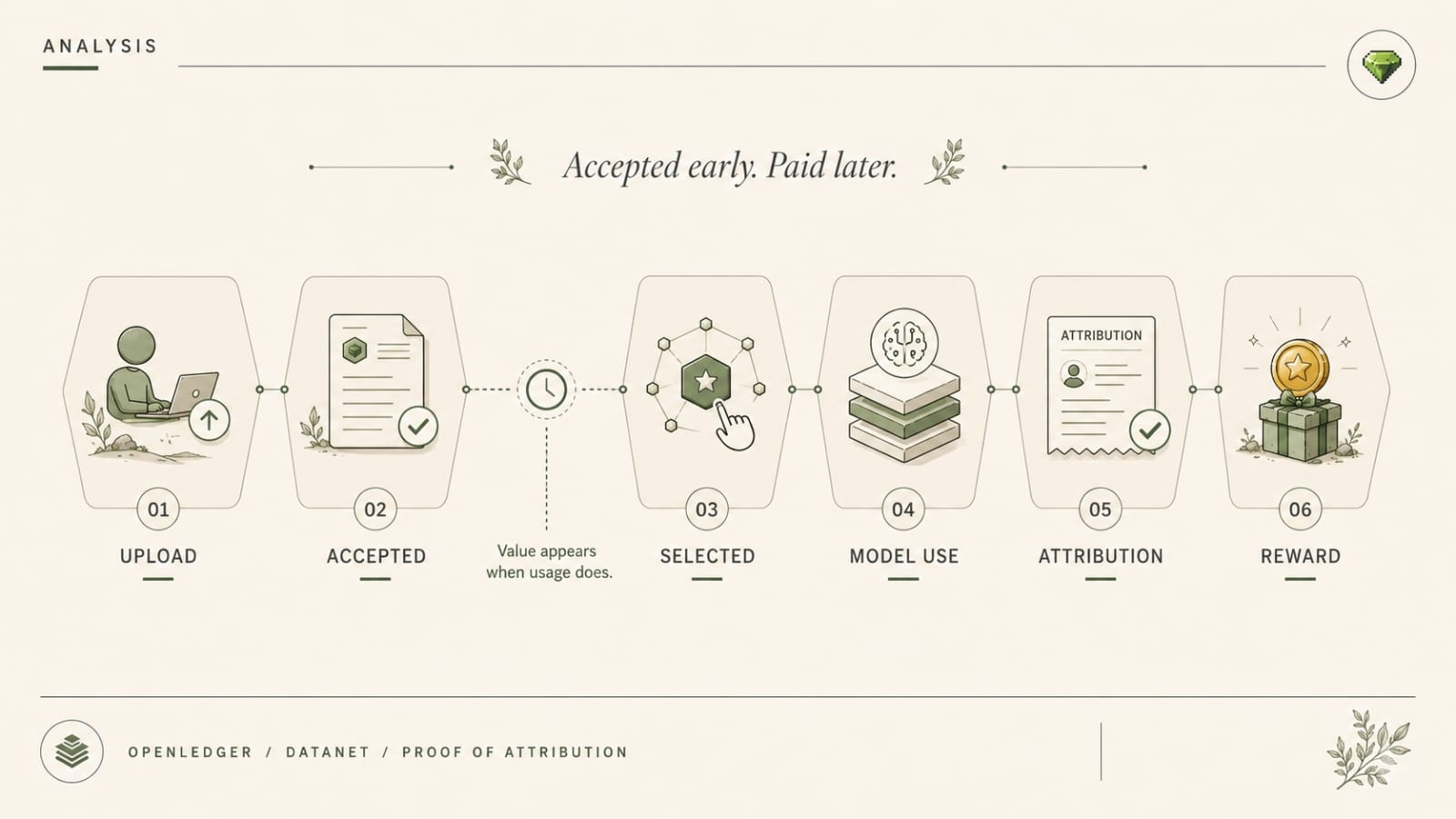
Say one contributor cluster keeps showing up heavier than expected. Same contributor IDs showing up across the reward rows again. Same corner of the Datanet doing more of the carrying. Say some niche Datanet slice that looked central during training barely moves the needle once reward rows start settling. Example the retrieval path keeps leaning on the same narrow source pattern and PoA is honest enough to keep reflecting that back into the split. Good. Great even. The machine is doing accounting. Humans love that. Right up until accounting starts talking back.
Still.
What exactly is it accounting for?
Thats the part I don’t think people say plainly enough.
Because OpenLedger isn't paying “who helped” in some clean storybook sense. It’s paying the version of help the system could isolate cleanly enough through Datanets, retrieval, inference traces, contributor lineage, and later attribution logic. Useful. Necessary. Also not neutral. If the model learned from a messy mix and only part of that mix stays clean enough to show up strongly in PoA, the payout can look fair while still flattening the actual story into something nicer for the ledger.
That’s a rotten little problem.
And very OpenLedger-native.
A normal black-box AI stack just steals the value and calls it product. No rows, no split, no explanation, no trouble. Here the trouble survives into view. Datanet structure matters. contributor history matters. ModelFactory choices matter. retrieval matters. inference behavior matters. Proof of Attribution matters later. OPEN moves once the settlement layer has something to settle. Better system, sure. More honest too. Still annoying as hell once the rows start talking back.
Also a system that can make a very legible argument about value and still feel off the second somebody stares at the rows too long.
I can already see the dumb little room.
Builder on one side. payout view open. contributor rows stacked in front of them. maybe a validator or operator looking over the same screen. Maybe someone has the inference trace open in another tab and it’s not helping nearly as much as everyone hoped. Maybe somebody’s scrolling contributor IDs and pretending that’s helping. Nobody is saying the split failed. That would be simple. They’re saying something uglier. Why is this narrow band carrying so much of the reward. Why is that source family dominating again. Why did the model seem broad during testing but the later payout story keeps collapsing toward the same chunk of the Datanet. Was the training mix narrow. Was the retrieval path thinner than it looked. Was the model just cleaner at producing attributable influence than actually broad intelligence.
Now the room gets stupid fast.
Was it the model. The Datanet. OpenLedger's retrieval layer. The builder. The validator who kept one ugly source out because the provenance looked embarrassing. The contributor base. Which part exactly is supposed to defend the payout once the payout starts looking a little too sure of itself.
That’s where the OpenLedger slogan stops helping. Real fast. Because “payable AI” sounds clean right up until payment has to explain itself. The system can trace influence through the surfaces it has. Fine. But builders are not dumb. Once they understand what kinds of contribution show up legibly later, they start favoring those paths. Cleaner Datanets. cleaner retrieval. cleaner contributor structure. nicer attribution later. Then ModelFactory choices stop being just model choices. They start being payout-shape choices too. Which means the payout engine can end up rewarding not just usefulness, but usefulness that survived being machine-legible enough to settle neatly.
And yes, that can distort behavior upstream.
Of course it can.
Same way people write for dashboards once they know the dashboard is what gets seen later. Same ugly instinct. If the builder knows PoA and later payout rows will have an easier time with some forms of contribution than others, the model design starts drifting toward cleaner legibility. Not better intelligence, necessarily. Nicer payout geometry later. Cleaner splits later. Easier for the machine to explain to itself what happened. Good luck pretending that doesn’t change choices upstream.
And I’m not even saying the system is wrong.
Thats the nasty part.
A narrow contributor band might genuinely be doing more of the work. A retrieval path might genuinely rely more heavily on a cleaner, more structured corner of the Datanet. A messy source that looked important during training review may really matter less at inference time. Fine. The split can be correct and still leave everybody uneasy because correctness at settlement is not the same thing as completeness about how the model got there.
That difference gets expensive the second real money starts sitting on top of it.
Imagine a team is now budgeting around these outputs. Or sharing revenue around them. Or pitching the fairness story to contributors. Or trying to convince outside users that OpenLedger solved something more meaningful than “AI, but with better receipts.” The second those reward rows become something people budget around, the gap between a clean split and a believable split gets expensive.
And OpenLedger does not get to dodge that by being better than black-box AI. It is better. Great. Still has to live here.
Because the more the project succeeds at making inference attributable, the more every payout row starts acting like a statement about what kind of contribution the system thinks is real. Not just what got used. What counts. What gets settled. What actually survives long enough to turn into money. By then it’s not just accounting anymore. It’s the system quietly deciding what kind of contribution gets to look real enough for money.
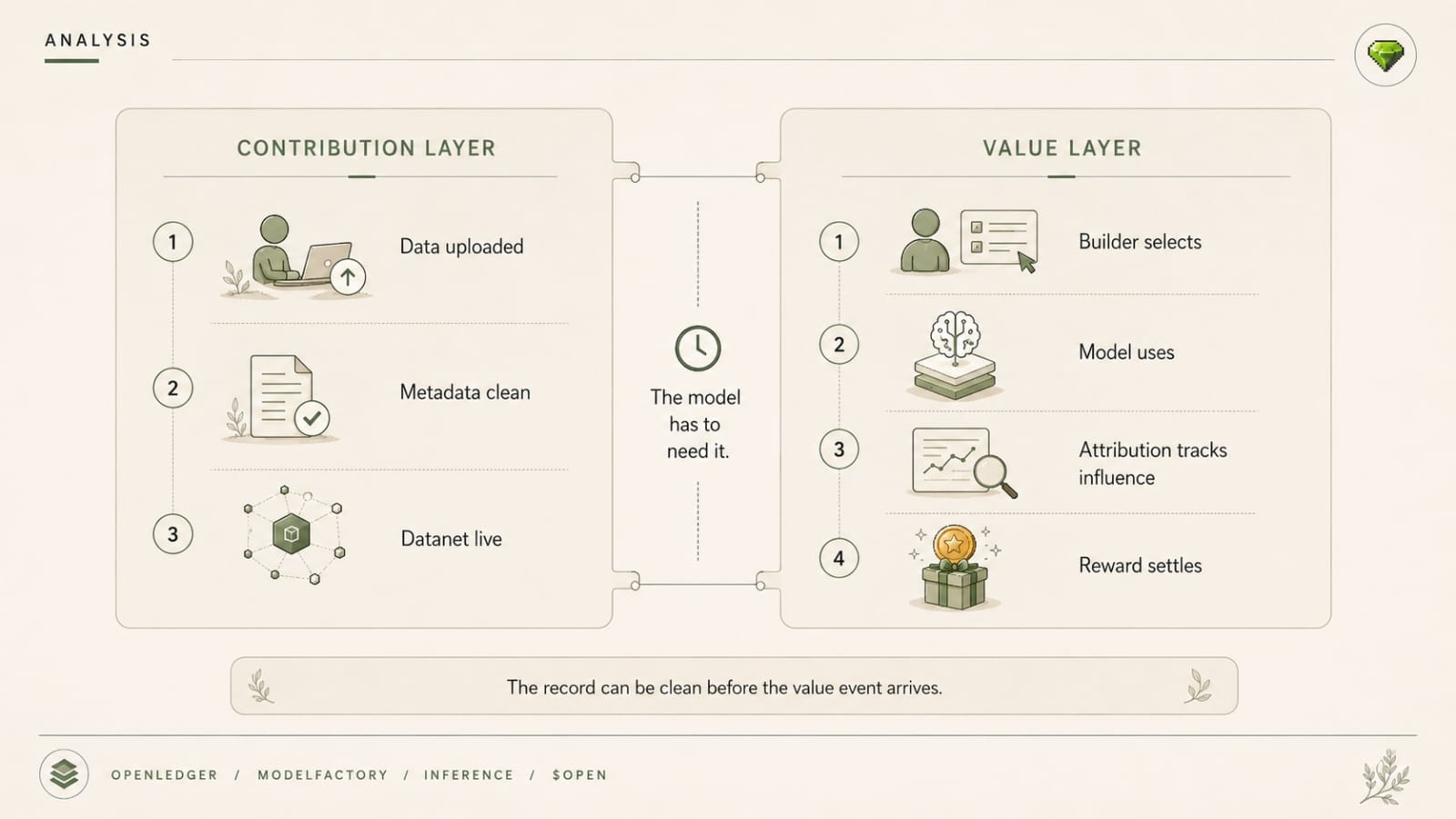
I keep getting stuck on one boring example. A specialized model gets built through ModelFactory on top of a Datanet that includes both clean structured sources and ugly edge-case material from contributors whose data is a pain to validate but actually useful when the world gets weird. Model launches. Usage starts. Retrieval looks broader than it really is if you only watch the front-end. Then later the payout rows keep bunching around the cleaner structured side. Of course they do. It’s easier to trace. Easier to reuse. Easier to settle around. The ugly stuff still may have mattered. Maybe a lot. But if it mattered in ways the later path can’t isolate cleanly enough, the clean part gets paid harder and the messy part gets remembered like background texture.
Now tell me that doesn’t change behavior over time.
Contributors notice. Builders notice. Validators notice. People start shaping Datanets and training choices around what ends up legible enough to earn. Not because they’re evil. Because the system is there and money is attached to it and humans are disgusting little optimization engines the second a payout table shows up.
So the harder OpenLedger question, for me anyway, is not whether PoA can trace contribution.
Maybe it can. Better than most things in this space, honestly.
The uglier question is what happens once the payout side gets good enough that everyone upstream starts designing around what the payout engine will later be able to see cleanly.
Because then the model isn’t just learning from the Datanet.
Its learning from the future settlement logic sitting behind it.
And once that starts happening, what exactly is the payout proving?
Who contributed most?
Or who contributed on OpenLedger in the cleanest way the machine knew how to reward?