
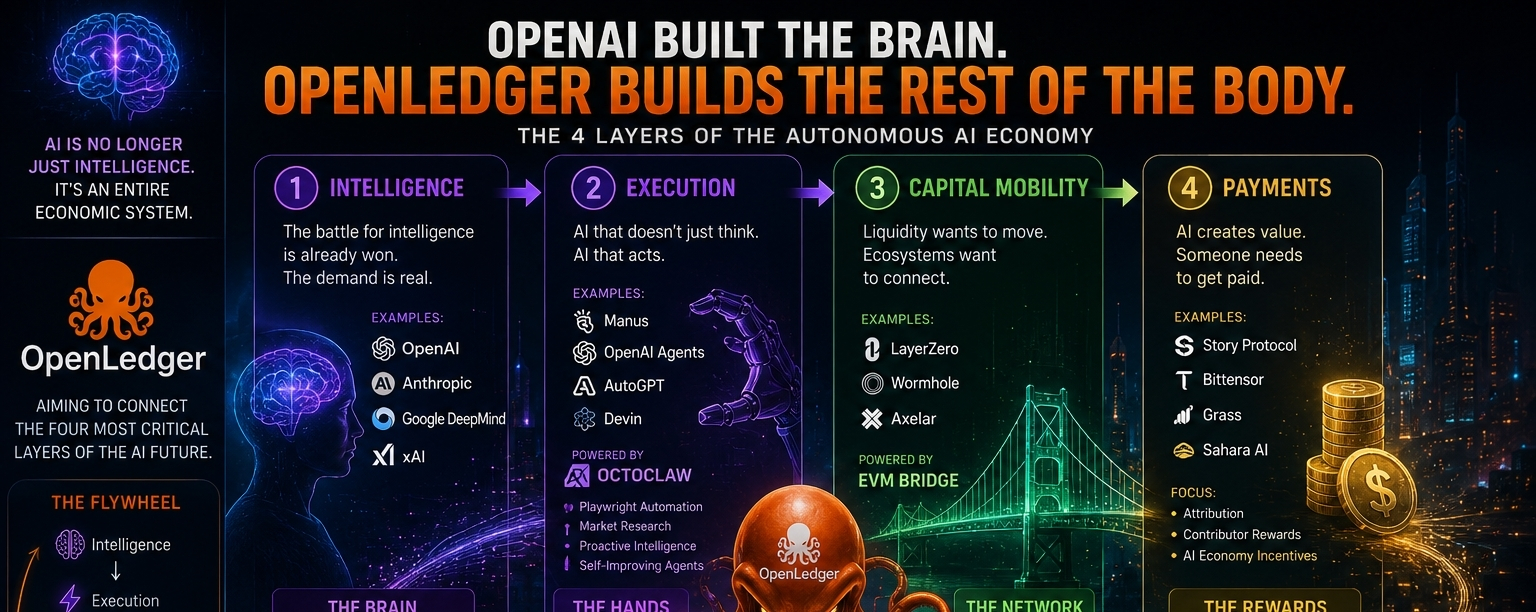
Most AI companies are fighting for one layer of the stack.
One builds intelligence.
Another builds automation.
Another moves liquidity.
Another handles attribution and payments.
What makes OpenLedger interesting is that it seems to be aiming at the coordination layer connecting all of them together.
And that changes the conversation completely.
━━━━━━━━━━━━━━━
🧠 INTELLIGENCE WAS ONLY THE BEGINNING
━━━━━━━━━━━━━━━
The market already decided AI matters.
Projects like OpenAI Anthropic Google DeepMind and xAI proved that demand for machine intelligence is real. Billions in capital infrastructure and user adoption already confirmed it.
But intelligence alone is becoming commoditized faster than most people expected.
The harder problem now is orchestration.
How do autonomous systems interact, execute, coordinate, exchange value, and continuously improve without collapsing under their own complexity?
That is where the next phase begins.
━━━━━━━━━━━━━━━
⚡ AI IS MOVING FROM THINKING TO ACTING
━━━━━━━━━━━━━━━
The first generation of AI answered questions.
The next generation performs actions.
Projects like AutoGPT Devin Manus and OpenAI Agents revealed something important:
People do not just want intelligence.
They want autonomous execution.
Research agents.
Browser automation.
Decision systems.
Self-improving workflows.
This is where OctoClaw starts becoming strategically important inside the OpenLedger ecosystem.
Because once AI can act instead of simply respond, coordination pressure increases dramatically.
Agents need memory.
Agents need tools.
Agents need infrastructure.
Agents need incentives.
And eventually…
agents need economies.
━━━━━━━━━━━━━━━
🌉 AUTONOMOUS AGENTS WILL NEED CAPITAL TOO
━━━━━━━━━━━━━━━
Crypto solved one problem traditional systems still struggle with:
Value mobility.
Projects like LayerZero Wormhole, and Axelar proved that liquidity wants to move freely across environments.
Now imagine autonomous AI systems operating across multiple chains datasets applications and execution layers simultaneously.
Those systems will also require seamless movement:
🌐 data
🌐 liquidity
🌐 permissions
🌐 execution access
That makes OpenLedger’s bridge infrastructure far more important than it may appear on the surface.
Because interoperability stops being a “crypto feature” once AI agents become economic participants themselves.
It becomes survival infrastructure.
━━━━━━━━━━━━━━━
💰 THE FINAL LAYER IS INCENTIVES
━━━━━━━━━━━━━━━
This is where things become truly difficult.
Once AI systems create measurable value, the question becomes:
Who gets rewarded?
Projects like Story Protocol, Bittensor, Grass, and Sahara AI are all exploring versions of the same future:
💰 attribution
💰 contributor ownership
💰 decentralized incentives
💰 AI-native economies
And honestly, this may become the most important layer of all.
Because highly connected systems do not fail from lack of intelligence.
They fail when incentives drift apart.
Humans already understand this instinctively.
Communities collapse.
Markets break.
Institutions decay.
Not because nobody was smart.
But because coordination stopped working.
━━━━━━━━━━━━━━━
🌀 OPENLEDGER’S REAL BET MAY BE COORDINATION
━━━━━━━━━━━━━━━
Most projects specialize in one vertical.
OpenAI → intelligence
Manus → execution
LayerZero → interoperability
Story → attribution
OpenLedger appears to be attempting something far larger:
🧠 Intelligence
↓
⚡ Autonomous Execution
↓
🌉 Capital & Data Mobility
↓
💰 Attribution & Incentives
↓
🔄 Feedback Loops
↓
🧠 Stronger Intelligence
That is not a single product.
That is an attempt to build an autonomous AI economy.
━━━━━━━━━━━━━━━
💀 WHICH IS ALSO WHY THE RISK IS MASSIVE
━━━━━━━━━━━━━━━
Specialized projects only need one layer to succeed.
OpenLedger is attempting to align multiple systems simultaneously.
And historically, coordination at scale is one of the hardest problems humans ever face.
The bigger a network becomes, the more fragile hidden dependencies become underneath it.
Small inconsistencies spread quietly.
Trust weakens gradually.
Incentives drift slowly.
Complexity compounds silently.
That is true for societies.
And it will likely become true for AI ecosystems too.
━━━━━━━━━━━━━━━
👀 FINAL THOUGHT
━━━━━━━━━━━━━━━
Maybe the future AI winner is not simply the smartest model.
Maybe it is the environment capable of keeping intelligence, execution, capital movement, incentives, and autonomous coordination functioning together at scale.
If that is the direction the world moves toward…
then OpenLedger may not be trying to compete with a single project at all.
It may be trying to become the connective infrastructure between all of them.